

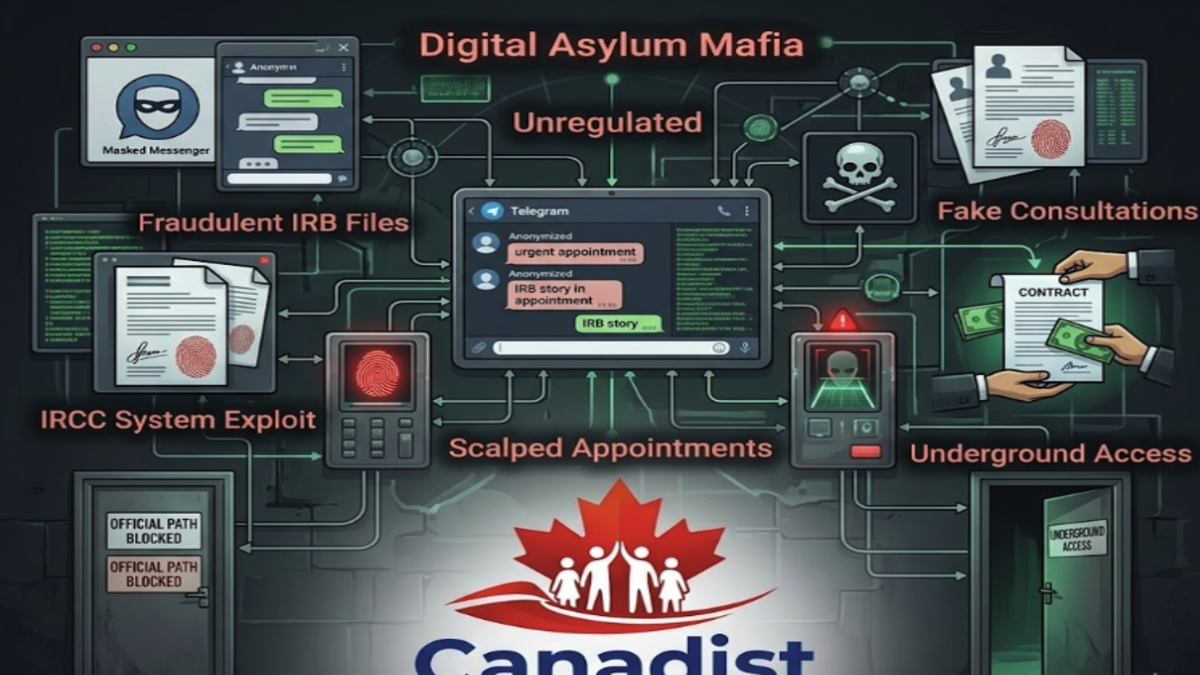
Ottawa – Canadist: Digital Asylum Mafia: How IRCC Appointments and Dossiers Became a Black Market

In closed Telegram groups, you only need to type one phrase: “Urgent Canada asylum appointment,” and dozens of anonymous accounts instantly flood you with shady offers. Official processing slots are sold for thousands of dollars, tailored “persecution stories” are fabricated to fit Canadian IRB (Immigration and Refugee Board) criteria, and fake consultants promise guaranteed protected person status within hours. How exactly did Canada’s humanitarian reputation transform into a lawless digital commodity traded behind smartphone screens?
What is the Core of the Issue? Turning the Canadian Dream into a Digital Commodity
Seeking asylum in Canada has long been seen as a gold standard for human rights and safety. However, in the digital underworld, this path has evolved into a lucrative parallel economy orchestrated by structured networks exploiting the system’s current backlogs. The term “Digital Asylum Mafia” refers to a decentralized yet highly organized network of tech-savvy scalpers and fraudulent document fixers who intercept official transactions between the IRCC (Immigration, Refugees and Citizenship Canada) and applicants online, effectively reselling free humanitarian services at exorbitant prices.
This phenomenon is more than simple fraud; it is a direct assault on the integrity of the Canadian refugee system. Sophisticated cybercriminals weaponize technical flaws in booking portals, delaying legitimate claimants while clogging the IRB with entirely fabricated asylum claims that can take years to adjudicate.

How Does the “Digital Asylum Mafia” Operate? The Infrastructure of the North American Black Market
These networks rely on a highly specialized division of labor to maintain steady cash flows while evading tracking by the CBSA (Canada Border Services Agency) and international cyber-intelligence units. Their operations bridge technical exploitation, legal forgery, and targeted digital marketing on platforms like TikTok and Telegram.
The Scalping of IRCC and Biometric Appointments
The foundation of this digital black market relies on monopolizing online booking platforms managed by Service Canada and the IRCC. The mafia employs specialized automated software scripts known as “Booking Bots.” These bots continuously crawl official government portals 24/7. The moment a free biometric or refugee interview slot is opened, the bot hijacks it within milliseconds using placeholder data.
Once captured, the slots are advertised in private “Canada Migration” groups. When a desperate buyer is found, the networks cancel the original placeholder and instantly re-book it using the buyer’s real passport data. Investigative findings by Canadist indicate that these aggressive bot attacks have caused an almost total paralysis of legitimate scheduling portals, forcing newcomers to pay for what is legally a free service.
Fabricating IRB-Ready Persecution Files
The fraud deepens well beyond simply booking appointments. For a premium fee, these digital syndicates curate an asylum seeker’s entire “Basis of Claim” (BOC) form from scratch. They generate tailored, reusable persecution narratives designed to trigger specific Canadian legal protections. This digital forgery includes:
Generating counterfeit political or religious affiliation letters featuring forged stamps from overseas organizations.
Fabricating threat letters and mock arrest warrants using advanced AI-driven editing software to look authentic to IRB members.
Creating fake journalistic articles or “news reports” alleging the client faces immediate physical danger in their home country.
Cultivating artificial social media footprints to “prove” a claimant’s political activism or sexual orientation, which are often the basis for Canadian claims.
Impersonating Registered Consultants and RCICs
Perhaps the most dangerous component is the rise of the digital “ghost consultant.” Dozens of unauthorized accounts actively masquerade as RCICs (Regulated Canadian Immigration Consultants). Utilizing professional-looking aesthetics on TikTok and WhatsApp, they use stolen logos from the College of Immigration and Citizenship Consultants to convince desperate victims to wire heavy upfront deposits under the guise of “legal processing fees.”
Why Does It Matter? An Economy Fuelled by the “Backlog”
These criminal rings thrive because they operate in an environment where severe psychological fear intersects with the massive IRCC backlogs. The fundamental catalyst for this black market is the extreme scarcity of official appointments and the long wait times for hearings. For an undocumented person in Canada, waiting months in legal limbo feels like a threat of deportation.
Language barriers further exacerbate this vulnerability. A newly arrived asylum seeker unable to comprehend complex legal English or French on government portals feels naturally alienated. The digital mafia steps in precisely here, offering an unregulated “fully translated solution,” exploiting the fact that legitimate, licensed legal counsel can be financially out of reach or fully booked.
Telegram: The Dark Hub for Canadian Immigration Scams
Telegram has grown into the undisputed headquarters for these operations due to technical designs that shield criminal networks from law enforcement. The platform offers highly secure broadcast channels where administrative identities can remain completely anonymous.
The syndicates integrate automated utility bots into their channels to auto-post promotional ads every few minutes across hundreds of “Newcomers to Canada” community groups. According to data monitored directly by Canadist, the catalog of services sold includes packages like “100% guaranteed IRB stories” and “fast-tracked work permit appointments.”
Fake Translators and the Risk of “Story Sabotage”
A rarely discussed angle of this investigation involves unaccredited translators. In multiple reported instances, the translator a migrant hires via social media is not a certified professional, but an active scout working for the scalping syndicates.
These fraudulent translators often alter the applicant’s BOC statements during document preparation to make the story “more dramatic” for Canadian officials. This unauthorized tampering leaves the migrant highly vulnerable; if the IRB detects inconsistencies during the oral hearing, the claim is rejected as “not credible,” leading to a permanent removal order from Canada.
Regulated Legal Paths vs. The Digital Underworld
To protect vulnerable applicants, a clear distinction must be made between legitimate Canadian immigration services and organized cyber fraud. Legitimate RCICs and immigration lawyers are governed by strict codes of ethics and professional insurance.
The core threat stems entirely from anonymous social media accounts and unlicensed “agencies” that boast of “insider connections at the IRCC.” Engaging with these illicit networks does not just expose the migrant to financial loss; it carries critical criminal implications. Presenting forged documents to Canadian officials is a serious offense (Misrepresentation), resulting in a 5-year ban from Canada and the immediate termination of all active applications.
Frequently Asked Questions
Are IRCC appointments for refugees supposed to cost money? No. All official appointments for asylum applications, biometrics, and hearings issued by the Government of Canada are entirely free. Anyone demanding payment to “reserve” a slot is a criminal scammer.
What happens if the IRB catches a “fake story” in my file? If the IRB determines that a claim is “manifestly unfounded” or based on fraudulent documents, the application is rejected. The claimant will be issued a removal order and will likely be barred from any future immigration to Canada under misrepresentation laws.
How can I check if a Canadian immigration consultant is real? You must verify their name on the public directory of the College of Immigration and Citizenship Consultants (CICC). If their name is not there, they are not authorized to charge you for immigration advice.
What should I do if I am a victim of the digital asylum mafia? Stop all communication with the scammers immediately. Report the fraud to the Canadian Anti-Fraud Centre and consult with a legitimate legal aid clinic or a registered lawyer to see how you can correct your file before the IRCC detects the fraud.
Dismantling the digital asylum mafia requires both systemic tech updates to Canadian portals and increased awareness among newcomer communities. The only reliable path to protection in Canada lies through official institutional channels—never through the encrypted alleys of unregulated social media applications.
Contact: info@canadaalyom.com