

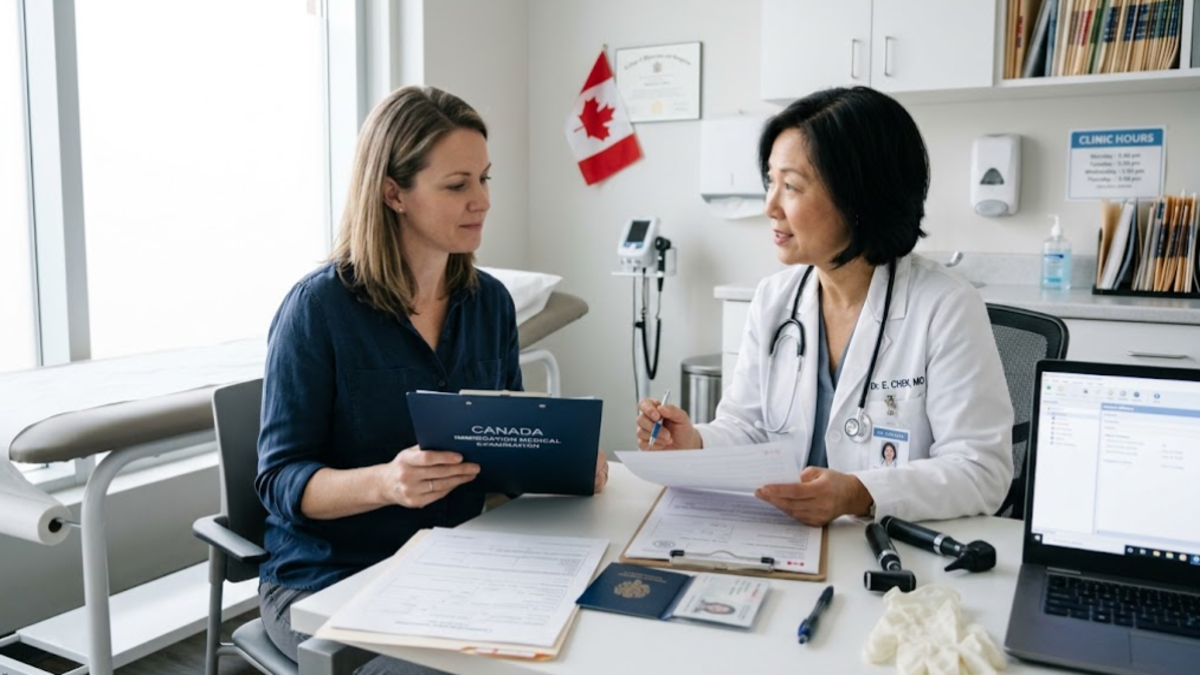
OTTAWA – Canadist: Canada Immigration Medical Exam: What Applicants Need to Know

Canada’s immigration medical requirements have become an important point of attention for applicants preparing permanent residence, work, study and family sponsorship applications. Recent immigration reporting has highlighted the importance of understanding when an Immigration Medical Exam (IME) must be completed, who can conduct it and what applicants should take to their appointment.
The rules differ depending on the immigration stream, and the timing of the examination can affect how an application is submitted and processed. For Express Entry candidates in particular, the medical examination is now an upfront requirement after receiving an Invitation to Apply, while other applicants may have to wait for instructions from Immigration, Refugees and Citizenship Canada (IRCC). So, what exactly should applicants know before booking their Canada Immigration Medical Exam?
Why the Canada Immigration Medical Exam matters
An immigration medical examination is part of Canada’s assessment of whether an applicant is medically admissible. IRCC uses the examination to determine whether a person’s health circumstances could create concerns under Canada’s immigration rules.

A medical examination does not mean that applicants must be in perfect health. Canadian immigration authorities assess medical circumstances individually, and the existence of a particular illness does not automatically mean that an applicant will be refused.
Government guidance says medical inadmissibility can involve concerns related to public health, public safety or excessive demand on health or social services. IRCC considers the circumstances of the individual applicant when making that assessment.
Recent IRCC guidance also makes clear that there is no single medical condition that automatically results in inadmissibility on excessive-demand grounds. Officials consider the person’s medical condition, likely prognosis, anticipated health and social service requirements and the possible effect on Canadian services.
That distinction is important because applicants sometimes assume that a diagnosis alone can end an immigration application. The medical assessment is more detailed than that.
The examination is also not a routine appointment with a person’s regular family doctor. Applicants must use a physician approved by IRCC, known as a panel physician.
Canada Immigration Medical Exam rules for Express Entry
One of the most significant changes affecting applicants concerns Express Entry.
Under the current procedure, Express Entry applicants must complete an upfront immigration medical examination after receiving an Invitation to Apply and before submitting their permanent residence application. The requirement was reinstated after a previous system allowed applicants to submit their applications before receiving medical instructions.
The change means medical preparation is now an important part of the period immediately following an Invitation to Apply.
Applicants should therefore avoid treating the medical examination as a minor administrative step that can be dealt with later. Once an invitation arrives, arranging the examination becomes part of preparing a complete permanent residence application.
Immigration news coverage following the change has focused heavily on this distinction because applicants who misunderstand the timing can risk submitting incomplete documentation.
An upfront examination must be performed by an approved panel physician. Applicants cannot simply visit their own doctor and submit a normal medical certificate instead.
The physician is responsible for carrying out the examination and submitting the relevant medical information through the system used by IRCC. The panel physician does not make the final immigration decision.
That decision remains with Canadian immigration authorities.
What about applicants outside Express Entry?
The process is different for many other permanent residence applications.
For non-Express Entry permanent residence applications, IRCC generally sends medical instructions after receiving the complete application. Applicants should follow those instructions rather than independently arranging an examination at the wrong stage.
IRCC says applicants receiving medical instructions normally have 30 days to complete the examination.
This difference between Express Entry and other permanent residence programs is one of the most important details for applicants to understand.
Booking the examination too early can create unnecessary complications, while failing to complete a required examination within the specified period can also put an application at risk.
Who must take the medical examination?
For permanent residence applications, the medical requirement generally applies to the principal applicant and family members, even when some family members are not accompanying the applicant to Canada.
This can surprise families preparing applications because a non-accompanying relative may still need to undergo an immigration medical examination.
The requirement is connected to the immigration application rather than simply to the person’s intention to travel to Canada.
Temporary residents face different rules.
Visitors, students and workers may need an IME depending on the length and circumstances of their stay, their recent travel or residence history and the type of work they intend to perform.
For example, applicants planning to remain in Canada for more than six months may need an examination if they have lived in or travelled to certain countries or territories for a specified period during the year before coming to Canada.
There are also occupations in which a medical examination may be required because public health protection is considered particularly important. Healthcare and childcare-related employment can fall into this category.
Applicants seeking a parent and grandparent super visa are also subject to medical requirements.
Because temporary-resident rules depend on individual circumstances and country-of-residence or travel history, applicants should check the applicable IRCC requirements rather than relying on general advice found online.
Choosing the right panel physician
The doctor conducting the examination is a critical part of the process.
IRCC requires applicants to use an authorized panel physician. A family doctor, private clinic or other medical professional cannot conduct the immigration examination unless that doctor is specifically approved by IRCC as a panel physician.
Applicants can choose an approved panel physician from the available list and can generally select a physician in a country other than their country of residence.
The cost of the examination is paid by the applicant, and fees can vary between physicians and locations.
This is one area where applicants should plan ahead. Appointment availability may differ from one location to another, particularly when large numbers of immigration candidates are preparing applications at the same time.
Applicants should therefore confirm the clinic’s appointment requirements before attending.
They should also ask whether the physician uses the electronic medical system for submitting results. If the clinic does not use eMedical, additional photographs may be required.
What happens during the Canada Immigration Medical Exam?
The exact examination can vary depending on the applicant’s circumstances, age and medical history.
The appointment generally involves a medical assessment conducted according to IRCC requirements. Applicants may be asked about existing or previous medical conditions and may undergo examinations or tests specified under the immigration medical protocol.
Additional testing can be requested when medically necessary.
Applicants should not be alarmed if the physician asks for further information or additional investigations. A request for further testing does not by itself mean that the immigration application will be refused.
The purpose of the process is to give IRCC the medical information required to assess admissibility.
In some circumstances, applicants may also receive follow-up instructions related to a medical condition identified during the examination.
Tuberculosis is one example that can result in medical surveillance requirements. IRCC states that applicants found to have inactive tuberculosis may be required to undergo medical surveillance after arriving in Canada so that appropriate treatment and monitoring can take place.
Documents applicants should take to the appointment
Preparation can make the medical appointment considerably easier.
Applicants should bring acceptable identification. IRCC strongly recommends using a passport where possible, although other forms of identification can be accepted in specified circumstances.
Applicants who wear glasses or contact lenses should take them to the appointment.
Medical documentation can also be important. People with previous or existing medical conditions should bring relevant medical reports and test results available to them.
A current list of medications is also recommended.
Applicants who have received medical instructions from IRCC may need to bring the relevant medical report form. The exact documentation depends on whether the applicant is completing an upfront examination or an examination requested by IRCC.
Photographs may also be required where the clinic does not use eMedical.
Because individual clinics can have additional appointment instructions, applicants should confirm the required documents before attending.
A missing document does not necessarily mean that the entire immigration application will fail, but it can make the appointment more complicated or lead to additional steps.
Medical inadmissibility is assessed individually
Health concerns are among the most misunderstood aspects of Canada’s immigration system.
Applicants sometimes believe that certain illnesses automatically prevent immigration. IRCC’s current guidance does not support such a broad assumption.
Medical inadmissibility can arise for several reasons, including public health, public safety or excessive demand on health and social services. However, assessments are made using the applicant’s individual circumstances.
For excessive-demand assessments, IRCC considers factors such as the current state of the medical condition, its expected prognosis and the anticipated need for Canadian health or social services.
The assessment can also consider projected costs over a period of several years and the possible impact on waiting lists for health and social services.
This means applicants should provide accurate information and relevant medical documentation rather than attempting to hide a condition.
Providing incomplete or misleading information can create separate immigration problems. Accuracy remains essential throughout the application process.
What if additional medical information is requested?
A panel physician may identify a need for additional testing or reports.
When that happens, applicants should follow the clinic’s instructions and provide the requested material as promptly as possible.
Delays in completing medical follow-up can affect the overall application timeline, particularly where the medical assessment is one of several outstanding requirements.
Applicants should also retain documents given to them by the clinic for their own records.
The panel physician submits the medical results to IRCC, but keeping the appointment documentation can help applicants respond if questions arise later.
Applicants already living in Canada may have an exemption
There is another important point for people already in Canada.
IRCC has extended a temporary public policy under which certain foreign nationals in Canada may be exempt from completing another immigration medical examination.
The exemption is subject to specific conditions.
Among them, the applicant must already live in Canada, must have completed a previous IME within the relevant five-year period and must have received results indicating a low risk or no risk to public health or public safety.
Applicants who qualify should include the medical examination number or unique medical identifier from their previous examination in their new application.
This does not mean every person living in Canada automatically qualifies.
The exemption depends on the individual’s circumstances and previous medical examination, so applicants should verify whether they meet all the conditions before assuming that a new examination is unnecessary.
Timing can make a difference
The medical examination should be treated as part of the immigration application strategy rather than an isolated health appointment.
For Express Entry applicants who have received an Invitation to Apply, the examination must fit into the application preparation period before submission.
For other permanent residence applicants, waiting for IRCC instructions can be important.
Temporary-resident applicants may have the option or requirement to complete an upfront examination depending on their application category and circumstances.
The key lesson is simple: do not assume that every immigration applicant follows the same medical-exam schedule.
The correct timing depends on the immigration program.
Applicants should also remember that medical results have a limited period of validity. If an application takes longer than expected, IRCC may require another examination or additional medical steps.
That possibility makes timing particularly relevant for applicants whose immigration process may take an extended period.
Common mistakes applicants should avoid
One of the most common errors is visiting a regular family physician instead of an approved panel physician.
Another is completing the examination at the wrong stage of the application.
Applicants can also run into problems by arriving without proper identification, medical reports or medication information.
A further mistake is assuming that a medical condition automatically leads to refusal.
Applicants should instead provide complete and truthful information and allow IRCC to make the medical admissibility assessment.
Finally, people should be cautious about relying on outdated immigration advice. Canada’s medical examination procedures have changed, particularly for Express Entry, and information published before those changes may no longer describe the current process.
What applicants should remember before booking
The Canada Immigration Medical Exam is a formal immigration requirement, not simply a general health check.
The first question should always be whether an examination is required for the applicant’s specific immigration category.
The second is when the examination must be completed.
The third is where it can be completed.
Once those points are clear, applicants should select an approved panel physician, confirm the clinic’s requirements and prepare identification and medical documentation.
For Express Entry candidates, the upfront medical requirement makes the examination especially important after receiving an Invitation to Apply.
For applicants in other programs, following IRCC’s instructions remains essential.
Recent immigration coverage and official guidance point to the same practical conclusion: preparation matters. Understanding the medical rules before an application reaches the final stages can help applicants avoid unnecessary delays and prevent mistakes that could have been avoided with better planning.
Canada Immigration Medical Exam: Frequently Asked Questions
Is a medical exam required for Canadian permanent residence?
Generally, permanent residence applicants and their family members must undergo an immigration medical examination, subject to applicable exemptions and policies.
Can my family doctor perform the exam?
No. The examination must be completed by an IRCC-approved panel physician.
Do Express Entry applicants need an upfront exam?
Yes. Express Entry applicants must complete the required medical examination after receiving an Invitation to Apply and before submitting the permanent residence application, unless an applicable exemption applies.
Can a previous medical exam be reused?
Some applicants already living in Canada may qualify for an exemption from another examination if they meet specific conditions, including having completed a qualifying previous IME within five years.
Contact: info@canadaalyom.com