

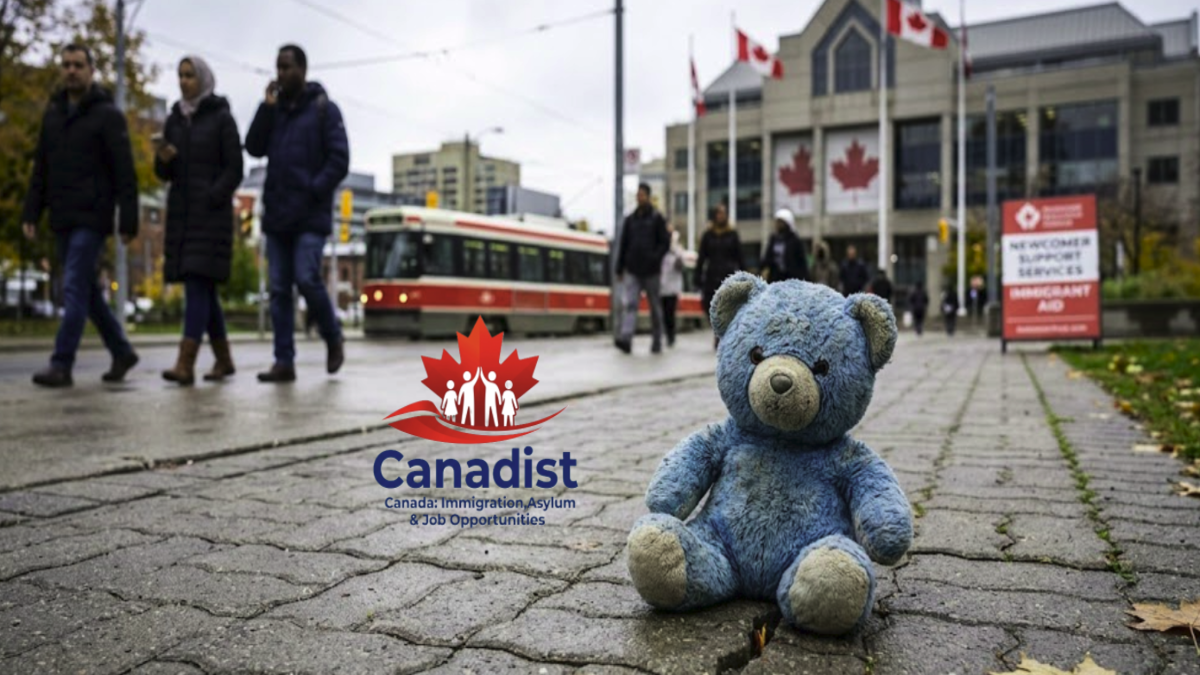
Ottawa – Canadist: Missing migrant children in Canada are no longer just isolated cases drifting silently through care centers or immigration files; they have become part of a humanitarian crisis unfolding behind the serene image Canada presents to the world. Children arrive alone through airports or land borders, some fleeing wars, gangs, or extreme poverty, only to disappear from tracking and care systems later, leaving behind heavy questions about their true fate. How can children entering a country with one of the most organized immigration systems in the world become “invisible”?

In recent years, the number of unaccompanied minors seeking asylum or protection in Canada has surged, fueled by global crises and displacement from conflict zones in Africa, Latin America, and the Middle East. Yet, behind official asylum files, human rights organizations speak of alarming disappearance stories. Some end up found within exploitation networks or illegal labor sectors, while other cases remain without any clear trace. According to official Canadian data, the absence of a unified system to track minors as they move between provinces or exit care facilities makes determining the true number of missing children a complex challenge.
Unaccompanied Minors: A Journey Born of Fear
Most children arriving in Canada alone do not have the luxury of choice. Some lost their families during war or migration, while others were sent by parents fleeing forced conscription, gangs, or abject poverty. Many of these children enter the country bearing deep psychological trauma. Some witnessed death during their journey, while others were subjected to violence or extortion by smugglers.
Initially, minors are transferred to reception centers or temporary care homes, where legal and social protection is supposed to begin. However, child protection organizations confirm that some children vanish after a short period, especially those without clear support networks or relatives. Reports indicate that older children, between 14 and 17 years old, are the most vulnerable to disappearance, as they are easily lured into work or convinced to flee toward other cities.

Why Do Children Vanish After Arrival?
The reasons are rarely singular. Some children flee out of fear that their asylum claims will be rejected or that they will be sent back to their home countries, while others seek to reach relatives living in different cities or countries. However, humanitarian organizations stress that a segment of these disappearances is directly linked to exploitation networks specifically targeting migrant minors.
These networks realize that a lone child, who may not speak English or French fluently, is more fragile and easier to control. In testimonies documented by Canadian child protection institutions, children spoke of individuals who offered them housing, work, and legal aid, only to later find themselves trapped in exploitative environments or forced labor.
The Reality of “Underground” Labor
When the exploitation of migrant children is mentioned, thoughts often jump to sex trafficking, but reality reveals a more widespread and less visible aspect: underground labor. In some Canadian cities, migrant minors are employed in restaurants, cleaning services, farms, and small businesses illegally. These children work long hours for minimal pay, often without contracts, health benefits, or education. The fear of deportation or losing their chance at asylum keeps many silent, even when they suffer from abuse or exploitation. According to human rights reports, some employers exploit the precarious legal status of these children, particularly those lacking complete documentation or living far from the watchful eyes of social institutions.
Exploitation Starts with Kindness, Not Force
The danger of these networks lies in their subtle approach. It rarely starts with direct violence. Sometimes, it begins with simple help: a phone, a bed to sleep in, a temporary job, or even a hot meal. Then, the gradual control begins. The child is asked to work to “pay off the travel debt,” or is threatened with being reported to authorities if they try to leave. Over time, the child becomes completely isolated from any entity that could protect them. Immigration experts confirm that migrant minors become easy targets because they are desperate for any sense of security or stability, even if it is a facade.
Structural Gaps in the Canadian System
Although Canada is known for more flexible reception policies compared to other nations, the situation reveals complex issues. The first involves the disparity in care systems between provinces; each province has different mechanisms for handling migrant minors, creating gaps in monitoring. The second issue is a shortage of resources. Some care centers face increasing pressure due to the rise in asylum seekers, particularly in major cities like Toronto and Montreal.
Furthermore, a lack of psychologists and translators makes communicating with these children difficult, increasing the likelihood that they will lose trust in official institutions. Civil organizations point out that some children vanish simply because no one managed to build a relationship of trust with them from the very beginning.
Human Trafficking: The Most Complex Threat
Canadian authorities have warned in recent years of the growing human trafficking networks targeting vulnerable groups, including migrant minors. These networks exploit children’s need for work or housing, then gradually push them into illegal activities or forced labor. In some cases, children are moved between cities to hide them or prevent their discovery. Official Canadian reports note that minor victims often do not report violations due to fear, threats, or a total loss of trust in the authorities.
Why Is Finding Missing Children So Difficult?
Several factors make tracking missing children complicated:
Their frequent movement between provinces.
The use of aliases or false names.
The absence of a unified national database.
The victims’ fear of contacting the police.
The psychological or financial control exerted by exploitation networks.
A Call for Systemic Change
What does the disappearance of these children signify? It means more than just a person being lost within an administrative system; it exposes deeper flaws in the protection framework. The issue poses a sensitive question within Canada: Is it enough to welcome children at the border if there are no real follow-up mechanisms to protect them afterward?
Human rights organizations believe that protection must begin from the moment of arrival, not stop at the registration of an asylum claim. They are calling for the expansion of psychological and educational support programs, the acceleration of family reunification, and the development of better cooperation between provinces and law enforcement. As noted by the Canadist research team, civil society organizations have been pushing for years for a more transparent monitoring system for unaccompanied minors, especially amid growing concerns over those who vanish after leaving care facilities.
Moving Forward: Reducing the Risk
Experts suggest several fundamental steps to mitigate these risks:
Establishing a unified national database for missing children.
Enhancing oversight within care centers.
Providing permanent access to translators and psychological professionals.
Accelerating reunification procedures.
Stiffening penalties for underground labor and human trafficking networks.
Involving schools and local associations in monitoring at-risk children.
Treating migrant minors as victims in need of protection, rather than just an immigration file, could fundamentally shift the current reality. Canada remains, for many, a symbol of safety and a chance for a new beginning. Yet, behind this image exist stories that do not always make the headlines. These are children who survived wars, seas, and borders, only to find themselves in a new cycle of fear, isolation, and exploitation. The issue is not just about numbers; it is about the fate of a generation seeking safety, sometimes disappearing before they ever find it.
Frequently Asked Questions
What is meant by “unaccompanied minors” in Canada?
These are minors who enter Canada without a parent or a legal guardian accompanying them.
Why do some migrant children disappear?
Some flee out of fear of deportation, while others fall victim to exploitation or illegal labor networks.
Are there networks that target migrant children?
Yes, Canadian reports warn of networks that exploit minors for forced labor or human trafficking.
What are the most prominent risks these children face?
The primary risks include economic exploitation, human trafficking, psychological abuse, and forced underground labor.
Contact: info@canadaalyom.com