
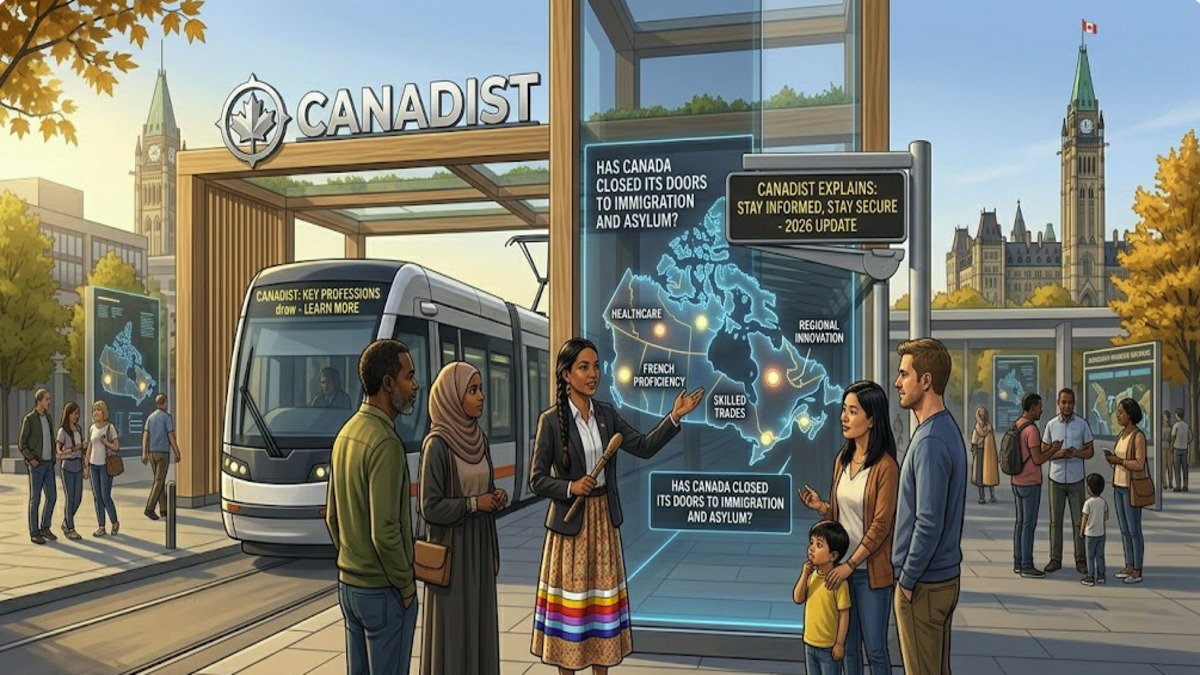
Ottawa – Canadist: For decades, the image of Canada was a wide-open gate. But as we move through 2026, many are asking a pointed question: Has Canada closed its doors to immigration and asylum? If you look at the crowded rental markets in Toronto or hear the news about the new Bill C-12, it might feel that way.

The short answer is a firm no. Canada hasn’t closed its doors, but it has certainly changed the locks. We are witnessing a historic transition from “mass intake” to “selective entry.” If you’re a skilled worker or a genuine refugee, the path exists, but it is no longer the “easy route” many were promised.
What changed in 2025 and 2026?
The biggest change is a conscious effort to pause population growth. According to the Official 2025–2027 Immigration Levels Plan, the government has slashed its permanent resident targets.
Fewer Permanent Residents: For 2026, the target has been lowered to 380,000, a significant drop from the previous half-million goal.

Temporary Resident Cap: For the first time, there is a hard cap on temporary residents (students and workers), aiming to reduce their presence to just 5% of the total population by the end of this year.

Has Canada closed its doors to immigration and asylum for students and workers?
The “student pathway” was once a near-guaranteed ticket to residency. Today, it is a different story.
The end of “study-to-immigrate” shortcuts
The government has tightened study permits and tied work permits directly to labor needs. If your degree doesn’t match a sector in crisis—like healthcare or trades—getting that post-grad work permit is now much harder.
A more selective Express Entry
The Express Entry system has moved away from just “high scores.” In 2026, the priority is on Category-based draws. Canada is actively looking for:
French speakers (who often see lower CRS cut-offs).
Healthcare professionals and tradespeople.
In-Canada applicants (Temporary residents already working here).
The Reality of Asylum in 2026: Is it still possible?
When people ask, “Has Canada closed its doors to immigration and asylum?“, they are often thinking of the borders. With the passing of Bill C-12 in March 2026, the asylum system has seen its most significant tightening in decades.
New restrictions on claims
It is no longer enough to just arrive. The new laws have introduced:
The One-Year Rule: Asylum claims made more than one year after entering Canada are now generally ineligible.
Irregular Crosser Bans: Those crossing the U.S. border outside of official ports of entry face much stricter hurdles and potential immediate rejection.
While Canada remains committed to protecting the “most vulnerable,” the system is now designed to deter those using asylum as a “shortcut” for economic migration.
Why the sudden “Cold Shoulder”?
It’s not about a change in Canadian values, but a crisis of infrastructure.
Housing Crisis: Rents have spiked, and the housing supply gap is massive.
Healthcare Strain: Wait times at hospitals have reached record highs.
Service Pressure: Schools and public transport are struggling to keep up.
Conclusion: Has Canada closed its doors to immigration and asylum for you?
In summary, Has Canada closed its doors to immigration and asylum? The answer depends on your profile. If you have a needed skill, speak French, or have a verified, urgent need for protection, the door is open. If you are looking for an “easy way in” without a clear professional contribution, you may find the entrance very difficult to find.
Canada hasn’t stopped being a nation of immigrants; it has simply become a nation that is much more careful about who it lets in.
FAQ
Can I still apply for asylum in Canada in 2026?
Yes, but you must do so within one year of your arrival and through official ports of entry to be eligible under the new Bill C-12 regulations.
What are the “easiest” professions for immigration right now?
Healthcare, construction trades, and anything requiring high-level French proficiency are the current priorities for IRCC.
Has the PR target been canceled?
No, it has only been reduced. Canada still plans to welcome 380,000 permanent residents in 2026.
Does Canada still prioritize family reunification?
Yes, the “Family Class” remains a core part of the levels plan, though processing times can vary based on the specific stream.
Contact: info@canadaalyom.com