

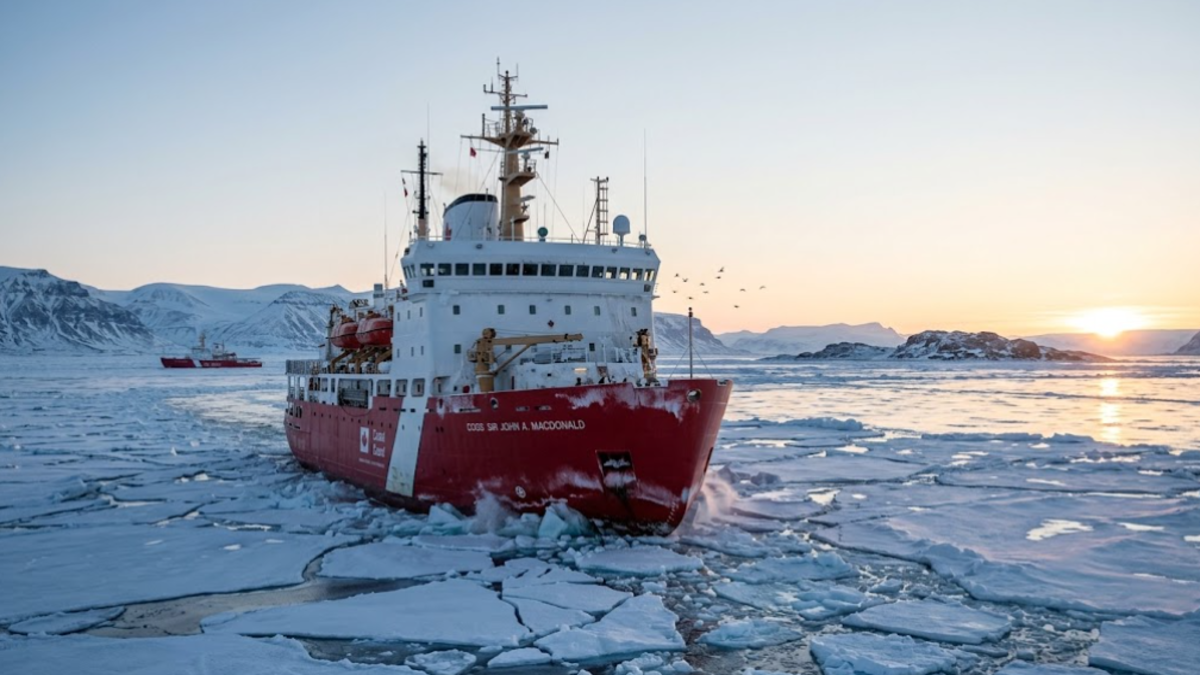
OTTAWA – Canadist: Canada icebreakers are at the centre of a major new investment as Prime Minister Mark Carney announced plans for more than C$11 billion to build six new vessels for the Canadian Coast Guard, a move Ottawa says will strengthen Arctic operations, maritime security and domestic shipbuilding. The ships will be constructed by Quebec-based Chantier Davie Canada Inc. in Lévis and will replace ageing heavy and medium icebreakers currently serving Canadian waters. What does the project mean for Canada’s Arctic presence, trade routes and shipbuilding industry?

Canada icebreakers project puts Arctic security in focus
The federal government has awarded Chantier Davie a C$11.3 billion contract, before taxes, for six new Program Icebreakers. The announcement represents the largest shipbuilding contract in Quebec’s history and gives the Lévis-based yard a central role in the renewal of the Canadian Coast Guard fleet.
Carney made the announcement in Lévis, Quebec, where the new vessels will be built. The project forms part of Canada’s broader effort to modernize its maritime capabilities while increasing the country’s ability to operate independently in the Arctic.
The six ships will replace existing heavy and medium icebreakers. Those vessels perform essential work in Atlantic Canada and the St. Lawrence waterways during winter, while operating in the Arctic during the summer months.

Their responsibilities extend well beyond breaking ice. The Coast Guard uses its icebreaking fleet to keep shipping routes open, escort vessels through difficult conditions and support communities that depend on reliable marine transportation.
The government also expects the new vessels to carry out search-and-rescue missions, environmental response operations, northern resupply missions and vessel traffic services. Their role will therefore combine economic, humanitarian and security responsibilities.
The announcement comes as Canada places greater emphasis on its northern territory and the strategic importance of Arctic waters. Ottawa has linked the modernization of its icebreaker fleet to the need to protect Canadian sovereignty and respond to increasing maritime activity in the region.
The Arctic has become more accessible as environmental conditions change, while governments and businesses are paying greater attention to northern shipping routes and resources. For Canada, that creates a need for vessels capable of operating in difficult waters while supporting communities and commercial activity.
The government’s official Program Icebreakers project page provides the detailed procurement information and contract figures.
Canada icebreakers deal strengthens domestic shipbuilding
The decision to award the project to Chantier Davie also carries an important industrial dimension. Ottawa wants the programme to create economic activity inside Canada rather than relying primarily on foreign shipyards for the construction of vessels required by the Coast Guard.
The ships will be manufactured in Lévis, and the government has said the programme will use Canadian steel and other domestic materials. The procurement is expected to support nearly 5,000 jobs during construction and contribute almost C$650 million annually to Canada’s gross domestic product.
Those figures give the programme significance beyond the Coast Guard itself. A shipbuilding contract of this size creates demand for steel producers, engineering firms, marine equipment suppliers, technology companies and smaller businesses that participate in the wider industrial supply chain.
It also gives Chantier Davie a long-term project pipeline. The company has already worked on Canadian Coast Guard and Royal Canadian Navy programmes, including vessel construction, conversion and maintenance.
Government records show that Davie received an initial C$19.6 million contract related to the Program Icebreakers in March 2024. That earlier agreement covered preliminary design work and project planning. The latest decision moves the programme from preparatory activity to the much larger design-and-build stage.
Chantier Davie joined Canada’s National Shipbuilding Strategy as its third strategic shipyard partner after a competitive process. The company joined Seaspan’s Vancouver Shipyards and Irving Shipbuilding in the federal strategy, giving Ottawa another major Canadian facility capable of handling large government vessel programmes.
The new order therefore represents an important test for the country’s long-term shipbuilding strategy. Canada has spent years attempting to create a more stable pipeline for naval and Coast Guard construction, with the objective of avoiding the long gaps between major vessel programmes that can weaken industrial capacity.
The six icebreakers will also require Canadian workers to develop specialized skills in the construction of vessels designed for severe ice conditions. That expertise could become increasingly valuable as Canada and other Arctic nations invest in new fleets.
Why the new vessels matter for Canada’s trade routes
Canada’s icebreaking capacity has a direct connection to the country’s economy. Winter conditions can restrict navigation in eastern Canadian waters, including parts of the St. Lawrence system and the Great Lakes.
Keeping those routes accessible helps commercial vessels move goods and supports industries that depend on marine transportation. In Atlantic Canada, icebreaking operations also assist shipping and commercial fisheries by clearing ice from harbours and waterways.
The Coast Guard’s responsibilities become even more demanding in the North. Arctic communities depend on annual marine resupply for essential goods, while ships operating in northern waters can encounter heavy ice and limited infrastructure.
The Program Icebreakers are intended to support northern resupply missions and provide icebreaking assistance to vessels travelling through Canadian Arctic waters. Their operations will therefore connect the country’s southern trade network with the needs of remote northern communities.
The government also sees the vessels as part of its response to the changing strategic environment in the Arctic. As more ships enter northern waters, Canada needs the ability to monitor activity, provide assistance and respond to emergencies over a vast geographical area.
That makes an icebreaker more than a commercial support vessel. It can provide a visible and practical Canadian presence in waters where distance, weather and ice can make operations difficult.
Carney has previously stressed the importance of ensuring that Canada can protect its Arctic territory without depending on another country. The latest investment fits that approach by expanding the Coast Guard’s ability to operate with modern Canadian-built vessels.
Canada already operates the world’s second-largest icebreaker fleet after Russia, according to reporting on the announcement. Its vessels also regularly assist ships, including U.S. vessels, travelling toward the Arctic.
The new programme is consequently aimed at preserving and modernizing an existing capability rather than creating an entirely new one.
A long construction programme lies ahead
The six ships will not enter service immediately. The project now moves into design and development, with Chantier Davie expected to continue work on the vessel designs before construction advances.
According to information released about the programme, construction is scheduled to begin with steel cutting in the next stage of the project. The first icebreaker is expected roughly five years after construction begins, while the complete six-ship fleet is planned to enter service by 2038.
That timetable illustrates the scale of the undertaking. Building six specialized icebreakers requires years of design, procurement, fabrication, testing and commissioning.
The government has already completed some of the preparatory work. The initial design contract awarded to Davie provided the shipyard with funding to evaluate requirements and develop the early design needed for the larger construction programme.
The next phase will allow the shipyard to develop basic, functional and production designs. Those stages are important because an icebreaker must combine conventional shipbuilding requirements with equipment and structural features suited to heavy ice conditions.
The programme also has to fit within the Coast Guard’s existing fleet renewal plans. Canada is pursuing other icebreaker projects at the same time, including two larger polar icebreakers intended to strengthen operations at higher Arctic latitudes.
The government says those polar vessels will become the most powerful icebreakers in the future Coast Guard fleet. One is associated with Chantier Davie, while the other is being developed at Seaspan’s Vancouver Shipyards.
The six Program Icebreakers will serve a different but complementary purpose. Rather than replacing the need for the larger polar vessels, they will renew the medium and heavy icebreaking capability used across Atlantic Canada, the St. Lawrence, the Great Lakes and the Arctic.
Canada’s Arctic strategy goes beyond shipbuilding
The icebreaker announcement is part of a broader Canadian effort to reinforce Arctic capabilities. Ottawa has increasingly linked maritime infrastructure, northern economic activity and national sovereignty.
The Coast Guard plays a particularly important role because its work combines public service with a continuing presence in remote waters. Its vessels can assist ships in distress, respond to environmental incidents, support northern communities and maintain navigation services.
The new fleet should improve that capacity as older ships reach the later stages of their service lives.
Government planning documents have previously highlighted the age and maintenance demands facing some Canadian icebreakers. Extending the useful lives of existing vessels has helped preserve capacity while replacement ships move through lengthy procurement and construction processes.
The new order aims to reduce the risk of a gap between the retirement of older ships and the arrival of replacements.
That issue matters because icebreaking capacity cannot easily be replaced at short notice. A shortage of suitable vessels can affect shipping, northern resupply and emergency response, particularly when several ships require maintenance at the same time.
The project also fits into Canada’s cooperation with Finland and the United States through the Icebreaker Collaboration Effort, or ICE Pact. The initiative seeks to strengthen cooperation on Arctic and polar icebreaker production, industrial capacity, technical knowledge and information sharing.
Canada’s relationship with Finland is particularly relevant because Finnish shipbuilders have extensive experience designing and constructing vessels for severe ice conditions. Ottawa has already used a Canadian-Finnish industrial model on other icebreaker projects.
The latest six-ship programme, however, places the construction work firmly at Chantier Davie’s facility in Quebec and emphasizes Canadian industrial participation.
What the C$11 billion investment means for Quebec
For Quebec, the project represents one of the most significant industrial orders in the province’s recent shipbuilding history.
The contract gives Chantier Davie a major long-term workload and strengthens Lévis as a centre for large-scale marine construction. The expected employment impact extends beyond the shipyard itself because each vessel requires materials, components, engineering services and specialized labour.
The government expects the project to involve Canadian manufacturers, suppliers and small and medium-sized businesses. That could distribute part of the economic benefit across the country rather than concentrating all activity at the shipyard.
The use of Canadian steel also adds another domestic industrial element to the programme. It reflects Ottawa’s broader preference for using federal procurement to strengthen Canadian supply chains.
The investment arrives at a time when governments are placing greater emphasis on supply-chain resilience and domestic production. For Canada, the ability to construct strategically important vessels at home can reduce exposure to foreign industrial bottlenecks.
The programme may also leave a longer-term skills legacy. Large shipbuilding projects require welders, electricians, engineers, designers, project managers, marine technicians and many other specialists. Maintaining that workforce can make it easier for Canadian yards to compete for future domestic and international orders.
Chantier Davie has already received substantial federal work. Government and industry information shows that the company has secured billions of dollars in Canadian contracts since becoming involved in major Coast Guard and naval programmes.
The strategic importance of Canada’s northern waters
Canada has one of the world’s longest coastlines, and a substantial part of it lies in the Arctic. Maintaining a practical ability to operate there requires more than aircraft, surveillance systems or military assets.
Ships capable of moving through ice provide another layer of presence and response.
For the Coast Guard, that presence has a civilian purpose. Its vessels help maintain safe navigation, support communities and respond to emergencies. At the same time, regular operations in northern waters reinforce Canada’s ability to demonstrate effective control and stewardship of its Arctic territory.
The six new icebreakers will therefore serve several objectives at once.
They will replace ageing vessels, support trade, assist northern communities, improve emergency response and strengthen Arctic operations. The government also views them as part of a wider effort to make Canada more self-reliant in protecting its northern interests.
The challenge now is execution. Large shipbuilding programmes often take many years and require careful management of costs, schedules and industrial capacity.
The government has committed the funding and selected the builder. The next question will be how efficiently the programme moves from design to steel cutting, construction, testing and delivery.
For Canada, the stakes are substantial. The country is investing more than C$11 billion not simply in six vessels, but in the infrastructure, workforce and maritime capabilities that those vessels represent.
If the programme stays on schedule, the Coast Guard will eventually receive a renewed fleet capable of supporting Canadian waters for decades. The first major milestone will be the transition from design work to physical construction, followed by the delivery of the first ship.
Until then, the announcement marks the beginning of a long industrial and maritime project designed to give Canada stronger control over its northern waters and greater confidence in its ability to keep vital shipping routes open.
FAQ
How much will Canada spend on the six icebreakers?
The federal government has awarded a contract worth C$11.3 billion before taxes for six Program Icebreakers.
Who will build the new icebreakers?
Quebec-based Chantier Davie Canada Inc. will build the six vessels at its shipyard in Lévis, Quebec.
What will the new icebreakers replace?
The vessels will replace the Canadian Coast Guard’s ageing heavy and medium icebreakers that operate in Atlantic Canada, the St. Lawrence waterways, the Great Lakes and the Arctic.
When will the fleet be completed?
The programme is expected to deliver the first vessel about five years after construction begins, with the full six-ship fleet planned to enter service by 2038…More
Contact: info@canadaalyom.com