

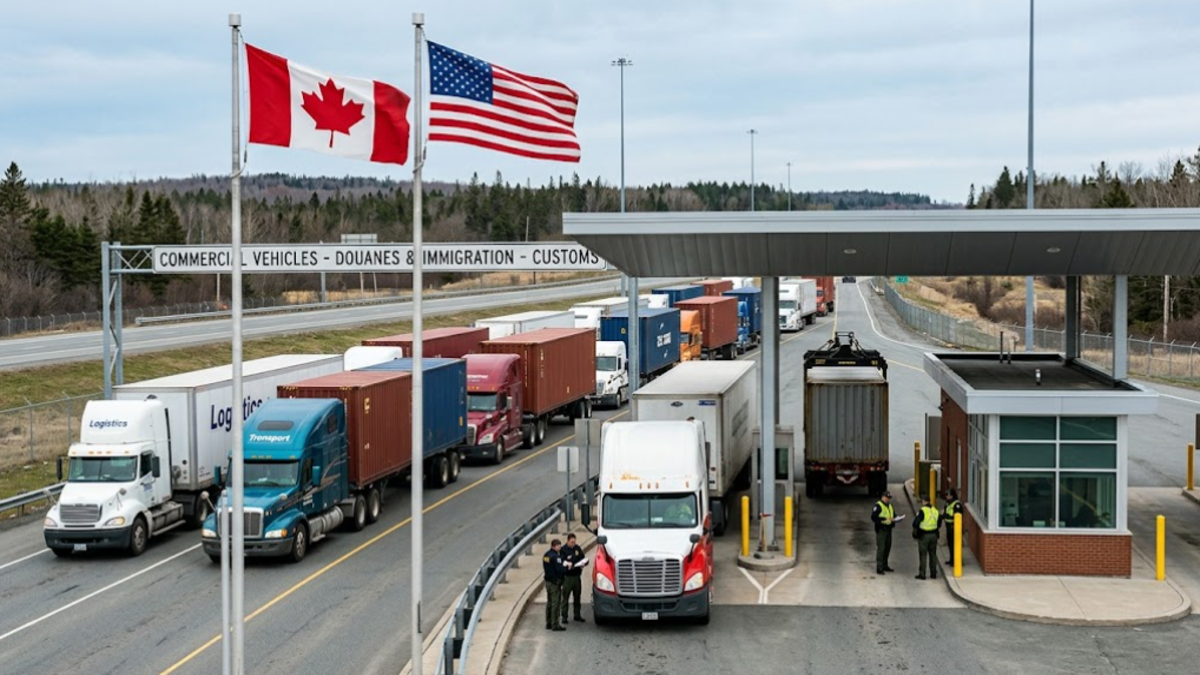
OTTAWA – Canadist: Quebec independence loses momentum as Trump’s tariffs reshape the political debate

Quebec independence has suddenly become a much bigger political story in Canada, but not for the reason separatists might have expected. Instead of strengthening the case for a break with Ottawa, President Donald Trump’s trade confrontation with Canada appears to be making sovereignty less attractive to many Quebecers.
A new Reuters report says support for a rapid move toward independence has fallen to roughly 30%, while the economic uncertainty created by U.S. tariffs is encouraging some Quebecers to see Canada as a source of stability rather than an obstacle to their future. The shift comes as Quebec approaches a provincial election and the Parti Québécois remains a major force in the political debate. So could Trump’s tariffs actually push Quebec away from independence?
Quebec independence faces an unexpected political problem
For decades, Quebec nationalism has drawn strength from the province’s distinct language, culture and political identity. The idea that Quebec should control its own political destiny has never disappeared, even after voters rejected sovereignty in two referendums.

The current debate, however, has developed under unusually difficult circumstances.
Trump’s trade policy has created a level of uncertainty that makes the economic consequences of any constitutional rupture harder for voters to ignore. Quebec has a highly integrated economy, with businesses and workers exposed to international trade, particularly trade with the United States.
That reality matters.
When the political question is framed primarily around identity, autonomy and French-language culture, independence can appear to some voters as a way to gain greater control. But when the discussion turns to tariffs, jobs, investment and access to markets, the risks become much more immediate.
Reuters reported that the latest U.S. tariff measures have hit Quebec’s steel and aluminum industries particularly hard. One Quebec manufacturer saw orders for bolts and fasteners fall by about one-third in less than a week after the tariff announcement. The company responded by halting hiring, closing a plant and cutting 140 jobs, most of them in Quebec.
Those numbers help explain why the sovereignty question has acquired a different tone.
The issue is no longer simply whether Quebec should become a country. Voters are also asking what would happen to businesses, workers and household finances if the province entered an already uncertain North American economic environment on its own.
That is a much harder political proposition to sell.
The Canadian government’s own trade measures show the scale of the confrontation. Ottawa has been working to protect Canadian workers and businesses while responding to U.S. tariffs, and official information on Canada’s tariff response remains available through Global Affairs Canada and the federal government’s tariff information.
The political consequence may be just as important as the economic one.
Trump’s rhetoric about Canada becoming the 51st state has also produced a strong emotional reaction in Quebec. Reuters says that the pressure from Washington has contributed to an outpouring of Canadian patriotism in a province that has historically been one of the country’s strongest sources of separatist politics.
That development puts Quebec nationalists in an awkward position.
Trump’s tariffs are changing the independence argument
The Parti Québécois has not abandoned the goal of sovereignty. Its leader, Paul St-Pierre Plamondon, has continued to argue that Quebec should eventually have the opportunity to choose independence.
But the timing has changed.
Plamondon has said that a Parti Québécois government would not hold an independence referendum while Trump remains president. The decision reflects a political calculation: a sovereignty vote conducted during a period of intense American political turbulence could make the debate more difficult and potentially distort the choice facing Quebec voters.
The separatist leader has emphasized the need for a calmer environment in which Quebecers can consider independence on its own merits.
That position represents a striking development.
The Parti Québécois has been preparing for a provincial campaign in which the sovereignty question was expected to play an important role. Yet the party now faces a situation in which the international environment may be working against its central constitutional objective.
The United States is supposed to be one of the most important economic partners for an independent Quebec. Instead, Trump’s policies have made the American relationship look unpredictable.
For some voters, that can strengthen the argument for Canada.
The logic is straightforward. If Quebec already faces uncertainty because of decisions made in Washington, why introduce another layer of uncertainty by leaving Canada?
That question does not necessarily eliminate support for sovereignty. It does, however, change the political calculation.
Reuters reported that support for independence is now around 30%, described as its lowest level in decades. The figure is particularly significant because the Parti Québécois can remain politically competitive without having a majority of Quebecers behind independence.
Those two things are not the same.
A party can gain support because voters approve of its provincial policies, its leadership or its criticism of the government without necessarily supporting its constitutional objective.
That distinction could become central to the coming campaign.
The Parti Québécois has a stronger electoral position than its independence cause
The Parti Québécois has emerged as a serious contender in Quebec politics, but its electoral performance should not automatically be interpreted as evidence of a surge in separatism.
That is one of the most important points in the current debate.
A voter can support the Parti Québécois because of its position on health care, housing, immigration, language policy or provincial autonomy while remaining opposed to independence.
The party therefore faces a delicate balancing act.
It needs to appeal to voters who want stronger Quebec nationalism without frightening those who see sovereignty as economically risky. The trade dispute with Washington makes that challenge even more complicated.
The provincial election is scheduled for October 5, according to Élections Québec, adding another deadline to the political calendar. The official election authority says Quebec’s next provincial general election is set for that date, while the formal election period is expected to run for between 33 and 39 days.
That campaign will take place against a backdrop of heightened concern about Canada’s economic relationship with the United States.
The timing could influence how voters interpret the sovereignty debate.
If the U.S. trade conflict continues to create uncertainty, opponents of independence will have a powerful argument: Quebec needs the economic and political weight of Canada while dealing with a much larger neighbour.
Separatists can offer a different response.
They can argue that the trade dispute demonstrates the vulnerability of Quebec inside Canada and that an independent Quebec should ultimately control its own foreign, economic and trade policies.
But that argument becomes difficult when voters are worried about immediate economic consequences.
Independence is a long-term constitutional project. Tariffs can affect orders, production and jobs almost immediately.
That difference in timing gives federalists a significant political advantage.
Why the American factor matters so much in Quebec
The relationship between Quebec nationalism and the United States has always been complicated.
Quebec has a distinct cultural identity within Canada, but it is also geographically and economically close to the United States. American markets are important to Quebec companies, while cross-border commerce supports businesses and jobs across the province.
That makes Trump’s policies particularly consequential.
His threats against Canada and his repeated rhetoric about American expansion have created an unusual political dynamic. Rather than encouraging Quebecers to distance themselves from Canada, the pressure from Washington appears to be reinforcing the idea that Canada provides an important layer of protection.
Reuters described the effect as a rise in Canadian patriotism in Quebec.
That is politically significant because separatist movements traditionally depend on a strong sense that the existing federation is failing to protect the province’s interests.
The current situation can produce the opposite perception.
If Quebecers believe Canada is standing up to Washington, defending its workers and negotiating from a stronger position as part of a larger country, the practical case for remaining in Canada becomes easier to make.
This does not mean Quebec nationalism is disappearing.
It means the meaning of nationalism is changing.
A Quebecer can strongly support French-language protections, provincial autonomy and Quebec’s distinct identity while also believing that Canada is the better framework for dealing with the United States.
That combination could become one of the defining political realities of the coming election.
The economic argument could overshadow the cultural one
The sovereignty movement has historically relied heavily on questions of language, identity and political control.
Those issues remain important.
But economic uncertainty can dominate political conversations remarkably quickly.
The latest tariff dispute provides a clear example. Quebec manufacturers that depend on American customers cannot easily separate constitutional politics from commercial reality. A business owner facing lost orders is likely to ask what policy will protect the company’s future, regardless of whether that policy comes from Quebec City, Ottawa or Washington.
The steel and aluminum sectors illustrate the problem particularly clearly.
U.S. tariffs can make Canadian products more expensive in the American market. That can reduce demand, squeeze companies and eventually affect employment. The effects can spread through suppliers and communities even when a company does not export directly to the United States.
For an independence campaign, that environment creates a difficult message.
An independent Quebec would still have to negotiate with the United States. It would still need trade agreements. It would still face the same geographic reality of sharing a continent with a vastly larger economy.
Supporters of sovereignty could argue that independence would give Quebec greater control over those negotiations.
Opponents can answer that Quebec already has a seat at the table as part of Canada and that separation would create additional uncertainty precisely when economic stability matters most.
The latter argument appears to be gaining traction.
A referendum is now a question of timing, not only support
The latest developments have moved the Quebec independence debate away from the question of whether a referendum is theoretically possible and toward a more practical question: when would it make political sense?
The Parti Québécois has already indicated that it would delay a referendum until after Trump’s presidency.
That decision effectively acknowledges that the current American political environment could overwhelm the sovereignty debate.
A referendum campaign requires voters to consider a major constitutional change. It would involve questions about citizenship, borders, trade, currency, public debt, institutions and Quebec’s future relationship with Canada.
Those questions would be difficult enough without an unpredictable trade relationship with the United States.
The party’s decision therefore reflects a strategic concern.
A referendum held during an intense confrontation with Washington could allow opponents to portray independence as an unnecessary additional risk. It could also turn a debate about Quebec’s identity into a debate about economic security.
For separatists, that is not necessarily the terrain they want.
The independence movement historically performs best when the discussion centers on Quebec’s distinctiveness and political aspirations. The current debate increasingly centers on stability.
And stability tends to favor the status quo.
What the tariff dispute means for Quebec’s political future
The most important development may not be a dramatic collapse in Quebec nationalism but a change in priorities.
The latest polling and political statements suggest that many Quebecers are not eager to make independence an immediate project while relations with Washington remain volatile.
That does not settle the sovereignty question.
Quebec has already held two referendums, and the issue has survived repeated political setbacks. The Parti Québécois remains capable of winning significant electoral support, and the province retains a strong nationalist movement.
But the current environment is different.
Trump’s tariffs have introduced a powerful external factor into a debate that was traditionally dominated by Canadian and Quebec politics.
The United States has effectively become part of Quebec’s constitutional conversation.
That could have consequences far beyond the next election.
If the trade conflict eventually eases, support for independence could change again. If economic tensions persist, however, the argument for maintaining the Canadian federation could remain stronger.
The situation also demonstrates why political support for a party should never be confused with support for its most ambitious constitutional objective.
The Parti Québécois may perform strongly at the polls while independence remains a minority position.
That distinction will matter enormously when politicians interpret the election result.
Could Trump unintentionally strengthen Canada?
There is an obvious irony in the current situation.
Trump has repeatedly criticized Canada and has used rhetoric that challenges Canadian sovereignty. Yet those actions may be encouraging some Quebecers to identify more strongly with Canada.
The Reuters report suggests precisely that.
Instead of convincing Quebecers that Canada is an unnecessary political structure, the pressure from Washington may be reminding them of the value of belonging to a larger country.
That does not mean Quebecers suddenly feel less attached to their province.
It means provincial identity and Canadian identity are not necessarily competing at every moment.
During periods of economic and geopolitical uncertainty, they can reinforce one another.
For federalist politicians, this is an opportunity.
For separatists, it is a warning.
The sovereignty movement must now explain why independence would make Quebec more secure at a moment when its largest external economic partner is using tariffs and political pressure against Canada.
That is a much harder question than simply asking whether Quebec should have greater autonomy.
The answer will depend partly on how the trade conflict develops, but also on how voters interpret the risks.
For now, the evidence points toward caution.
Support for Quebec independence has fallen to around three in ten, according to the Reuters report, while the Parti Québécois itself has acknowledged that the timing of a referendum is no longer straightforward.
The immediate political lesson is clear: Trump’s trade strategy has not simply created an economic dispute between Washington and Ottawa. It has altered the domestic political conversation inside Quebec.
And if that shift continues, one of Canada’s oldest constitutional debates could enter a very different phase.
FAQ
Is support for Quebec independence falling?
Yes. Reuters reports support at roughly 30%, described as its lowest level in decades.
Will Quebec hold an independence referendum soon?
The Parti Québécois leader has said his party would not hold a referendum while Trump remains president.
Why are tariffs affecting the independence debate?
Economic uncertainty has made voters more concerned about stability, jobs and access to markets, potentially making separation less attractive.
Does support for the Parti Québécois mean support for independence?
Not necessarily. Voters can support the party’s provincial policies without supporting its goal of Quebec sovereignty.
Contact: info@canadaalyom.com