

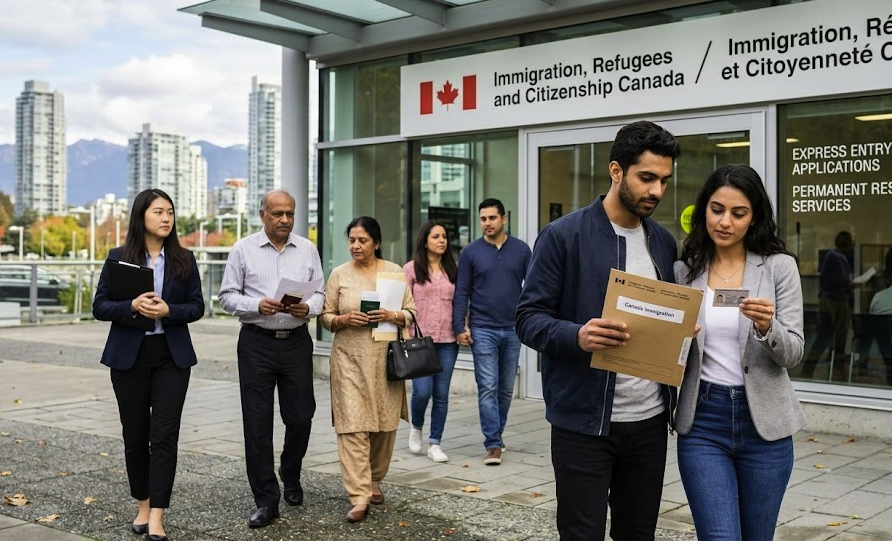
Ottawa – Canadist: The dream of establishing a new life in North America draws hundreds of thousands of skilled professionals, ambitious students, and families toward Canadian borders every single year. Obtaining a Canada permanent residency remains a top priority for global talent due to the nation’s exceptional quality of life, robust economic stability, and inclusive social systems. However, navigating the immigration landscape is far from a random lottery. The Canadian immigration framework operates on highly structured, transparent, yet uncompromising point-based evaluation models and legal benchmarks.

Many aspiring applicants mistake the welcoming nature of Canadian immigration policies for simplicity, assuming the process is straightforward and lenient. In reality, the pathway involves meticulous legal steps, strict criteria, and complex paperwork where even a minor clerical error can halt an entire immigration journey. How can individuals successfully secure their residency through official channels, and what critical mistakes must they avoid to prevent a definitive rejection from immigration authorities?
Navigating the Official Pathways to Canadian Permanent Residency
The Power of the Express Entry System
The primary mechanism for managing economic immigration applications is the highly efficient Express Entry gateway. This system coordinates three major federal programs: the Federal Skilled Worker Program, the Federal Skilled Trades Program, and the Canadian Experience Class. Instead of a traditional first-come, first-served methodology, it utilizes the Comprehensive Ranking System (CRS) to evaluate candidates.
The system scores applicants based on a specific set of core human capital parameters, which include:

Age: Maximum points are awarded to candidates within prime working-age brackets.
Educational Attainment: Higher degrees, especially those evaluated via an Educational Credential Assessment (ECA), significantly boost scores.
Professional Work Experience: Continuous, skilled employment history in high-demand occupations adds substantial weight.
Language Proficiency: Verified test scores in English (IELTS/CELPIP) or French (TEF/TCF) serve as critical score determinants.
Candidates enter a highly competitive pool, and Immigration, Refugees and Citizenship Canada (IRCC) issues Invitations to Apply (ITAs) directly to the highest-ranking individuals during regular electronic draws.
The Provincial Nominee Programs (PNP)
Canada consists of diverse provinces and territories, each possessing distinct economic realities and demographic challenges. To balance regional labor market needs, the Provincial Nominee Program allows individual provinces to establish unique immigration streams. These programs target specific niches, such as tech workers in British Columbia, healthcare professionals in Nova Scotia, or agricultural experts in the prairies. Receiving a provincial nomination is highly advantageous, as it automatically injects 600 additional points into an Express Entry candidate’s CRS score, virtually guaranteeing an invitation for permanent status.
[Express Entry Profile Entered] ➔ [Provincial Stream Selects Candidate] ➔ [+600 CRS Points Awarded] ➔ [Immediate ITA Issued]
Strategic Education and Employment Pathways
Pursuing higher education at a Designated Learning Institution (DLI) is widely considered one of the most reliable long-term strategies for securing a Canada permanent residency. International students can work part-time during their academic semesters, gaining valuable local exposure. Upon graduation, they frequently qualify for a Post-Graduation Work Permit (PGWP), enabling them to transition into full-time skilled employment. This Canadian work experience significantly enhances their eligibility under the Canadian Experience Class program.
Similarly, obtaining a valid, official job offer from a Canadian employer can open immediate immigration doors. To count toward permanent residency points, most employers must secure a positive Labor Market Impact Assessment (LMIA) from the government, proving that no local citizen or permanent resident was available to fill the position.
Critical Application Blunders That Lead to Immediate Rejections
Misrepresentation and Inaccurate Data Entry
According to immigration guidelines published by the Canadian authorities, entering inaccurate data or providing inconsistent timelines within an application is treated with extreme severity. IRCC draws a very sharp legal line between honest mathematical errors and willful misrepresentation. If an immigration officer determines that an applicant inflated their work experience, altered employment dates, or failed to declare a previous visa refusal to any country, the application is not merely rejected. The individual faces a mandatory five-year ban from entering Canada or submitting any future immigration applications under allegations of fraud.
Inadequate Language Scores and Missing Documentation
Language testing is an absolute hurdle that catches many highly qualified candidates off guard. Submitting an application with language test results that fall even a fraction below the National Occupational Classification (NOC) requirements results in an automatic system rejection.
Furthermore, checking document checklists thoroughly is vital. A complete application requires police clearance certificates from every country the applicant resided in for more than six months, detailed reference letters matching specific corporate formats, and certified translations of non-English documents. If a single document is missing, unreadable, or expired, the processing center immediately closes the file as incomplete, forcing the applicant to restart the entire process from scratch.
Economic Sufficiency and Program Alignment
Demonstrating Settlement Funds
A frequent reason for the refusal of economic class visas is the inability to prove sufficient settlement funds. The Canadian government requires unencumbered, liquid funds to ensure that newcomers can support themselves and their dependents during their initial job search phase.
| Number of Family Members | Purpose of Settlement Funds | Acceptable Proof of Capital |
| 1 (Single Applicant) | Initial housing, food, and transport costs | Official bank certification letters, liquid savings accounts |
| 2 (Couples/Dependents) | Basic family maintenance without social assistance | Liquid asset statements, unencumbered personal funds |
| 3 or more (Families) | Long-term household establishment security | Clear financial tracks free of borrowed loans or debts |
As outlined above, borrowed funds, real estate assets, or future employment projections cannot be used to satisfy this financial requirement. The money must be completely free of debts or liens and held in accounts under the primary applicant’s name at the time of submission and throughout the processing period.
Program Incompatibility
Selecting an inappropriate immigration stream is another widespread mistake. Applicants often apply for programs without confirming that their specific job duties align with the official training, education, experience, and responsibilities (TEER) categories. Simply having a matching job title is insufficient; the core daily duties performed must closely match the official occupational descriptions listed in the Canadian structural matrix.
Maximizing the Probability of Application Success
Achieving success within the selective Canadian immigration network demands absolute precision, strategic planning, and patience. To maximize selection chances, candidates should focus heavily on improving their language capabilities, as scoring a Canadian Language Benchmark (CLB) level 9 or higher yields significant bonus points within the Express Entry scoring system. Additionally, evaluating credentials early and keeping a close eye on changing provincial demand lists allows applicants to pivot their strategies quickly when specific economic streams open.
For verified, up-to-date guidance on immigration rules, forms, and point calculators, applicants should always rely exclusively on the official portal of Immigration, Refugees and Citizenship Canada, ensuring they are following current legal pathways instead of outdated third-party advice.
Frequently Asked Questions
What is the fastest pathway to obtain permanent residency in Canada?
The Express Entry system is currently the fastest pathway for skilled immigrants, processing complete electronic applications in approximately six months once an invitation to apply is issued.
Is it possible to immigrate to Canada without a formal job offer?
Yes, pathways such as the Federal Skilled Worker Program managed under Express Entry do not mandate a Canadian job offer, provided the candidate scores high enough across human capital criteria.
Can a student visa be converted directly into permanent residency status?
A student visa itself does not convert automatically; however, graduation enables students to obtain an open work permit to acquire the local skilled experience needed for permanent programs.
What are the primary reasons for the refusal of Canadian immigration files?
Most rejections stem from incomplete documentation, data contradictions, low language scores, insufficient settlement funds, or choosing an immigration stream that mismatches the applicant’s background.
In summary, securing a pathway to establish long-term roots in Canada is an achievable goal for those who treat the application process with rigor, accuracy, and thorough preparation. By understanding the functional realities of point-based selection systems and actively avoiding common documentation pitfalls, applicants can navigate the immigration system smoothly and safely turn their relocation aspirations into reality.…More
Contact: info@canadaalyom.com