

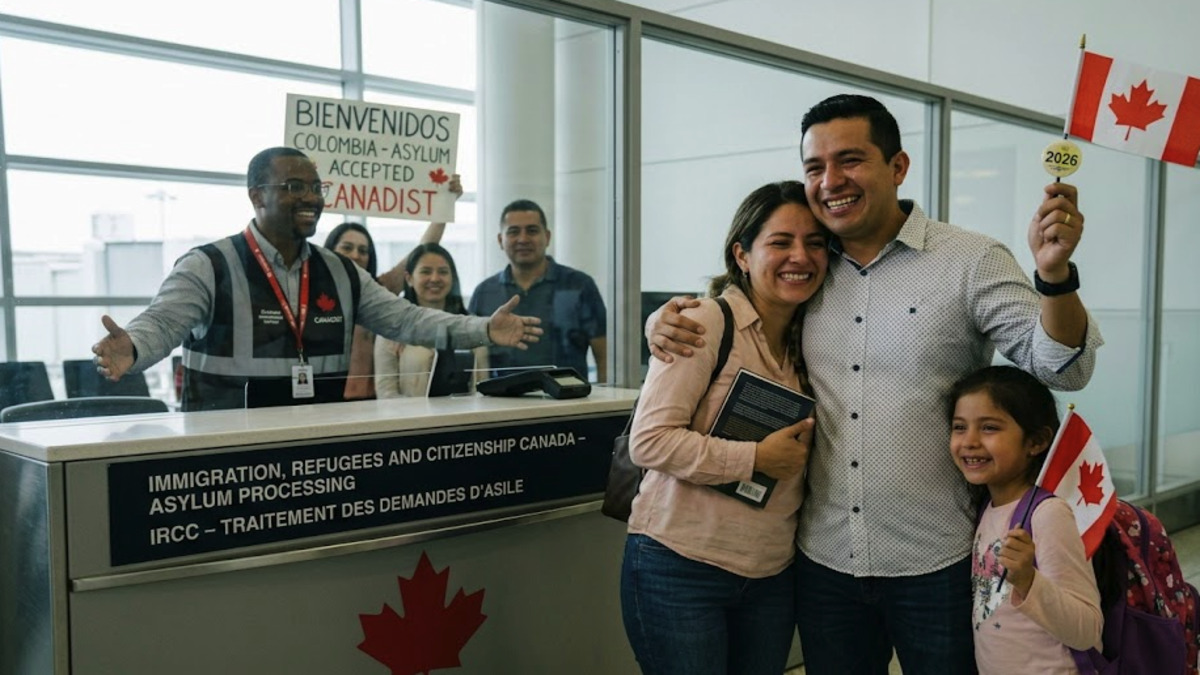
OTTAWA – CANADIST: In a world where borders are closing and walls are rising, the rate of Asylum Acceptance in Canada stands as a testament to a system that still believes in the power of immigration. While European nations are mired in political infighting over their borders, Canada has quietly perfected a model that balances humanitarian duty with economic necessity. But don’t be fooled—it’s not an open-door policy; it’s a smart-door policy.

As we analyze the global migration trends of 2026, the contrast is stark. In France and Sweden, the conversation is about “how many can we keep out?” In Canada, the conversation is “who can we help succeed?” This fundamental difference in perspective has made Canada the top choice for those looking for more than just a temporary permit. They are looking for a future. The Asylum Acceptance process here is transparent, structured, and, most importantly, designed to end in citizenship, not deportation.
The Strategic Edge: How Canada Manages Asylum Acceptance
What sets Canada apart from the chaos of Asylum in Europe is geography and intention. Europe is currently dealing with nearly a million applications a year, many of them arriving through irregular and dangerous Migration Routes. Canada, protected by two oceans, has the luxury of choosing its arrivals. This allows for a much higher quality of care and a more dignified Asylum Acceptance process.
Unlike the New Migration Laws in Sweden that force seekers into “reception centers,” Canada’s laws focus on integration from day one. If you are accepted as a refugee in Canada, you are given a path to work, to learn, and to bring your family. It is a long-term investment in human capital. We see this in the data: Canada’s acceptance rates for humanitarian cases remain high because the public sees migration as a positive force for the nation’s aging workforce.

Migration Routes: From Peril to Security
The Migration Routes to Canada are primarily legal. Whether through the Express Entry system for skilled workers or through UNHCR resettlement programs, people arrive in Canada via an airplane, not a wooden boat. This eliminates the trauma of the journey and allows the Asylum Acceptance process to begin in a stable environment.
The Role of Family Reunification in Canada’s Success
A key pillar of the Canadian system is Family Reunification. Canada understands something that Sweden and France seem to have forgotten: a migrant with a family is a migrant who integrates.
Fast-Tracked Sponsorship: Canada has reduced the waiting times for spouses and children to some of the lowest in the Western world.
A Holistic Approach: The focus isn’t just on the “head of the household” but on the family unit as a whole.
In 2026, while Europe is busy tightening the rules on who can bring their children, Canada is making it easier. This policy not only helps the migrants but also ensures that the next generation grows up as part of the Canadian fabric.
The Impact of New Migration Laws on Global Trends
While the EU passes New Migration Laws that speed up deportations and restrict movement, Canada is passing laws that target specific labor shortages. The “Pathways to Permanent Residency” are being expanded for healthcare workers, engineers, and teachers. This means that for many, the path to Asylum Acceptance isn’t just about escaping a war; it’s about joining a thriving economy.
In France, the system is bogged down by a bureaucracy that seems to enjoy saying “no.” In Sweden, the laws have become so restrictive that they are almost hostile. Canada remains the “gold standard” because its laws are predictable. If you follow the rules, you are rewarded with a life of security. It is a simple social contract that is proving to be incredibly resilient in a volatile world.
Why Canada is the Logical Choice
If you are looking at the global map of migration, the choice is clear. Asylum in Europe has become a lottery of uncertainty. Spain offers some hope, but its economy is still recovering. France and Sweden are tightening their belts. Canada, however, offers a clear, legal, and dignified path. The Asylum Acceptance rates here are not just numbers on a page; they represent lives transformed.
As we conclude our report for CANADIST, the message is simple: Canada isn’t just a destination; it’s a partner in your success. In a world of closing doors, the “True North” remains strong, free, and open.
FAQ
Does Canada accept asylum seekers who arrive at the border spontaneously?
Yes, but the process is much more rigorous than for those who arrive through pre-vetted resettlement programs.How long does it take to get a work permit after asylum acceptance?
In most cases, you can apply for a work permit almost immediately after your claim is deemed eligible.Are the new migration laws making it harder for unskilled workers?
Yes, Canada is increasingly focusing on “targeted skills,” but humanitarian pathways remain open for those in genuine danger.Can I bring my parents through family reunification?
Canada has a specific “Parents and Grandparents Program,” though it is based on a lottery system due to high demand.
Contact: info@canadaalyom.com