
VICTORIA – Canadist: Vancouver police bravery award honours Vancouver woman Marina Pereira after she rushed to save a man who had been set on fire and then helped police identify the suspected attacker. Pereira, who found herself witnessing the violent incident while waiting for her husband, used her backpack to put out the flames before following the suspect and directing officers to him. How did an ordinary afternoon turn into an extraordinary act of courage?

Vancouver police bravery award recognizes split-second courage
Marina Pereira has received the Vancouver Police Board’s Award of Merit after taking action during a frightening incident in downtown Vancouver. The honour recognizes civilians who step into dangerous situations to help save a life or assist police in preventing a crime or apprehending an offender.
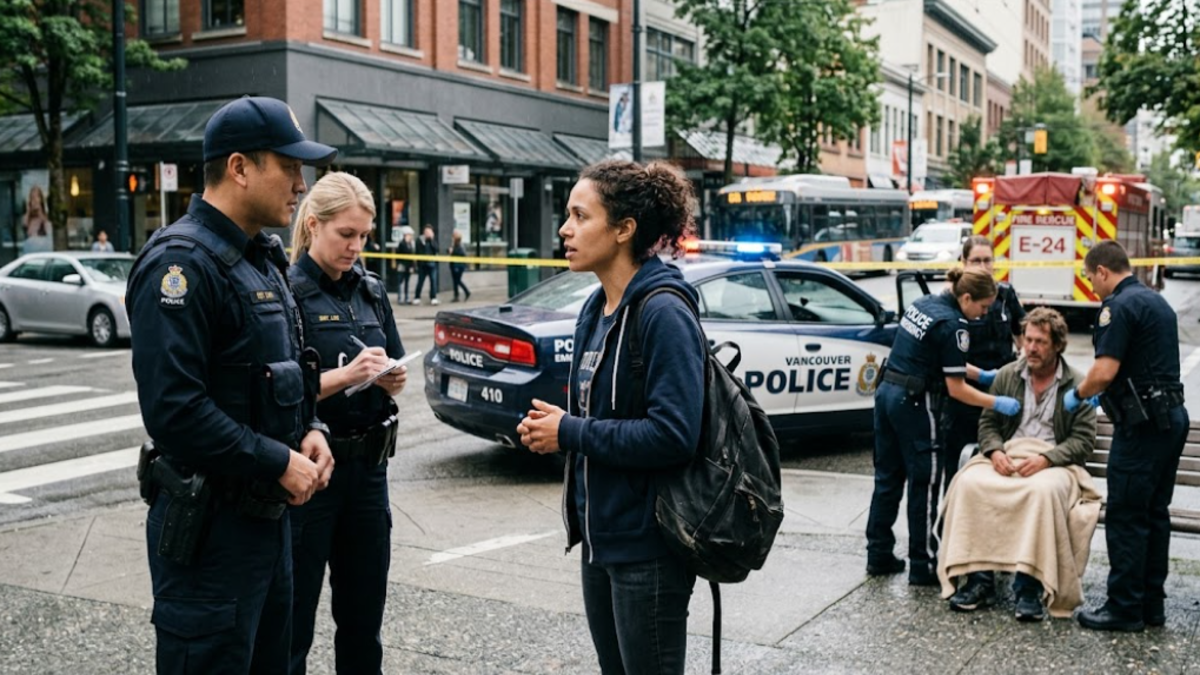
Pereira earned the recognition after a violent attack near Abbott and West Pender streets. She had been waiting for her husband when she noticed a man approach another person who was sleeping in an alley.
The man poured liquid over the sleeping person and then set him on fire. According to the Vancouver Police Department’s account, the attacker walked away after igniting the victim.

Pereira did not stay at a safe distance or wait for emergency crews to arrive. She immediately moved toward the victim and used her backpack to extinguish the flames.
That first decision placed her close to an active and potentially dangerous attack. Her response, however, did not stop once the fire went out.
Pereira also made the decision to follow the suspect. She kept him in sight while waiting for an opportunity to alert police, exposing herself to another possible confrontation.
Moments later, two patrol officers drove through the area. Pereira flagged them down, explained what she had witnessed and pointed to the man she had followed.
Her account gave police an immediate direction to pursue. The department’s award publication says Pereira’s actions helped prevent the victim from suffering more serious injuries and helped officers identify and take the suspect into custody.
The sequence of events explains why the Vancouver Police Board selected Pereira for its highest recognition for civilian bravery. The award does not simply honour someone who witnessed a crime. It recognizes a civilian who chooses to act despite actual or anticipated danger.
For Pereira, that choice came twice: first when she moved toward a person who was on fire, and again when she followed the suspect instead of walking away.
The incident that led to the Vancouver police bravery award
The incident happened on the afternoon of August 20, 2024, near Abbott and West Pender streets in downtown Vancouver. Pereira was waiting for her husband when she saw the confrontation unfold in an alley.
The victim had been sleeping when the suspect approached him. The suspect poured liquid over the man and set him ablaze before calmly leaving the scene.
The description in the police award publication presents a rapid series of decisions. Pereira saw the flames, moved toward the victim, and used the backpack she had with her to extinguish them.
Police later determined that the suspect had a history of similar criminal activity. That history included an incident in which he set fire to a makeshift shelter while people were sleeping inside.
That detail adds another layer to Pereira’s actions. She confronted a person whose previous conduct, according to police, included another dangerous fire incident involving sleeping people.
The official account also makes clear that Pereira continued to act after she extinguished the flames. She followed the suspect and maintained visual contact until police officers came through the area.
When the patrol officers appeared, Pereira immediately drew their attention to what had happened. She identified the suspect for them and showed officers where he was.
The police account credits her intervention with two significant results. It helped protect the victim from potentially much more serious harm, and it helped police locate the person suspected of carrying out the attack.
The Vancouver Police Department has described the Award of Merit as the Vancouver Police Board’s highest award for civilian bravery. The recognition goes to community members who act on their own initiative in dangerous circumstances to save lives or support police efforts against crime.
The department’s official account of the award can be read in its Beyond the Call publication, which documents the actions of citizens and police personnel who receive commendations.
Pereira’s story stands out because she had no official emergency role when the incident began. She did not arrive as a firefighter, paramedic or police officer. She encountered an unfolding emergency and decided to intervene.
That distinction matters in understanding the award. Her recognition reflects an individual civilian response to a sudden and serious threat rather than an action carried out as part of a professional duty.
Why Marina Pereira’s response drew police recognition
The Vancouver Police Board’s Award of Merit sets a high standard for civilian recognition. The board gives it to community members who act independently and face real or anticipated danger while attempting to save a life, prevent a crime, or help police apprehend an offender.
Pereira’s actions fit both sides of that standard.
Her first priority was the burning victim. Instead of waiting for someone else to respond, she approached the flames and used her backpack to stop the fire.
She then shifted her attention to the suspect. Following a person who had just committed a violent act created its own danger, yet Pereira kept the man within sight.
That decision proved important because she could identify him when the patrol officers arrived. Her immediate account gave the officers a direct lead while the suspect remained nearby.
The award publication emphasizes that Pereira placed her own safety at risk while following the suspect. It also states that, without her intervention, the victim could have faced serious injury or worse and the attacker might not have been found.
Those observations explain the board’s choice more clearly than the award title alone. Pereira did not perform a single dramatic act and then disappear from the story. She remained engaged through several stages of the emergency.
First, she responded to the burning victim. Then she tracked the suspect. Finally, she communicated what she had seen directly to police.
The result created a bridge between the immediate rescue and the police response.
That kind of civilian assistance can become crucial during a fast-moving incident. Police officers who arrive moments later rely on witnesses for descriptions, directions and context. In this case, Pereira provided all three.
Her actions also show how quickly an ordinary moment can become a public-safety emergency. She had been waiting for her husband when she suddenly found herself watching a violent attack.
The incident did not give her time to prepare or assess the situation from a position of safety. She had to make an immediate choice.
She chose to help.
A civilian response with consequences beyond the rescue
The story has significance beyond the award itself because Pereira’s actions affected both sides of the incident: the person who needed immediate help and the police investigation that followed.
The victim needed someone to stop the flames. Pereira did that with the backpack she was carrying.
Police needed to know who had committed the attack and where that person had gone. Pereira followed the suspect and then pointed him out to responding officers.
The two parts of her response worked together. Her intervention at the scene addressed an immediate threat to life, while her decision to keep the suspect in sight supported the subsequent police response.
According to the police account, investigators later learned that the suspect had a history of similar criminal behaviour involving fire. That information reinforced the seriousness of the threat Pereira had encountered.
Police did not present Pereira as someone who simply happened to provide a useful description. Instead, the department specifically recognized her courage, quick thinking and willingness to place herself at risk.
That distinction is central to civilian bravery awards. In a dangerous incident, helping someone can mean moving toward a threat while understanding that personal safety may also be at stake.
Pereira made that choice without knowing how the suspect might react.
She also had no guarantee that police would arrive quickly. When officers finally passed by, she acted immediately and directed their attention to the suspect.
The award therefore recognizes more than the successful outcome. It recognizes the decisions Pereira made before she knew how the incident would end.
The Vancouver Police Board’s wording around the Award of Merit also places emphasis on initiative. Civilians receive the honour when they act on their own rather than simply following an official instruction.
Pereira’s case illustrates that principle directly.
She saw someone in danger, intervened, followed the suspected attacker and alerted officers. Each step came from her own decision to remain involved.
A reminder of the role civilians can play in public safety
The Marina Pereira case also highlights the often-unpredictable role that witnesses can play during emergencies.
Police officers and emergency crews have formal responsibilities, training and equipment. Civilians generally do not have those same resources, yet they may become the first people to encounter someone in immediate danger.
Pereira’s experience shows what can happen when a witness chooses to help rather than simply observe.
Her response began with a backpack, not specialized equipment. That ordinary object became the tool she used to extinguish the flames and help the victim.
The next stage depended on observation and communication. Pereira kept the suspect in view and then gave police the information they needed to locate him.
The police recognition also places her story within a broader tradition of civilian assistance in Vancouver. The Award of Merit exists specifically to recognize members of the community who step forward during dangerous circumstances.
Pereira’s case carries particular weight because the threat involved fire, a sleeping victim and a suspect who, according to police, had allegedly carried out similar acts before.
That combination created a serious and unpredictable situation.
Her actions prevented the fire from continuing and helped police move quickly toward the suspect.
The Vancouver Police Department’s account does not provide details about the victim’s identity or the full legal status of the suspect. It does, however, describe the police response as a successful effort that resulted in the dangerous individual being taken into custody.
For readers following crime and public safety in Vancouver, the incident offers a clear example of how eyewitness actions can influence the course of an emergency.
For Pereira, the recognition provides official acknowledgment of a decision that began with a simple instinct: help someone who was in immediate danger.
Her response carried personal risk, but she chose to act.
What the award means for Vancouver
The Award of Merit also sends a wider message about the relationship between police and the communities they serve.
By recognizing civilian intervention, the Vancouver Police Board signals that public safety does not depend exclusively on police action. Members of the public can also play a role when they witness an emergency.
That does not make civilians responsible for confronting dangerous suspects. Pereira’s case was exceptional precisely because her actions involved significant risk.
Her story instead illustrates the value of responsible intervention and timely communication when circumstances demand an immediate response.
The police board’s award criteria make that principle clear. The honour recognizes civilians who attempt to save lives or assist police in preventing crimes and apprehending offenders.
Pereira’s actions covered both areas.
She helped a man who had been set on fire, and she then helped police identify the person suspected of attacking him.
The recognition also preserves an important detail that can sometimes disappear in coverage of violent crime: the actions of the people who help victims.
News of an attack naturally focuses attention on the suspect, the investigation and the danger. Pereira’s story adds another element — a member of the public who refused to stand by while a stranger faced a potentially life-threatening situation.
Her courage became part of the official record through the Vancouver Police Board’s highest civilian bravery honour.
For the victim, Pereira’s intervention may have changed the course of the incident. For police, her description and identification helped move the investigation forward.
For Vancouver, the award highlights a civilian who took action at a moment when another person needed help most.
FAQ
What is the Vancouver Police Board’s Award of Merit?
It is the board’s highest award for civilian bravery. It recognizes community members who act independently in dangerous situations to help save a life or assist police.
Who received the award in this case?
Vancouver woman Marina Pereira received the Award of Merit for rescuing a man who had been set on fire and helping police identify the suspect.
When did the fire attack happen?
The incident occurred on August 20, 2024, near Abbott and West Pender streets in downtown Vancouver.
How did Pereira help police?
She followed the suspect after extinguishing the flames, kept him in sight, and pointed him out to two patrol officers when they arrived.
Contact: info@canadaalyom.com