

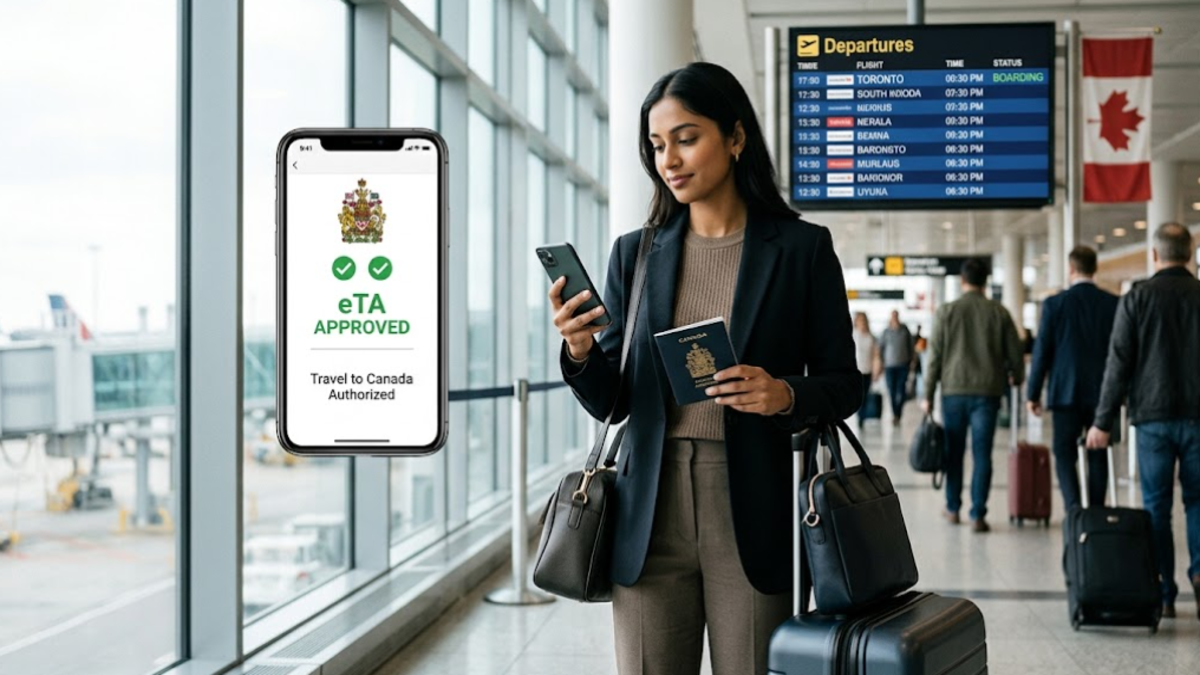
OTTAWA – Candist: How long does a Canadian eTA take? For travellers preparing to fly to Canada, the answer is often much quicker than expected, but not every application follows the same timetable. Most electronic travel authorizations are approved within minutes, while some applications can require additional checks and take several days. So, what should travellers know before submitting an eTA application?

Canada’s electronic travel authorization, commonly known as an eTA, remains one of the quickest entry-related requirements for eligible foreign nationals travelling to Canada by air. The authorization is electronically linked to the passport used during the application, meaning travellers generally do not need to carry a separate paper document once approval has been granted.
Canadian immigration authorities say most applicants receive confirmation within minutes. However, the government also warns that some applications require additional processing. In those cases, applicants can receive an email within 72 hours explaining what happens next.
The difference between an application that is approved almost immediately and one that takes longer is important for travellers with flights already booked. An eTA is not something passengers should leave until the last moment simply because many applications are processed quickly.

How long does a Canadian eTA take? The official answer
The short answer is that a Canadian eTA usually takes only a few minutes.
According to Canada’s immigration authorities, most applicants receive their eTA approval by email shortly after submitting the online application. The official processing guidance describes the normal timeframe as “within minutes,” although some applications can take several days.
The government advises travellers to obtain the authorization before booking their trip to Canada. This recommendation reflects a basic reality of international travel: an application that normally takes minutes can still require additional attention in individual cases.
For applications that need further processing, the authorities say applicants can expect an email within 72 hours of applying. That message provides information about the next steps and may indicate that additional information or documentation is required.
Travellers should therefore distinguish between the normal processing time and the maximum period that may apply when an application cannot be approved immediately.
The vast majority of applicants should not expect a lengthy wait comparable to some Canadian visa or immigration applications. An eTA is a different travel authorization, and its electronic processing system is designed to handle eligible applications rapidly.
The Canadian government currently lists the eTA fee at CAN$7. The application is completed online, and applicants need the passport they intend to use when travelling to Canada.
Why can a Canadian eTA take several days?
Although many applications are processed automatically within minutes, Canada’s immigration authorities acknowledge that some cases require more time.
One reason is the need to verify information supplied by the applicant. The government says processing times can depend on factors including whether an application is complete and how easily officials can verify the information provided.
The authorities also consider whether they need additional information from the applicant.
This means that a longer wait does not automatically indicate a problem with the application. In some cases, the file simply requires additional review before a final decision can be made.
Applicants should also pay close attention to the information entered into the application. A mistake in a passport number, for example, can create serious travel problems even after an authorization has been issued.
The eTA is electronically connected to the passport used in the application. The airline checks the traveller’s passport electronically when the passenger prepares to board a flight to Canada.
That makes accuracy particularly important.
If an applicant receives an approval but later discovers that the passport number in the approval email does not match the passport being used for travel, the traveller may need to submit a new application.
The authorization does not function independently of the passport. It is tied to the specific travel document supplied during the application process.
What happens if the eTA is not approved immediately?
An application that does not produce an immediate approval should not necessarily cause alarm.
Canadian immigration authorities explain that some requests require several days to process. In these cases, the applicant receives an email with further instructions.
The government says applicants should monitor the email address used on the application and check their junk or spam folder. Automated messages can sometimes be filtered by email providers, potentially causing travellers to miss an important notification.
This is particularly relevant for people who are travelling soon.
If an application enters additional processing, the applicant should follow the instructions in the message rather than submitting repeated applications without understanding what happened to the first one.
The key timeframe provided by the Canadian government is 72 hours for an email explaining next steps when an application requires additional processing.
That does not mean every delayed application will be fully approved within 72 hours. Rather, the communication tells the applicant what is required next.
Travellers should therefore avoid interpreting the 72-hour period as a guaranteed approval deadline.
The safest approach is to apply well before the planned flight, even when the normal processing time is only a few minutes.
How long does a Canadian eTA take when documents are requested?
An application can take longer when Canadian authorities request supporting documents or additional information.
The government’s eTA guidance specifically notes that some requests can take several days if applicants are asked to submit supporting documentation.
This creates a second stage in the process. Instead of receiving an immediate automated decision, the traveller may need to respond to a request before officials can continue assessing the application.
The time required can consequently depend on how quickly the applicant responds and whether the information supplied is sufficient.
Applicants should read every message from Immigration, Refugees and Citizenship Canada carefully. Missing a request or failing to provide the requested information can make the process more complicated.
For this reason, travellers who have an upcoming flight should not rely on the shortest possible processing time.
An eTA application may be straightforward for one person and require additional review for another. The online process is designed to be quick, but the final timeframe depends on the individual application.
This is also why travellers should provide complete and accurate information from the beginning.
A carefully completed application reduces the possibility of unnecessary complications and makes it easier for Canadian authorities to verify the information provided.
Why travellers should apply before booking a flight
Canada’s immigration authorities recommend obtaining an eTA before booking travel.
That advice may seem cautious given that most applications are approved within minutes, but it reflects the possibility of additional processing.
For travellers making expensive international arrangements, securing the required authorization early can provide greater certainty.
An eTA is required for eligible visa-exempt foreign nationals travelling to Canada by air. It is not a general replacement for a Canadian visa, and travellers should determine which entry document applies to their nationality and circumstances before travelling.
Those who already hold a valid Canadian visa generally do not need an eTA for the same purpose, according to Canada’s official guidance.
The distinction between an eTA and a visa is important because the two documents serve different purposes and apply to different categories of travellers.
An applicant should therefore confirm eligibility before beginning the eTA application.
The online authorization is also specifically connected to air travel. Having an eTA does not mean that every foreign national can automatically enter Canada under every circumstance.
Border officers retain authority to determine whether a traveller meets Canada’s entry requirements when they arrive.
For that reason, travellers should consider the eTA as one part of their preparation rather than the only requirement for entering Canada.
What travellers should check after receiving approval
Receiving the approval email is not necessarily the final step for travellers.
Canadian immigration authorities advise applicants to check the passport number shown in the approval email and compare it with the passport they will use for their journey.
This is one of the most important checks because the eTA is electronically linked to the passport used in the application.
If the numbers do not match, the authorization may not work when the traveller reaches the airline check-in stage.
Travellers generally do not need to print a separate eTA document. The airline can verify the authorization electronically using the passport.
However, keeping the approval email and eTA number available can still be useful. The Canadian government says applicants should keep the eTA number in case they need to contact authorities or check the status of their authorization.
Checking the approval details before leaving for the airport can prevent an avoidable problem.
The traveller should also make sure that the passport itself remains valid for the planned journey and that all other applicable Canadian entry requirements have been satisfied.
Is a Canadian eTA always approved within minutes?
No.
Although approval within minutes is the normal experience for most applicants, Canadian authorities explicitly state that some applications can take several days.
The difference is important because online travel authorizations can create the impression that every application is automatically approved immediately.
That is not the case.
The government says processing can vary depending on the type of application, whether the application is complete, how quickly officials can process applications already received, how easily information can be verified and whether the applicant needs to respond to questions or concerns.
These factors mean that no responsible traveller should treat the “within minutes” timeframe as a guaranteed deadline.
Instead, it should be understood as the normal processing experience for most eligible applicants.
A traveller with a departure date approaching should apply as early as possible and monitor email communications closely.
This is especially important when the application does not receive an immediate approval.
Canadian eTA applications remain largely digital
One of the main advantages of the eTA system is its digital nature.
Applicants submit the required information online, pay the applicable fee and receive communication electronically. Once approved, the authorization is linked to the passport.
There is therefore no requirement for travellers to wait for a physical visa label or paper authorization to arrive by mail.
The digital process also means that travellers should use an email address they regularly monitor when completing the application.
The official Canadian instructions specifically tell applicants to check their junk folder because messages from immigration authorities can sometimes be filtered automatically.
This simple step can be particularly important when an application requires further action.
A missed email could leave a traveller unaware that additional information has been requested.
What the latest guidance means for travellers
The latest Canadian government guidance provides a relatively clear picture: most eTA applications are processed within minutes, but applicants should allow additional time because some cases require further review.
For travellers, the practical message is straightforward.
Do not wait until the airport, the day before departure or the final hours before a flight to apply simply because the normal processing time is short.
Instead, complete the application early, provide accurate passport information, monitor the email account used for the application and respond promptly if Canadian authorities request additional information.
The 72-hour communication timeframe is particularly relevant when an application is not immediately approved. Applicants in that situation should look for an email explaining what they need to do next.
The Canadian government also recommends obtaining an eTA before booking travel, reinforcing the importance of planning ahead.
For eligible travellers, the eTA process is considerably faster than many other Canadian immigration procedures. But speed should not be confused with a guarantee of instant approval.
A few minutes is the usual experience. Several days remains possible.
That distinction could make the difference between a smooth journey and an avoidable travel disruption.
How long does a Canadian eTA take before a flight?
For most eligible travellers, the answer remains: only a few minutes.
However, the safest travel strategy is to apply well before the planned departure date. This gives applicants time to deal with an unexpected request for supporting documents or additional information.
Once approval arrives, travellers should check the passport number in the email carefully. The passport used for the journey must correspond to the passport used in the eTA application.
Airlines can verify the authorization electronically, so travellers generally do not need to present a printed eTA document at check-in.
The process may therefore be fast, but accuracy remains essential.
For people who are still waiting after applying, the most important step is to monitor their email and junk folder. If Canadian immigration authorities need further information, the instructions will be sent electronically.
The current guidance does not establish one universal processing time for every applicant. Instead, it gives a normal expectation and recognizes that individual applications can take longer.
That is why the answer to the question “How long does a Canadian eTA take?” should always include both parts: most applications are approved within minutes, while some can take several days.
FAQ
How long does a Canadian eTA take?
Most applicants receive their Canadian eTA approval within minutes, although some applications can take several days.
Can a Canadian eTA take more than 72 hours?
The authorities say applicants whose requests require additional processing should receive an email within 72 hours explaining the next steps. That communication timeframe should not be interpreted as a guarantee that the final decision will arrive within 72 hours.
Does a Canadian eTA need to be printed?
No. Once approved, the eTA is electronically linked to the passport used in the application. Travellers should still keep their approval information available.
What should I do if my eTA has not arrived?
Check the email account used for the application, including the junk or spam folder. If Canadian immigration authorities require additional information, they will provide instructions by email.
Contact: info@canadaalyom.com