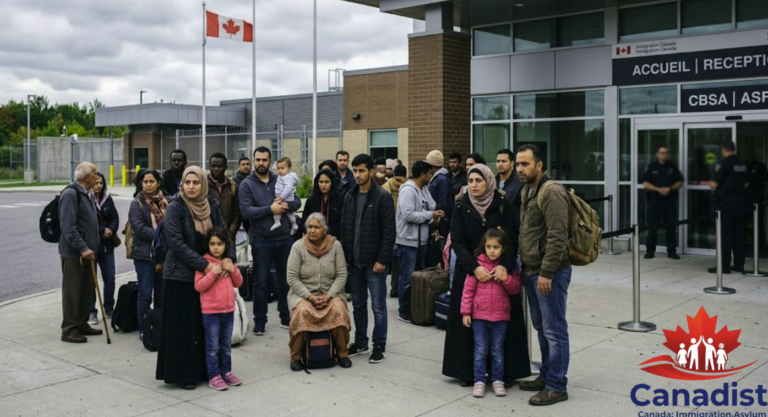


Canada’s 2027–2029 Immigration Levels Plan: Permanent Residence Targets, Student Numbers and New Pathways
Canada has released its 2027–2029 Immigration Levels Plan, confirming a strategy focused on stabilising immigration, prioritising skilled workers and managing the number of temporary residents entering the country. Published on November 5, 2026, the plan sets annual targets of 380,000 permanent residents and 370,000 new temporary resident arrivals for each of the three years.

The announcement provides greater clarity for international students, foreign workers, families, skilled professionals and people seeking protection in Canada. It also introduces a time-limited measure intended to help certain people already living in the country transition to permanent residence.
For prospective immigrants, the central message is that Canada is maintaining relatively stable overall admission numbers while placing greater emphasis on economic needs, regional labour shortages and applicants who are already contributing to Canadian communities.
Canada’s 2027–2029 Immigration Plan: The Main Figures
The new immigration plan maintains the same annual headline targets throughout the three-year period.

| Immigration category | 2027 | 2028 | 2029 |
|---|---|---|---|
| Permanent residents | 380,000 | 380,000 | 380,000 |
| New temporary residents | 370,000 | 370,000 | 370,000 |
| Temporary workers | 220,000 | 220,000 | 220,000 |
| International students | 150,000 | 150,000 | 150,000 |
These figures refer to different immigration processes and should not be confused.
The permanent residence target covers people receiving permanent resident status, including applicants already living in Canada. Temporary resident targets concern new arrivals under the international student and temporary worker programs.
The government says this approach is intended to provide greater predictability for employers, educational institutions, provinces and territories while keeping immigration at more sustainable levels.
Permanent Residence: Economic Immigration Takes Priority
Economic immigration will account for 64.4% of planned permanent resident admissions throughout the period, making it the largest category under the new plan.
The government intends to attract candidates whose professional experience and qualifications respond to Canada’s economic priorities. This includes people who can address persistent labour shortages and contribute to the development of regional communities.
The main permanent residence allocations are:
| Immigration category | Annual target |
|---|---|
| Federal High Skilled | 100,000 |
| Provincial Nominee Program (PNP) | 95,000 |
| Federal Economic Pilots | 7,900 in 2027 |
| Rural Community Immigration Program | 5,500 in 2027 |
| Atlantic Immigration Program | 6,000 |
| Federal Business | 1,500 in 2027 |
| Total Economic Immigration | 244,700 |
Figures refer to the 2027 targets. Individual program ranges and subsequent annual allocations may differ.
Express Entry and skilled workers
Express Entry remains a central mechanism for selecting economic immigrants.
The Federal High Skilled allocation covers three major programs:
Federal Skilled Worker Program.
Federal Skilled Trades Program.
Canadian Experience Class.
The government also plans to continue reforms to Express Entry and its Comprehensive Ranking System (CRS), with selection increasingly aligned with labour market requirements.
Priority areas identified by IRCC include:
Healthcare and medical professions.
Education.
Construction and skilled trades.
Artificial intelligence and digital innovation.
Defence.
Energy.
Critical minerals.
This direction suggests that candidates with relevant qualifications, professional experience and language skills will remain important to Canada’s economic immigration strategy.
However, the immigration levels plan does not guarantee invitations to candidates in any particular occupation. Express Entry eligibility, CRS scores, category-based selection requirements and individual draw results will continue to determine who can receive an invitation.
Provincial Nominee Program receives a major allocation
The Provincial Nominee Program will have an annual target of 95,000 admissions throughout the plan.
This programme allows participating provinces and territories to nominate candidates who meet their economic and labour market requirements.
For applicants, this reinforces the importance of looking beyond federal immigration routes. A candidate who does not receive an invitation through a federal Express Entry draw may still find an opportunity through a provincial pathway, provided they meet the relevant requirements.
The Atlantic Immigration Program will also have a target of 6,000 admissions annually.
Canada is placing particular emphasis on regional immigration because smaller communities, rural areas and remote regions face labour shortages that cannot always be addressed through recruitment in major cities.
Family Reunification and Humanitarian Immigration Remain in the Plan
Although economic immigration receives the largest share, Canada has maintained substantial allocations for family reunification and humanitarian protection.
The annual targets are as follows:
| Category | Annual target |
|---|---|
| Spouses, partners and children | 66,000 |
| Parents and grandparents | 15,000 |
| Total Family Class | 81,000 |
| Protected persons in Canada and dependants abroad | 20,000 |
| Government-assisted resettled refugees | 11,750 |
| Privately sponsored refugees | 17,550 |
| Total Refugees and Protected Persons | 49,300 |
| Humanitarian and Compassionate and Other | 5,000 |
The Family Class represents 21.3% of planned permanent resident admissions, while refugees and protected persons account for 13%.
The humanitarian and compassionate category represents a further 1.3%.
These allocations demonstrate that the government intends to maintain family reunification and Canada’s humanitarian commitments while giving economic immigration the largest share of available permanent residence spaces.
New Measure Could Help Up to 200,000 People Already in Canada
One of the most significant announcements accompanying the immigration plan is a temporary measure designed to accelerate permanent residence for people who are already living in Canada.
The government intends to provide additional admissions space in 2027 for up to 200,000 people through two separate groups.
Up to 200,000 people
1. Workers cohort: Up to 100,000 people
The first group will focus on workers already established in Canada, together with their accompanying family members.
The federal government will work with provinces and territories to identify people who can contribute to regional labour market needs.
The measure will involve additional Provincial Nominee Program allocations and selected federal immigration applications.
The government specifically identifies applications under:
Atlantic Immigration Program.
Start-up Visa Program.
Self-Employed Persons Program.
Agri-Food Pilot.
Home care worker programs.
Some of these programmes are closed to new applications. Their inclusion in the measure concerns eligible applications already submitted, rather than an announcement that the programmes will reopen.
The measure is intended to help workers who have established themselves in Canadian communities move towards permanent residence.
2. Humanitarian cohort: Up to 100,000 people
The second group will focus on individuals already in Canada who have experienced lengthy waits for permanent residence decisions.
The government has identified several areas where additional processing capacity will be used:
Remaining applications under the Hong Kong permanent residence pathways.
Applications under the Ukraine Family Reunification Pathway.
Applications from people already found eligible for permanent residence on humanitarian and compassionate grounds.
Applications from spouses, common-law partners and dependent children of Canadian citizens and permanent residents who are already living in Canada.
The government also aims to bring processing times closer to 12 months for the spouse or common-law partner class outside Quebec.
This is a stated objective, not a guarantee that every application will be processed within that timeframe.
Important: The measure does not establish an unrestricted new permanent residence programme for anyone currently in Canada. It is directed at specific cohorts and existing application pathways. The detailed implementation and individual eligibility requirements must be confirmed through IRCC.
What About the 115,000 Protected Persons and 33,000 Work Permit Holders?
The new announcement also confirms the continuation of previously announced one-time initiatives.
These initiatives, originally announced through Budget 2025, aim to accelerate the transition to permanent residence of:
Up to 115,000 protected persons in Canada and their dependants already in Canada.
33,000 work permit holders.
Implementation is scheduled across 2026 and 2027.
These existing initiatives should be distinguished from the newly announced measure involving up to 200,000 people.
They are separate government commitments and should not automatically be added together as if they represented one single immigration programme with a common eligibility process.
International Students: 150,000 New Arrivals Per Year
International students remain an important part of Canada’s immigration system, but the government is maintaining a more controlled approach to new arrivals.
The plan sets a target of 150,000 new international student arrivals annually.
This figure is part of the overall temporary resident target of 370,000.
It does not mean that every international student will have access to a study permit. Applicants must still satisfy the requirements of the International Student Program, including admission to an eligible Designated Learning Institution and the applicable study permit conditions.
There is also an important distinction between new arrivals and people who are already studying in Canada.
IRCC excludes certain in-Canada permit extensions and changes of status from the new-arrival targets. Post-Graduation Work Permits are also not counted as new arrivals under the relevant targets.
For prospective students, the announcement does not introduce an automatic route from studying in Canada to permanent residence.
Graduates may still qualify through relevant economic immigration programmes, but eligibility depends on their individual circumstances and the rules in force when they apply.
Temporary Foreign Workers: 220,000 New Arrivals Annually
Canada will maintain an annual target of 220,000 new temporary workers.
These arrivals are divided between two programmes:
| Programme | Annual target |
|---|---|
| International Mobility Program (IMP) | 170,000 |
| Temporary Foreign Worker Program (TFWP) | 50,000 |
| Total | 220,000 |
The International Mobility Program includes work permits issued under international agreements and other streams that do not generally require a Labour Market Impact Assessment (LMIA).
The Temporary Foreign Worker Program is designed to help employers fill specific positions when qualified Canadian citizens or permanent residents are not available.
For most positions under the relevant TFWP streams, employers need an LMIA before a closed work permit can be issued.
The figures do not represent the total number of foreign workers who will be physically present in Canada. They concern specified new arrivals and exclude certain categories, including seasonal workers who enter and leave within the same calendar year.
For foreign nationals considering employment in Canada, the plan confirms that work opportunities remain available, but it does not remove the need for a qualifying job offer where required, employer compliance or the relevant work permit.
French-Speaking Immigration Outside Quebec Will Increase
Another important feature is Canada’s commitment to strengthening Francophone communities outside Quebec.
The government has established the following targets for French-speaking permanent residents outside Quebec:
| Year | Target |
|---|---|
| 2027 | 9.5% |
| 2028 | 10.5% |
| 2029 | 12% |
The objective is to increase the number of French-speaking newcomers settling in provinces and territories where Francophone minority communities contribute to Canada’s linguistic and cultural diversity.
This policy may create opportunities for eligible French-speaking candidates interested in settling outside Quebec.
It also reinforces the importance of French-language skills in Canada’s immigration strategy.
However, meeting the overall Francophone targets does not mean that every French-speaking applicant will qualify for permanent residence. Candidates must still satisfy the conditions of the immigration programme through which they apply.
Quebec has a separate immigration selection framework under the Canada–Quebec Accord, and its own 2027 immigration targets were still to be published when the federal plan was announced.
What the New Plan Means for People Planning to Immigrate to Canada
The new targets provide useful guidance, but their impact will vary depending on the applicant’s situation.
Here is what different groups should consider.
People applying through Express Entry
Economic immigration remains the largest category. Candidates should monitor CRS requirements, category-based draws and changes to federal economic programmes rather than assuming that the overall target guarantees an invitation.
International students
The annual target remains at 150,000 new arrivals. Prospective students should check study permit requirements, institutional eligibility and the conditions for studying in Canada before making financial commitments.
Temporary foreign workers
The government continues to allocate substantial space to temporary workers. Applicants should focus on legitimate employers, valid job opportunities and the correct work permit route.
Workers already living in Canada
The new transition measure could be particularly relevant to people with existing applications under selected provincial and federal programmes. However, inclusion is not automatic, and applicants should wait for specific IRCC instructions.
Families seeking reunification
Family sponsorship remains an important part of Canada’s immigration strategy. The additional humanitarian processing measure may also help certain family applications already in the system.
French-speaking candidates
The increasing targets outside Quebec strengthen the government’s commitment to Francophone immigration. Candidates with French-language ability may wish to investigate the available federal and provincial pathways.
Important Details: What Is Confirmed and What Could Still Change?
Although the plan has been officially announced, not every figure should be interpreted as an unconditional guarantee.
There are several details applicants should understand:
Permanent residence targets: The annual headline target is 380,000, with an overall operational range of 352,500 to 422,000.
Temporary resident targets: The annual target is 370,000, with a range of 355,000 to 385,000.
Future adjustments: The 2028 and 2029 targets are notional and may be confirmed or adjusted in subsequent annual plans.
Programme allocations: Individual immigration categories have operational ranges, allowing the government to respond to changing priorities and processing pressures.
Quebec: The province’s separate immigration targets were still pending.
New transition measure: The government has announced the two cohorts and their intended scope, but applicants should not assume that all eligibility and processing instructions have already been published.
The levels plan establishes the government’s admission objectives. It does not replace the legislation, regulations or eligibility requirements governing individual immigration applications.
What Should Prospective Immigrants Do Now?
Anyone considering Canada as a destination should approach the announcement as a planning reference rather than an immediate opportunity to submit a new application.
The following steps can help:
Check eligibility for Express Entry and the Provincial Nominee Program.
Review provincial immigration streams, particularly those targeting regional labour shortages.
Prepare recognised language test results where required.
Obtain an educational credential assessment if applicable.
Verify that potential employers and job offers are legitimate.
Check study permit requirements before paying tuition or other significant expenses.
Monitor official IRCC announcements for changes to programme requirements and application procedures.
Applicants already in Canada should also check their application status and follow official instructions rather than assuming that they will automatically benefit from the new temporary measure.
Our Editorial Assessment: A More Selective Approach to Canadian Immigration
The 2027–2029 Immigration Levels Plan signals a continuation of Canada’s shift towards more controlled and economically targeted immigration.
Maintaining 380,000 permanent resident admissions annually provides a degree of predictability, while allocating 64.4% of admissions to economic immigration demonstrates the government’s priorities.
The decision to reserve additional processing capacity for people already living in Canada is also significant. It recognises that temporary residents, established workers and families with long-standing applications are already part of Canadian communities.
However, the effectiveness of this strategy will depend on implementation. Stable targets alone cannot resolve processing delays, regional labour shortages or the difficulties faced by applicants navigating changing immigration requirements.
From our perspective, prospective immigrants should pay particular attention to provincial pathways, skilled worker selection and the development of the new transition measures. These areas could be especially relevant as Canada seeks to balance economic growth with more sustainable population levels.
The announcement is an important policy development, but it should not be interpreted as a general expansion of eligibility or a guarantee of permanent residence for people wishing to move to Canada.
Frequently Asked Questions
1. How many immigrants will Canada accept between 2027 and 2029?
Canada plans to admit 380,000 permanent residents annually, equivalent to a headline target of 1.14 million over the three years. The plan also sets an annual target of 370,000 new temporary resident arrivals.
2. Will Canada reduce the number of international students?
The plan maintains the target at 150,000 new international student arrivals annually. This is not an increase in the number of available study permits for every applicant, and all existing eligibility requirements continue to apply.
3. Can temporary workers in Canada obtain permanent residence under the new plan?
The government has announced a temporary measure intended to help up to 100,000 workers, together with their families, transition to permanent residence. The measure will involve selected existing applications and provincial collaboration. It does not provide automatic permanent residence to every temporary worker.
4. Which immigration category receives the largest number of permanent residence places?
Economic immigration receives the largest allocation, with a target of 244,700 admissions in 2027, representing 64.4% of planned permanent resident admissions.
5. Will French-speaking immigrants have more opportunities outside Quebec?
The government has set increasing Francophone permanent residence targets outside Quebec: 9.5% in 2027, 10.5% in 2028 and 12% in 2029. These targets support Francophone immigration but do not guarantee admission to individual applicants.
Official Sources
1. Immigration, Refugees and Citizenship Canada (IRCC) — Supplementary Information for the 2027–2029 Immigration Levels Plan
Official immigration targets and category allocations
2. Immigration, Refugees and Citizenship Canada — Building a Stronger Canada Through a Well-Managed, Predictable Immigration System
Government backgrounder on the new immigration plan
3. Government of Canada — Canada’s Immigration Levels
Official immigration targets and programme explanations
4. Government of Canada — Budget 2026, Chapter 3: A More Affordable Life