

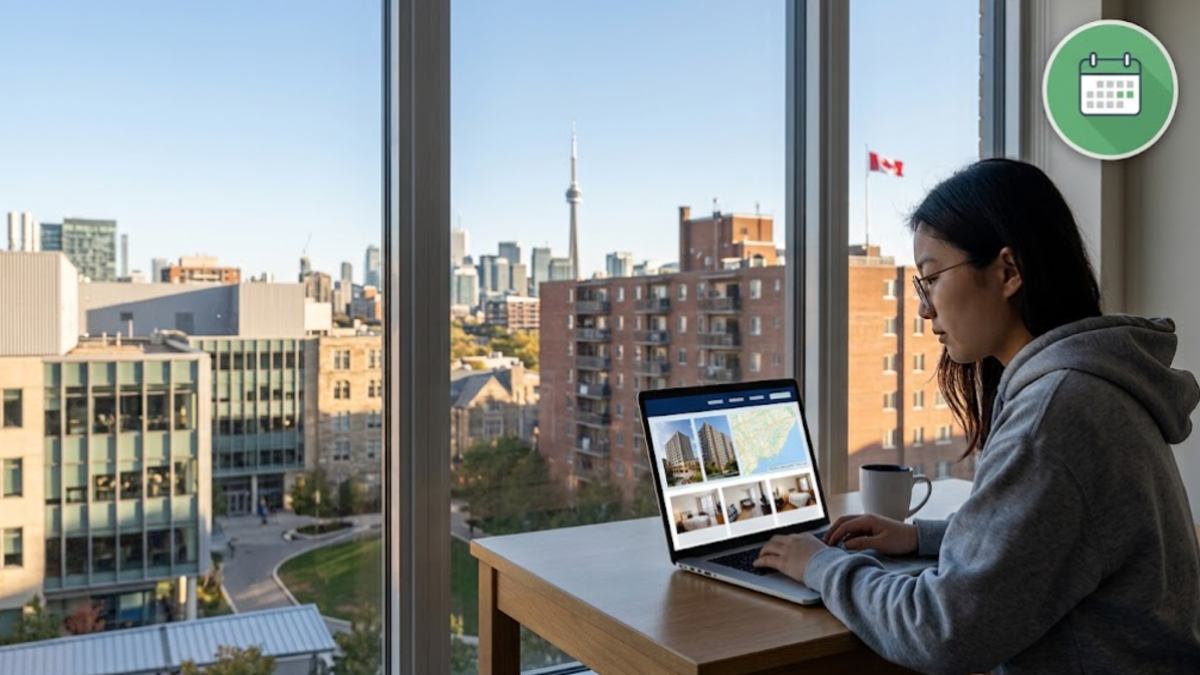
OTTAWA – Canadist: Canada Student Accommodation has become one of the most urgent practical concerns for students preparing to study in Canada, particularly those arriving from abroad and trying to secure a room before they land. Recent Canadian reporting points to continuing pressure on affordable student housing, while universities, colleges, student groups and housing providers look for ways to expand supply. What should students do now to improve their chances of finding a safe and affordable room before arrival?

Why Canada Student Accommodation is becoming harder to secure
Finding a room in Canada is no longer a task students can easily leave until the last few weeks before the start of classes. Recent coverage of the student housing market shows that affordability remains a major concern as students return to campuses and compete for rooms close to colleges and universities.
Global News recently reported on student groups in Halifax who said their classmates were struggling with rising living costs and that the lack of affordable housing had become one of their biggest concerns ahead of the autumn term. The report also highlighted students working together to look for practical housing solutions.
The pressure extends beyond one city. A national student housing analysis from Real Estate News Exchange found that Canada still lacks enough purpose-built student accommodation to satisfy demand. The report cited research indicating that between 7 and 9 per cent of students consider themselves unhoused and do not know where they will sleep the following night.

That situation changes the way newcomers should approach accommodation. Instead of simply searching for the cheapest room online, students should begin with a clear housing plan, identify several options and verify every important detail before transferring money or signing an agreement.
The federal government also recognises student accommodation as a distinct housing category. Its newcomer housing guidance says universities and colleges can provide information on both on-campus and off-campus housing. It also advises newcomers to consider their financial situation, housing needs, preferred communities and the possibility of temporary accommodation when they first arrive.
For students still overseas, that advice is especially important. A room that looks attractive in an online advertisement may be far from campus, exclude utilities, require a long lease or involve conditions that become difficult once the student arrives.
The best strategy is to treat accommodation as part of the study-abroad preparation process rather than as a last-minute move.
Canada Student Accommodation options students can consider before arrival
Students generally have several housing routes in Canada, and the right option depends on budget, course duration, location and personal preferences.
On-campus residence is often the simplest starting point. EduCanada says residence can be particularly convenient for students spending one or two semesters in Canada. Rooms may be single or shared, while some institutions also provide apartment-style residence with kitchens and bathrooms. Residence buildings can offer access to laundry facilities, common spaces and, in many cases, Wi-Fi.
The biggest advantage is location. Living on or near campus can reduce commuting time and transportation costs while making it easier for new students to meet classmates.
However, residence is not guaranteed. Students must check application rules, deadlines, room availability and payment requirements directly with their institution.
University and college housing offices should therefore be among the first contacts for anyone searching from abroad. Canada’s official newcomer housing guidance specifically recommends contacting the housing department of the university or college a student plans to attend.
Off-campus housing provides more choice but also more responsibility. Students may rent a room in a house, share an apartment with other students or rent an entire apartment. EduCanada notes that shared accommodation can reduce costs, while private rental prices vary significantly according to the city, property and number of bedrooms.
Another option is a homestay, where a student lives with a Canadian family. This arrangement may appeal to younger students or those looking for a more structured arrival experience.
Purpose-built student accommodation is another growing part of the market. Student Housing Canada, for example, operates a housing platform that allows students to compare properties by city, institution and property name, with listings across provinces and territories.
The market is also expanding in some locations. In Surrey, British Columbia, Western Community College, Lark Group and ICT Group have begun work on a 23-storey student residence planned to contain 810 beds. The project is intended to address demand for student housing and is expected to open after construction is completed.
In Montreal, the federal government announced support for a project that will create 187 purpose-built rental homes for students in Outremont, close to the Université de Montréal’s MIL campus.
These developments show that new supply is coming, but they do not solve the immediate problem for students arriving for the next academic term.
How to search for a room before you arrive in Canada
The first step is to decide exactly what you need.
A student should know the campus address, maximum monthly budget, preferred commute, room type and desired lease period before contacting landlords. A clear checklist prevents students from wasting time on unsuitable properties.
Location deserves particular attention. A room that costs less but sits far from campus can create regular transportation expenses. Students should check walking routes, public transit connections and the distance to grocery stores before committing.
The next step is to use multiple sources. Canadian government guidance lists several ways to find rental housing, including asking friends, using social media and online advertising platforms, checking classified advertisements, visiting rental agency websites and seeking help from newcomer service providers.
University-specific resources should come first because they are tailored to students. Some institutions operate accommodation listing services or provide links to local rental resources.
Queen’s University, for example, operates an accommodation listing service where students can filter properties by features such as shared accommodation, included utilities, furnished rooms, laundry and accessibility. The university also warns students that it does not guarantee the quality of listings and tells them to make their own checks before accepting accommodation.
That warning matters. A university listing service is a useful search tool, but students should still verify the landlord, inspect the agreement and confirm the property details.
Students searching from outside Canada should also ask for a live video tour where possible. A video call can help confirm that the room exists, show common areas and allow the student to ask direct questions.
The student should request a written breakdown of what the rent includes. Utilities such as heating, water, electricity and internet can change the real monthly cost considerably.
Canada’s official newcomer rental guidance provides detailed information about finding a rental, visiting a unit, signing a lease and understanding tenant and landlord responsibilities.
Students should also keep copies of advertisements, messages, lease documents and receipts. Maintaining a clear record can become valuable if a disagreement develops later.
Avoiding scams when booking Canada Student Accommodation
Housing scams present a serious risk to international students because many first-time renters search remotely and may feel pressured by limited availability.
Recent Canadian enforcement activity underlines the broader risk of fraud targeting international students. The Canada Border Services Agency announced charges in an Ontario case involving an alleged scheme that defrauded international students of about $126,000 through false promises connected to education and enrolment. While that case did not specifically concern rental housing, it demonstrates why students should verify claims made by people asking for money before arrival.
Accommodation searches require the same level of caution.
Students should be suspicious when a landlord refuses to provide a video tour, asks for money before answering basic questions or creates unusual urgency around payment. A request to send money through an unfamiliar method should also trigger extra scrutiny.
The property’s address should match the advertisement. Students can also compare photographs, descriptions and prices across more than one listing. A dramatically different price compared with similar rooms in the same neighbourhood deserves closer investigation rather than an immediate payment.
Students should never assume that an impressive-looking advertisement guarantees a legitimate rental.
Another important issue is the lease itself. Canada has provincial and territorial rules governing rentals, so students need to understand the rules that apply where they will live. The federal newcomer guide explains general rental processes, but local tenancy rules may differ.
Students should ask who will sign the lease, who receives the rent, what is included, whether the room is furnished and whether the agreement permits subletting or additional occupants.
They should also clarify whether the advertised monthly figure represents the total amount payable or only the base rent.
A student who arrives with accommodation arranged has one major advantage: less immediate pressure. That can make it easier to complete enrolment, open a bank account, obtain local documents and settle into classes without spending the first days urgently searching for a room.
What to do when long-term housing is not available
Not every student will secure a permanent room before flying to Canada.
In that situation, arranging temporary accommodation can be safer than accepting an unverified long-term rental simply because the student feels under pressure.
The federal government advises newcomers to consider temporary housing when they arrive while they search for a place that better fits their needs.
Temporary accommodation gives students time to visit properties in person, compare neighbourhoods and meet potential roommates.
It can also help students understand the practical reality of commuting. A neighbourhood that appears convenient on a map may feel different once a student considers the actual transit journey, winter conditions, grocery shopping and daily class schedule.
Students should calculate the temporary stay into their arrival budget. The goal is not to extend temporary accommodation indefinitely but to use it as a bridge while completing a careful housing search.
This approach can be especially useful in large and competitive markets, where students may need to inspect several properties before making a decision.
The shortage of affordable student accommodation makes flexibility increasingly valuable. RENX reported that Canada’s student housing market remains heavily dependent on university residences, while private development has not fully closed the gap. The same report noted that high occupancy and rising rents have not yet generated enough new purpose-built supply.
That means students may need to consider alternatives such as shared apartments, rooms in houses, locations farther from campus or different lease arrangements, depending on their circumstances.
Why starting early can make a major difference
Timing may be the single most practical advantage a student can control.
Some universities continue to make residence placements on a rolling basis. At the University of Toronto, for example, residence placements for some students can continue from the summer period through the academic cycle depending on availability, while the institution publishes specific application periods for different student groups.
That illustrates why students should not assume that one unsuccessful application means all housing options have disappeared.
Students can create a simple housing calendar with separate deadlines for residence applications, private listings, document preparation and temporary accommodation.
They should also prepare a digital folder containing their admission documents, identification, study-related paperwork and any material that a landlord or housing provider legitimately requests.
When contacting a prospective landlord, students can introduce themselves clearly, explain that they are coming to Canada to study, identify their programme and expected arrival date, and ask precise questions about the property.
Communication should remain professional and written whenever possible.
For international students, Canada Student Accommodation is not only about finding a bed. The housing choice can affect transportation costs, study time, social opportunities and the overall transition into a new country.
That is why a room should be judged on more than its advertised monthly price.
Recent coverage shows that universities, student organisations, governments and private developers all recognise the pressure in the student housing market. Halifax students have organised around affordability concerns, new purpose-built projects are moving forward in British Columbia and Quebec, and housing-sector analysts continue to point to the gap between demand and supply.
For students preparing to travel, the immediate lesson is straightforward: start the search early, use university and trusted housing resources, verify every listing and keep a realistic temporary plan in reserve.
The safest room is not necessarily the first room that appears online. It is the one a student can verify, afford and reach reliably from campus.
FAQ
How early should I look for Canada Student Accommodation?
Students should begin their search well before arrival because residence places and affordable rooms can be limited.
Is university residence better than renting privately?
Residence can simplify the transition because it is often close to campus and may include services and facilities, while private housing can provide more choice.
How can I avoid rental scams in Canada?
Verify the property, confirm the landlord’s identity and terms, request a tour where possible, read the lease carefully and avoid sending money under suspicious conditions.
What should I do if I cannot find a room before arrival?
Arrange temporary accommodation and continue your search after arriving so you can inspect long-term options in person.
Contact: info@canadaalyom.com