

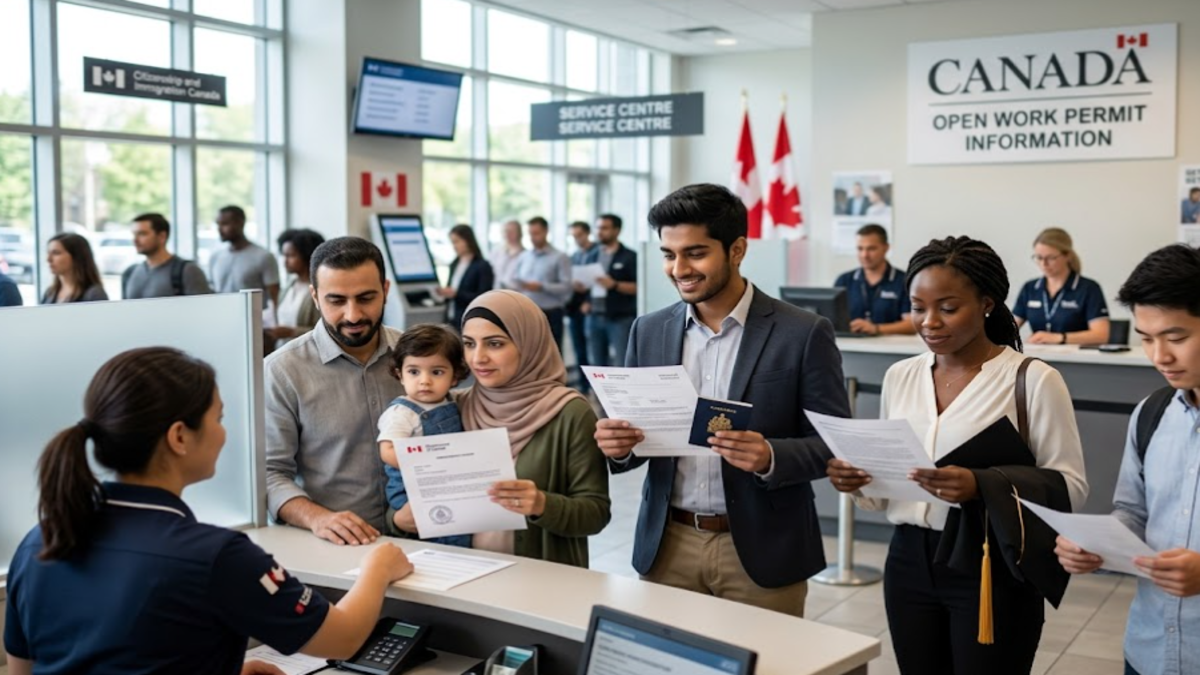
OTTAWA – Canadist: Canada Open Work Permit rules remain under close attention as Immigration, Refugees and Citizenship Canada (IRCC) continues to tighten eligibility for some temporary residents while maintaining specific pathways for workers, spouses, international graduates and other eligible applicants. Recent government updates show that the open work permit system is becoming more targeted, with different rules applying depending on an applicant’s immigration status and circumstances. So, who can still qualify for a Canada Open Work Permit, and what do the latest changes mean for applicants and their families?

Canada Open Work Permit rules continue to evolve
Canada’s open work permit system allows eligible foreign nationals to work for most employers without first obtaining a job-specific permit. Unlike an employer-specific work permit, an open permit generally gives the holder greater flexibility to change employers and occupations, although some restrictions can apply.
The Canadian government has continued to adjust the system as part of broader efforts to manage temporary immigration, respond to labour-market needs and protect the integrity of immigration programs.
The latest official information shows that applicants cannot assume they automatically qualify for an open work permit simply because they are in Canada or have a family member working or studying there.

Eligibility depends heavily on the applicant’s category.
IRCC’s current guidance lists several situations in which an individual may qualify, including certain family members of foreign workers, people in specific permanent-residence-related processes, vulnerable workers and some international graduates.
At the same time, rules introduced in recent years have narrowed access for some family members of temporary residents.
These changes mean that applicants must now examine their exact circumstances before submitting an application. A work permit application that might previously have been possible under broader rules may no longer qualify under current eligibility requirements.
The official government guidance remains the most reliable place to check eligibility and application instructions.
Canada Open Work Permit eligibility for spouses of foreign workers
One of the most closely watched areas is the availability of open work permits for spouses and common-law partners of foreign workers.
Under current rules, not every spouse of a temporary foreign worker automatically qualifies.
IRCC says that, since January 21, 2025, only certain spouses or common-law partners of foreign workers can apply for an open work permit under the relevant family-member measures.
The principal foreign worker generally needs to meet specific conditions, including holding a valid work permit, having approval for a work permit that has not yet been issued, or having authorization to work without a work permit in qualifying circumstances.
The worker must also be living, or planning to live, in Canada while working.
Additional requirements apply depending on the worker’s occupation and immigration circumstances.
The government has also established separate provisions for some workers covered by free trade agreements. Spouses or common-law partners of eligible workers under certain agreements may qualify for an open work permit, subject to the rules of the applicable agreement.
The distinction is important because the family-member open work permit system is no longer as broad as it once was.
Applicants should therefore avoid relying on older immigration articles, social-media posts or outdated advice when assessing eligibility.
IRCC’s current rules should be checked before applying because eligibility can depend on the principal applicant’s occupation, work authorization and immigration pathway.
What changed for family members?
The January 2025 changes represented a significant shift in Canada’s approach to family-member open work permits.
Under the updated framework, dependent children of foreign workers are generally no longer eligible to apply for an open work permit through the family-member measure.
The government also introduced restrictions affecting family members of lower-skilled workers who are not on certain pathways toward permanent residence.
However, the rules include transitional provisions.
Some family members already in Canada may still be able to extend an existing open work permit if they meet specific conditions. Among other requirements, their current permit must be valid for a shorter period than the principal applicant’s work permit, and they must apply for an extension before their existing permit expires.
The government also states that the validity period of a family member’s work permit cannot extend beyond the expiry of the principal applicant’s work permit or, in relevant cases, the family member’s passport or biometric validity.
This means applicants should pay close attention to expiry dates.
A person whose passport expires earlier than their eligible period of work authorization may receive a permit that is shorter than expected. Renewing the passport and then applying for an extension may be necessary in some situations.
These details can have a direct effect on families planning their work and residence in Canada.
Canada Open Work Permit options for international graduates
International students and graduates remain another important group within Canada’s temporary immigration system.
However, the post-graduation work permit is a distinct category with its own eligibility requirements. It should not be confused with every other type of open work permit.
IRCC says eligible graduates may qualify for a post-graduation work permit if they meet the applicable conditions, including completing an eligible program at a designated learning institution and satisfying study-status requirements.
The government also requires eligible applicants to apply within 180 days of receiving confirmation that they completed their program.
The rules can vary according to the applicant’s educational program, institution and other factors.
For international students, the distinction between a study permit, a post-graduation work permit and other open work permit categories is particularly important.
A person who does not qualify for one category may not automatically qualify for another.
The current system therefore requires applicants to identify the specific immigration measure that applies to their situation rather than treating all open work permits as one program.
Why the post-graduation route remains important
For many international graduates, a post-graduation work permit provides an opportunity to gain Canadian work experience after completing their studies.
That experience can be relevant to future immigration plans, depending on the applicant’s circumstances and the requirements of the immigration program they later pursue.
However, holding a work permit does not itself guarantee permanent residence.
Candidates who later want to immigrate permanently may need to qualify under programs such as Express Entry or a provincial nominee program.
Express Entry uses a ranking system to assess eligible candidates, while provincial and territorial nominee programs have their own requirements.
The Canadian government has also been adjusting immigration targets and temporary-resident policies as part of its broader immigration planning.
That policy environment means international graduates should consider both their immediate work authorization and their longer-term immigration strategy.
Canada Open Work Permit and permanent residence applicants
Another important development concerns people who applied for permanent residence under Canada’s temporary resident to permanent resident pathway.
IRCC has extended a temporary public policy allowing eligible applicants under that pathway to apply for an open work permit until December 31, 2026.
The measure is aimed at eligible applicants who submitted permanent residence applications in 2021 and are still waiting for a decision.
Under the policy, eligible applicants can continue working in any occupation and for any employer while their permanent residence application is processed.
The extension also covers eligible family members in qualifying circumstances.
However, the measure does not apply automatically to everyone who once applied for permanent residence.
Applicants must meet the conditions of the specific public policy, including the applicable status requirements.
The policy also contains provisions for spouses, common-law partners and dependent children who meet the relevant criteria.
This extension is significant for eligible applicants because it can help them maintain legal status and continue working while they wait for a decision on their permanent residence case.
For people affected by long processing periods, maintaining valid work authorization can be an important practical issue.
The government has made clear, however, that the public policy applies only to eligible applicants and their qualifying family members.
Newer pathways and special categories
Canada’s open work permit framework also includes special measures for specific groups.
The latest IRCC information, for example, includes provisions affecting certain family members of workers covered by specific agreements and programs.
A notable update concerns spouses of workers employed under a supported immigration pathway.
According to the current government eligibility information, as of March 23, 2026, a spouse may be able to apply for an open work permit where the principal applicant holds a qualifying work permit or letter of introduction under a supported immigration pathway, is employed or has a job offer in an occupation at any TEER level, and is or will be living in Canada while employed.
This illustrates how the rules can differ significantly between immigration categories.
The same term — “open work permit” — can describe work authorization issued under different policies, each with separate eligibility requirements.
Applicants should therefore identify the exact program or public policy under which they intend to apply.
This is especially important for people who are already in Canada and are considering changing their immigration status or extending their work authorization.
What applicants should know before applying
The most important message from the latest Canadian immigration updates is that there is no single eligibility rule for every Canada Open Work Permit applicant.
The first step is to determine which category applies.
An applicant may be a spouse or common-law partner of a foreign worker, an international graduate, a person waiting for permanent residence processing, a vulnerable worker or another eligible foreign national.
Each category has its own requirements.
Applicants should also check whether they are applying from inside or outside Canada, because application procedures can differ.
Maintaining legal status is another critical issue.
People already in Canada should pay attention to the expiry date of their current permit or temporary resident status.
In certain circumstances, an applicant who submits an extension application before their status expires may benefit from maintained status while the application is processed.
However, the rules depend on the individual’s circumstances and the type of application submitted.
Applicants should also ensure that their documents are accurate and complete.
Immigration applications can be refused if an applicant does not meet the eligibility requirements or provides inaccurate information.
The safest approach is to rely on current IRCC instructions and official government announcements rather than older articles or informal advice.
Canada Open Work Permit changes reflect a broader immigration strategy
The evolution of Canada’s open work permit system forms part of a wider shift in immigration policy.
The federal government has been seeking to manage temporary resident numbers while continuing to attract workers needed in the Canadian economy.
The 2026-2028 Immigration Levels Plan includes targets and ranges for temporary residents, including international students and temporary foreign workers, alongside permanent-residence targets.
The plan emphasizes more sustainable immigration levels and a reduction in temporary resident arrivals compared with previous planning.
This broader policy direction helps explain why Canada has introduced tighter eligibility rules in some temporary-resident categories while maintaining targeted pathways for workers and other groups.
For applicants, the result is a more selective system.
The ability to work in Canada remains available through multiple routes, but eligibility increasingly depends on a person’s specific immigration status, occupation, family relationship or pathway to permanent residence.
That makes accurate, up-to-date information more important than ever.
What the latest news means for applicants
For people considering a Canada Open Work Permit, the current immigration landscape presents both opportunities and restrictions.
Some applicants continue to have access to open work authorization, while others may no longer qualify under rules that existed before January 2025.
Spouses of certain foreign workers may still be eligible, but the principal worker’s occupation and immigration circumstances can be decisive.
International graduates may qualify through the post-graduation work permit system if they satisfy the applicable requirements.
Eligible applicants connected to the temporary resident to permanent resident pathway may benefit from the extension of the relevant open work permit policy.
Meanwhile, some family members of temporary residents face narrower eligibility than in the past.
The practical lesson is straightforward: applicants should not assume that a general statement about “open work permits” applies to their individual case.
Instead, they should identify their immigration category, review the current requirements and check the applicable application process before taking action.
Canada’s immigration rules continue to change, and official updates can affect eligibility, deadlines and application procedures.
For readers following immigration developments, the most reliable source remains the official Canadian government’s immigration information and IRCC announcements.
Frequently Asked Questions
What is a Canada Open Work Permit?
It is a work permit that generally allows an eligible foreign national to work for most employers in Canada without being tied to one specific employer.
Can every spouse of a foreign worker get an open work permit?
No. Since January 21, 2025, eligibility has been restricted to spouses and common-law partners who meet specific requirements.
Can international graduates apply for an open work permit?
Eligible international graduates may qualify for a post-graduation work permit if they meet the applicable requirements, including those related to their program and study status.
Is the open work permit policy for the temporary resident to permanent resident pathway still available?
Eligible applicants under the relevant temporary public policy can apply for an open work permit until December 31, 2026, subject to the policy’s conditions.
Contact: info@canadaalyom.com