
Toronto – Canadist: Wildfires and climate change are once again putting communities across Canada under pressure as active fires spread, smoke affects air quality, and authorities prepare for further fire danger during the summer. With wildfire activity already exceeding recent levels in several measures, how is Canada responding to a crisis that is increasingly affecting public health, communities and climate policy?

Wildfires and Climate Change Are Reshaping Canada’s Fire Season
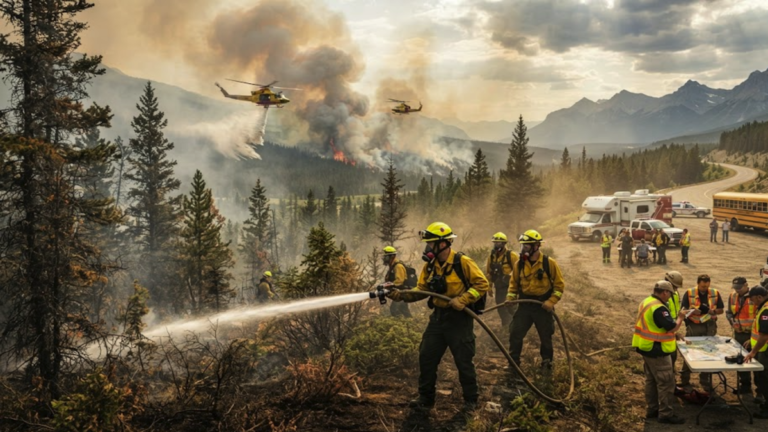
Canada’s wildfire season has intensified in recent weeks, with fires in central provinces including Ontario, Manitoba and Saskatchewan driving a growing share of the country’s emergency response.
Reuters reported that Canada had more active wildfires by mid-July than at the same point in either of the previous two years, while the area burned had already exceeded the 10-year average. On July 17, the news agency reported that officials had counted 858 fires across the country, with roughly 2.4 million hectares burned at that point in the season.
The latest federal update issued in July said seasonal wildfire activity remained below the five-year average at that stage, while warning that fire danger was continuing to rise during the summer. The federal government had also previously warned of above-normal temperatures across nearly all Canadian regions during the summer months.

The figures illustrate why wildfire risk has become a central issue in Canada’s climate discussion. Rising temperatures can contribute to drier vegetation and conditions that allow fires to spread more easily, although individual fires have multiple causes and climate change does not explain every ignition.


The Canadian government has recognized wildfire smoke as a significant source of air pollution. Smoke can travel far beyond the location of a fire, affecting communities hundreds or even thousands of kilometres away.
Wildfire Smoke Is Becoming a Public Health Issue
The impact of Canada’s wildfires is not limited to forests and communities near the flames. Smoke has repeatedly moved across provincial and international borders, creating periods of poor air quality in major urban centres and parts of the United States.
In July, smoke from fires in Ontario reached cities in the United States, while Toronto experienced severe haze linked to fires in northern Ontario. Reuters reported that the smoke contributed to hazardous air conditions and prompted health warnings urging people to reduce outdoor activity.
Health Canada warns that wildfire smoke can contain fine particles and other pollutants that affect the respiratory and cardiovascular systems. People with existing health conditions, older adults, pregnant people and young children can face greater risks from smoke exposure.
The scale of smoke pollution also changes the nature of wildfire emergencies. A community does not have to be directly threatened by flames to experience consequences. Air quality alerts can disrupt outdoor activities, affect schools and workplaces, and place additional pressure on health services.
For residents, the response often involves following local air-quality advice, reducing time outdoors when smoke levels are high and using appropriate measures to limit exposure. Official guidance remains essential because conditions can change quickly as winds shift and fires develop.
Evacuations Put Remote and Indigenous Communities Under Pressure
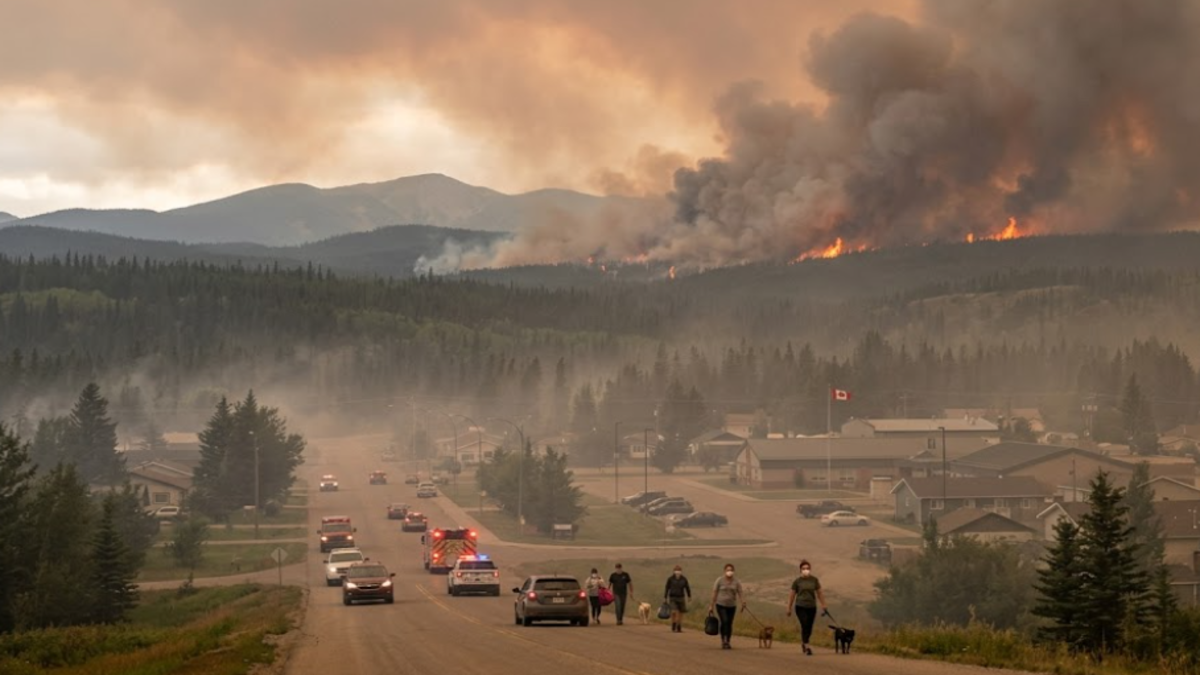
Wildfires are also creating a major challenge for emergency planners as communities face evacuation orders and alerts.
Reuters reported in July that Ontario had sought federal support as wildfires expanded and smoke spread, while Indigenous Services Canada said that 1,600 people from First Nations communities had been evacuated because of fires during the season as of July 15. The report noted that many of the fires were concentrated in remote areas of Manitoba, Saskatchewan and Ontario.
Evacuation is often more complicated in remote communities because of limited road access, long distances and the need to coordinate transportation and temporary accommodation.
The challenge is not only to move people away from immediate danger. Authorities must also maintain access to essential services and support displaced residents until it is safe to return.
The federal response has therefore involved coordination between different levels of government and emergency organizations. The wildfire situation has also highlighted the importance of preparedness before fires become large enough to threaten communities.
What Climate Change Means for Canada’s Wildfire Risk
Climate change has become an important part of the discussion surrounding Canada’s changing wildfire conditions.
Government climate information and wildfire research have linked warmer conditions to increased wildfire risk in many regions. Higher temperatures can dry forests and vegetation, while changes in precipitation and drought conditions can contribute to fire-prone landscapes.
The relationship is complex. Weather, vegetation, human activity, lightning and local land conditions all influence whether a fire starts and how quickly it spreads. Climate change is best understood as a factor that can increase the likelihood of conditions favourable to severe fire behaviour rather than as a single cause of every wildfire.
Canada’s experience in recent years has made the connection more visible. Large fires can produce enormous amounts of smoke, force evacuations and affect communities far from the original fire zone.
The Canadian government has also identified climate action as part of its broader environmental policy. Environment and Climate Change Canada has outlined a target of reducing greenhouse gas emissions by 45% to 50% below 2005 levels by 2035.
Wildfire Policy Is Moving Beyond Firefighting
The growing scale of wildfire impacts is putting pressure on governments to look beyond emergency firefighting.
The policy challenge includes preparing communities for evacuation, improving public access to air-quality information, protecting vulnerable populations from smoke and strengthening coordination between federal, provincial, territorial and Indigenous authorities.
It also includes longer-term climate policy. Reducing greenhouse gas emissions does not immediately eliminate wildfire risk, but climate policy is part of the broader effort to limit future warming and its associated impacts.
At the same time, Canada must continue adapting to the conditions that already exist. Fire management, emergency preparedness, community planning and public-health measures all remain necessary even as governments pursue emissions reductions.
The current wildfire season shows why these issues increasingly overlap. A single fire can become a local emergency, a regional air-quality problem and a national policy question at the same time.
What Canadians Should Watch Next
The immediate outlook will depend heavily on weather conditions, including temperature, rainfall and wind.
The federal government has warned that wildfire danger can continue to rise during the summer, while recent reporting has shown how quickly smoke can move across large parts of Canada and into the United States.
For Canadians, the most important developments to watch are the number and location of active fires, evacuation orders, air-quality conditions and changes in fire danger.
The wider question is whether Canada can strengthen its emergency response while also addressing the climate conditions that can increase wildfire risk. The answer will shape how communities prepare for future fire seasons.
FAQ
Are wildfires in Canada linked to climate change?
Climate change can increase wildfire risk by contributing to warmer and, in some regions, drier conditions. However, individual fires can have many causes, including lightning and human activity.
Why does Canadian wildfire smoke affect cities far from fires?
Wildfire smoke can travel long distances through the atmosphere. Wind patterns can carry smoke from remote fires into major cities and across international borders.
Who is most vulnerable to wildfire smoke?
People with certain respiratory or cardiovascular conditions, older adults, pregnant people and young children can face greater health risks from smoke exposure.
Is Canada responding to the wildfire crisis through climate policy?
Canada is pursuing both wildfire preparedness and broader climate policies. Its approach includes emergency response and adaptation alongside greenhouse-gas emissions reduction targets.
Conclusion
Wildfires are increasingly affecting Canada beyond the areas where flames are burning. Smoke pollution, evacuations, public-health risks and pressure on emergency services have made wildfire preparedness a national issue. As Canada continues to face changing fire conditions, the challenge is to combine immediate emergency action with long-term climate policy and adaptation.
Contact: info@canadaalyom.com