
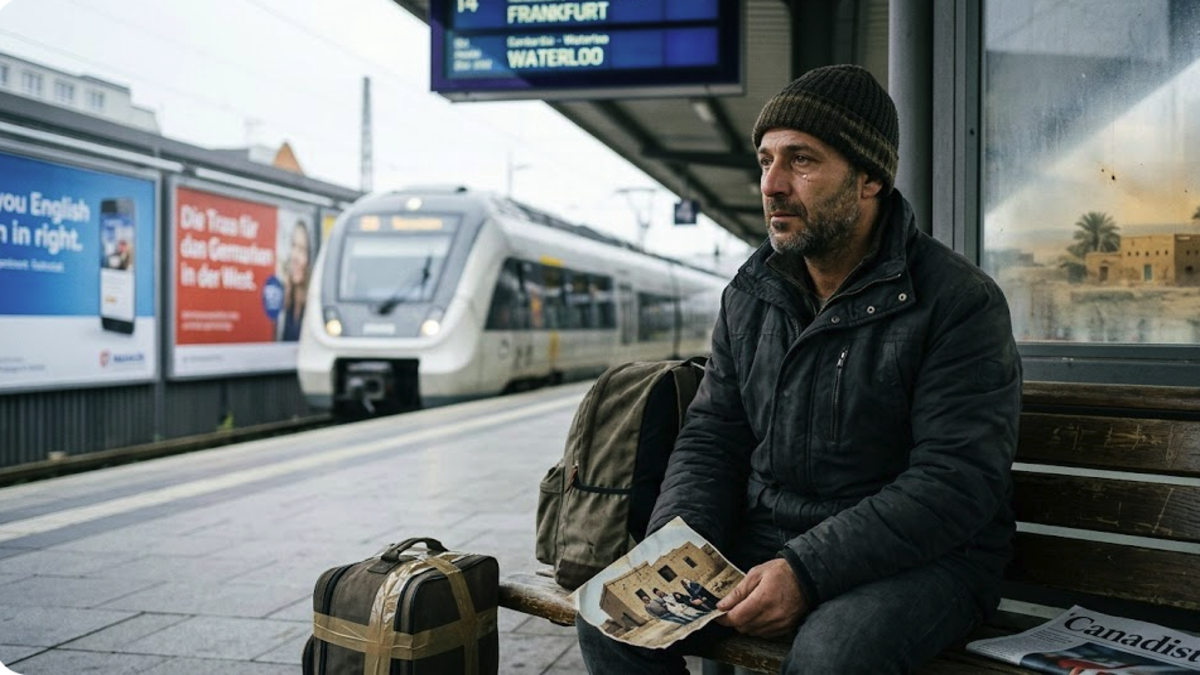
Ottawa – Canadist: Why do some refugees choose to return home when they have finally secured the safety of the West? It is a question that challenges the core of the global migration narrative, which often assumes that arriving in a developed nation is the ultimate happy ending. For years, the public has watched millions risk everything to cross borders, flee conflicts, and seek asylum in Europe or North America. Yet, a quiet, counter-intuitive movement is taking place under the surface. Thousands of displaced individuals are discovering that surviving a conflict does not automatically mean building a meaningful life, leaving many to contemplate a dangerous journey back to the lands they once fled. If safety is everything, why are so many willing to risk it all over again?

The Hidden Reality of Voluntary Repatriation
To understand this phenomenon, one must look beyond the initial relief of escaping a war zone. For many displaced individuals, the transition from asylum seeker to permanent resident reveals a profound truth: legal status does not guarantee human fulfillment. While Western policies focus heavily on border control and initial resettlement logistics, they frequently overlook the long-term psychological and social needs of those who arrive.
According to the latest data and insights gathered by the UNHCR Global Report, a vast majority of displaced persons maintain a deep, lifelong desire to return to their places of origin whenever conditions permit. This is not a sudden whim but a persistent emotional and cultural pull. In fact, UN reports indicate that over 1.6 million refugees globally made the monumental decision to return to their home countries recently, choosing the familiar challenges of their homelands over the destabilizing uncertainties of exile.
This reality challenges the conventional political rhetoric surrounding immigration. It shows that refugees are not looking to permanently replace their identities; rather, they are often caught in a painful limbo between a past they cannot erase and a future they cannot fully grasp.

Integration Failure: The Incomplete Dream
The journey of seeking asylum is often fueled by the promise of a fresh start, but the practical reality of integration is incredibly complex. True integration requires stable employment, social acceptance, a deep sense of belonging, and long-term psychological security. Unfortunately, the administrative and social structures in many host countries turn this dream into a bureaucratic maze.
Language Barriers and Professional Downgrading: Learning a complex new language as an adult is incredibly difficult, and without it, securing meaningful work is nearly impossible. Many highly qualified professionals—doctors, engineers, and teachers—find their degrees unrecognized, forcing them into low-wage, unskilled labor.
The Bureaucratic Grind: Long, exhausting waiting periods for family reunification leave households fractured for years. The constant stress of temporary permits creates a permanent state of anxiety.
Social Isolation: Living in a society where you cannot easily communicate or connect builds an invisible wall. Many individuals survive the physical threats of war only to lose their vitality in the quiet emptiness of an isolated apartment.
A deep investigation into these social dynamics, highlighted in a comprehensive study available on arXiv, confirms that legal and social integration is a deeply uneven process. It varies drastically depending on nationality, gender, and legal status, often taking decades rather than years. When this process stalls indefinitely, the initial gratitude of finding safety turns into a exhausting realization: you have survived, but you are not truly living.
The Quiet Sting of Everyday Discrimination
For many who consider going back, the driving force is not a single dramatic event, but the cumulative weight of daily exclusion. Discrimination in host societies rarely manifests as open violence; instead, it exists as a subtle, structural friction that shapes every interaction.
Refugees frequently encounter silent rejection when trying to rent apartments, fill out job applications, or simply navigate public spaces. The rising tide of anti-immigrant rhetoric across Europe and North America, frequently covered by major outlets like The Guardian, has created an atmosphere of persistent suspicion. Newcomers are often unfairly linked to broader geopolitical conflicts, economic strains, or rising crime rates.
When every glance from a neighbor or interaction with a clerk feels like a subtle reminder that you do not belong, the psychological toll becomes immense. It is within this environment that the thought of returning home begins to take root. For some, facing the familiar structural dangers of home feels more dignified than enduring the daily, quiet humiliation of being viewed as a permanent outsider.
The Crushing Weight of Economic Pressure
The common misconception is that arriving in a wealthy Western nation instantly solves all financial worries. The reality for low-income immigrant families is a starkly different story of economic survival.
High inflation, skyrocketing rent prices, and complex tax systems make it incredibly difficult for newcomers to establish financial independence. Many find themselves entirely dependent on minimal social assistance programs for extended periods, which provides survival but traps them in a cycle of poverty. The struggle to afford basic necessities, combined with the guilt of not being able to send money back to extended family, creates an immense amount of pressure.
Research published by Refworld emphasizes that the high cost of living and limited access to upwardly mobile career paths leave many refugees economically paralyzed. Instead of building a prosperous future, they find themselves working exhausting hours just to stay afloat, leading many to realize that the economic promise of the West does not match their daily reality.
A Structural Breakdown of the Conflict
| The Western Exile Experience | The Reality of the Homeland |
| Physical safety from active warfare | Ongoing geopolitical and economic instability |
| High cost of living and systemic poverty | Access to family networks and owned property |
| Social isolation and language barriers | Cultural familiarity and effortless communication |
| Persistent identity loss and outsider status | A profound sense of belonging and dignity |
Psychological Isolation: Worse Than War?
The emotional landscape of exile is perhaps the most painful part of this untold story. The human mind is remarkably resilient against physical danger, but it fractures easily under the weight of profound loneliness, chronic depression, and a total loss of identity.
[Trauma of War] ---> [Physical Safety in Exile] ---> [Isolation & Identity Loss] ---> [The Choice to Return]
In their homelands, individuals are part of a rich social fabric. They are neighbors, cousins, professionals, and community pillars. In exile, they are often reduced to a single, bureaucratic label: “refugee.” They deeply miss the familiar sounds of their old neighborhoods, the ease of speaking their native tongue, and the unconditional support of extended family networks.
Our team at Canadist looked closely into these emotional patterns, and Canadist learned that this psychological exhaustion often outweighs the fear of physical conflict. When the future feels completely blank and the present feels entirely hollow, returning home becomes an act of reclaiming one’s emotional dignity and mental health.
Why Refugees Choose the Homeland Despite the Risks
The decision to return to a volatile country is rarely a purely logical one; it is a choice made with the heart. A collaborative research initiative found on the UNHCR Data Portal reveals that return dynamics are heavily driven by deep personal factors rather than macro-level politics.
Deep Family Ties: The need to care for elderly parents or reunite with separated children often overrides safety concerns.
Land and Property Ownership: Reclaiming family homes and ancestral land provides a tangible sense of security that a rented apartment abroad never can.
Cultural Restoration: The desire to raise children within one’s own faith, values, and traditions is a powerful motivator.
Sheer Emotional Fatigue: The simple, overwhelming exhaustion of living as a stranger for years makes any alternative look better.
This shift in perspective was vividly documented in a detailed report by The Irish Times, which followed several Syrian families who chose to leave their secure lives in Europe to return to their homeland. Their stories showed that when human beings are starved of connection and purpose, they will willingly choose a familiar danger over a safe, empty existence.
Finding Meaning Beyond Borders
Ultimately, this phenomenon reveals that human beings need far more than just survival; they require a sense of purpose, community, and respect. When host countries view integration merely as a checklist of legal papers and housing placements, they miss the deeper human element. The stories of those who choose to go back remind us that a true home is not just a place where you are safe from harm, but a place where you are seen, understood, and allowed to truly live.
Frequently Asked Questions
What percentage of refugees actually want to return home?
While exact numbers shift depending on the stability of each region, UN data consistently shows that a clear majority of displaced people hope to return to their native countries if basic security stabilizes.
Does returning home mean the destination country failed to help?
Not necessarily. While integration systems often have major gaps, the desire to return is usually driven by a deep emotional connection to one’s culture, family, and homeland rather than just a rejection of the host nation.
How do refugees manage to return if their home countries are still unstable?
Many undertake difficult journeys through secondary countries or utilize specific voluntary repatriation channels managed by international organizations, accepting the physical risks in exchange for returning to their communities.
What can host countries do to lower these rates of isolation?
Focusing heavily on rapid language learning, professional degree recognition, mental health support, and fostering genuine community connections can significantly help newcomers feel like they belong.
Contact: info@canadaalyom.com