
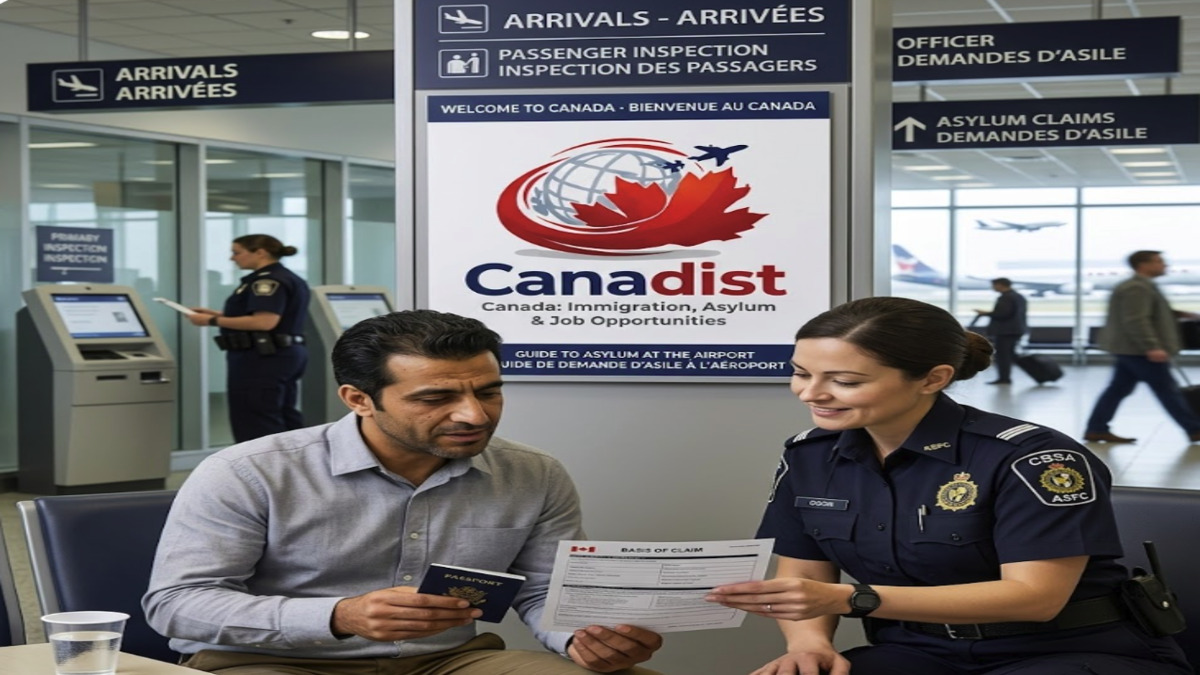
Ottawa Canadist : Asylum in Canada at the airport begins the very moment you tell a border officer that you fear returning to your home country. Is your first step on Canadian soil the most important moment of your life? Many travelers feel a mix of intense fear and sudden hope as they approach the primary inspection kiosk.

The process at major hubs like Pearson International or Pierre Elliott Trudeau is highly structured and professional. Crucially, you must make your claim immediately upon arrival. Do not wait until you have passed through customs or left the terminal building.
The Role of the Canada Border Services Agency
Your first point of contact will be an officer from the Canada Border Services Agency (CBSA). You must clearly state that you wish to seek protection or apply for Asylum in Canada at the airport. The officer will then move you to a private area to begin the formal interview process.
Furthermore, the officer will examine your travel documents and take your fingerprints and digital photos. This biometrics step is a standard security measure for all claimants. Consequently, you should be prepared to explain how you arrived in Canada and provide any identification you carry.

The Eligibility Interview and Documentation
During the initial stage, a border officer determines if your claim is “eligible” to be referred to the Refugee Board. They will ask questions about your background and the specific reasons you cannot return home. Meanwhile, you will be given several important documents to fill out.
One of the most vital papers is the Basis of Claim (BOC) form. In some cases, you might be required to complete this form shortly after your arrival. Therefore, it is essential to be as detailed and honest as possible from the very first sentence you write.
Legal Rights and Language Support
Navigating Canadian law can feel overwhelming during a long flight layover. You have a legal right to an interpreter if you do not speak English or French fluently. Never hesitate to ask for one, as clear communication is vital for your case.
Additionally, you have the right to contact a lawyer or seek legal aid. While the initial interview happens quickly, you can request time to find professional representation. The Canadian system emphasizes fairness, and having an expert to guide you can make a significant difference.
Accommodation and Next Steps
If the CBSA officer decides you are not a security risk, you are generally allowed to enter the country. You will receive an Acknowledgement of Claim document. This paper allows you to access certain social services and health coverage while your case is pending.
If you have no place to stay, the authorities can often direct you to local shelters or reception centers. These facilities provide a safe environment while you wait for your hearing. Consequently, you will begin the transition from a traveler to a protected refugee claimant.
Health Checks and Work Permits
Most claimants are required to undergo a medical examination within thirty days of arrival. This is a standard procedure to ensure public health and safety. Furthermore, you may be eligible to apply for a work permit once your claim is officially registered.
Being able to work provides a sense of dignity and independence during the long waiting period. The Canadian government understands that claimants want to support themselves. Therefore, the system allows you to contribute to society while your refugee status is being determined.
Final Thoughts for New Arrivals
Applying for Asylum in Canada at the airport is a serious legal step that requires consistency. Any major differences between your airport statement and your final hearing can hurt your credibility. Focus on staying calm and telling your story with as much accuracy as you can muster.
Ultimately, Canada remains a global leader in providing refuge to those in genuine need. The system is built on the principle of protection and human rights. By following the official rules, you give your claim the best possible chance of success in this new land.
FAQ
Can I apply for asylum if I have a valid visitor visa?
Yes, you can still claim protection even if you arrived with a valid visa. The border officer will simply register your intent to seek asylum and begin the eligibility process regardless of your current visa status.
Who makes the final decision on my refugee claim?
While the CBSA officer at the airport checks your eligibility, they do not make the final decision. Your case is referred to the Immigration and Refugee Board (IRB), which is an independent tribunal that hears your story.
What happens if I arrived from the United States?
Canada has a Safe Third Country Agreement with the US. Generally, you must claim asylum in the first safe country you reached. However, there are specific exceptions, and you should discuss your unique situation with the officer at the desk.
Is it possible to be detained at the airport?
Detention is rare but can happen if your identity is unclear or if there are serious security concerns. In most cases, claimants are released into the community with a date for their next interview or hearing.
Contact: info@canadaalyom.com


عاوز اسافر العمل