

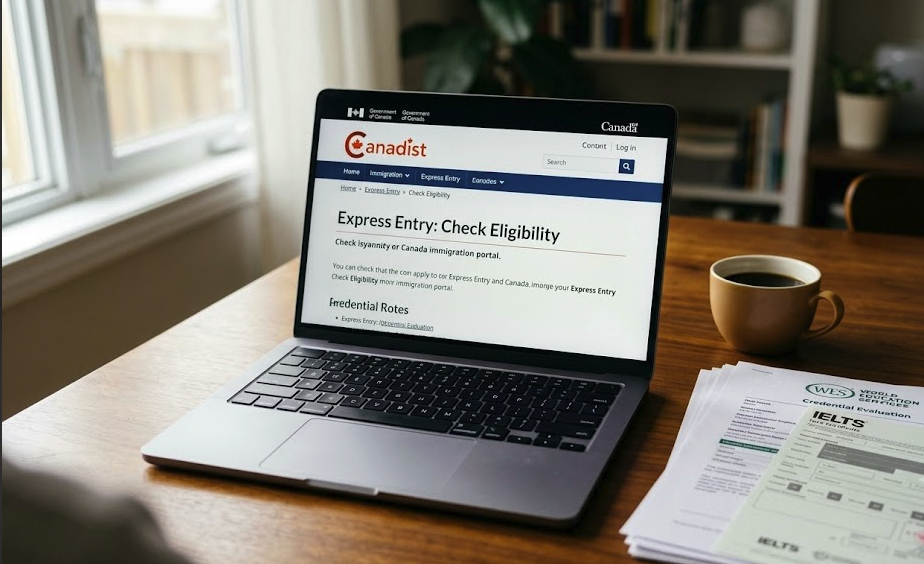
TORONTO – CANADIST:How to Immigrate to Canada Without a Lawyer: Moving to a new country is a life-changing milestone that often feels weighed down by complicated legal jargon and expensive professional fees. For many prospective newcomers, the immediate reaction is to hire an immigration attorney or a registered consultant to manage the paperwork. However, the Government of Canada maintains a transparent, direct-to-consumer immigration infrastructure designed specifically for individuals to navigate independently. All official application portals, instruction guides, and eligibility metrics are fully accessible to the public online. Why spend thousands of dollars on third-party legal representation when you can manage your own economic destiny for free?

Decoding the Canadian Immigration Framework: What Does the DIY Route Mean?
Navigating your own application means shifting from a passive client to an active manager of your immigration portfolio. The Immigration, Refugees and Citizenship Canada (IRCC) department designs its online platforms to ensure equal access for all applicants, regardless of whether they retain legal counsel. A third-party representative cannot legally influence visa processing speeds, nor can they guarantee an approval. IRCC evaluates files strictly on verifiable metric data.
According to operational insights gathered by the editorial team at Canadist, managing your own profile ensures total data accuracy and builds your personal literacy regarding Canadian administrative systems. By removing the middleman, you eliminate the risk of miscommunication and gain real-time access to automated status updates directly from the source. Taking control of your application is a highly practical introduction to life in Canada, where digital self-service is the norm for public administration.
The Primary Express Entry System: Canada’s Leading Economic Route
The Express Entry framework stands as the primary digital pipeline for skilled workers seeking permanent residency (PR). This points-based pool manages three core federal economic programs: the Federal Skilled Worker Program, the Federal Skilled Trades Program, and the Canadian Experience Class.

[Create Online Profile] ---> [Enter Candidate Pool] ---> [Calculate CRS Points] ---> [Receive Official ITA]
The system ranks candidates utilizing the Comprehensive Ranking System (CRS), an algorithmic matrix that evaluates human capital attributes. When IRCC executes a selective invitation round, candidates whose scores meet or exceed the designated cutoff receive an official Invitation to Apply (ITA) for permanent residency.


The Five Pillars of the Comprehensive Ranking System (CRS)
Age Dynamics: Points scale optimally for candidates between the ages of 20 and 29, gradually decreasing after the age of 30.
Educational Attainment: Higher tier degrees (Masters, Professional designations, or PhDs) secure substantial points.
Professional Work Experience: Continuous, skilled foreign or Canadian employment under the National Occupational Classification (NOC) system heavily sways the calculation.
Linguistic Proficiency: Verifiable scores in official English or French exams act as an essential multiplier.
Adaptability & Additional Factors: Valid Canadian job offers, sibling relationships inside the country, or regional nominations provide major point boosts.
To begin building your prospective profile or to check program requirements directly, visit the Official Express Entry Portal via IRCC to evaluate current systemic trends.
Provincial Nominee Programs (PNP): Maximizing Regional Options
If your baseline CRS score falls below the standard federal cutoff thresholds, the Provincial Nominee Programs (PNP) offer an excellent parallel alternative. Under the Canadian constitution, individual provinces and territories manage specialized streams designed to attract workers who fulfill specific regional economic gaps.
When a province selects your profile from an Express Entry-aligned stream, they grant you an official regional nomination. This digital certificate automatically awards an additional 600 points to your federal CRS score, effectively guaranteeing an Invitation to Apply (ITA) in the subsequent federal selection round. Prospective applicants can audit regional pathways through the Official Provincial Nominee Program (PNP) Directory to locate tailored economic demands.
The Comprehensive 5-Step DIY Blueprint to Canadian Migration
Step 1: Execute a Rigorous Eligibility Audit
Never guess your placement before verifying your baseline parameters. Use the automated, interactive government tools to cross-reference your credentials against specific program definitions. Determine your baseline parameters using the Official IRCC Eligibility Verification Tool before investing any funds into credential testing.
Step 2: Clear the Language Assessment Hurdle
Language proficiency remains the single most flexible factor to boost your CRS score. You must book a testing slot with an authorized testing provider. For English, choose between the IELTS General Training or the CELPIP General test. For French, utilize the TEF Canada or TCF Canada. Achieving a Canadian Language Benchmark (CLB) level of 9 or higher opens access to critical skill transferability point bonuses.
Step 3: Secure Your Educational Credential Assessment (ECA)
If you earned your degree outside of Canada, you must prove its domestic equivalent. You must arrange for your academic institution to dispatch your transcripts directly to an authorized evaluation agency. Organizations like World Education Services (WES), IQAS, or ICES generate the formal ECA report required to validate your schooling in your application.
Step 4: Assemble and Submit Your Electronic Profile
Once your language test results and ECA reports are ready, set up your secure online IRCC account. Enter your exact test reference numbers, employment codes, and educational details. The system will calculate your CRS score automatically and place you into the competitive candidate pool for a rolling 12-month period.
Step 5: Receive Your ITA and Finalize the File
Upon receiving your formal ITA, you have a strict 60-day window to upload complete supporting documentation. This includes scan results of reference letters, police clearances, medical exams, and proof of settlement funds. Pay the processing and Right of Permanent Residence fees directly via the web portal to send your file to a visa officer for final review.
Crucial Financial Requirements and Program Adjustments
Settlement Funds (Proof of Funds)
Except for candidates with a valid Canadian job offer or those applying under the Canadian Experience Class, IRCC requires proof of unencumbered liquid funds to support settlement costs. These amounts adjust annually based on low-income cut-offs.
[1 Applicant: ~$14,700 CAD] ---> [2 Dependents: ~$18,300 CAD] ---> [3 Dependents: ~$22,500 CAD]
These balances must remain in liquid bank accounts (savings or current holdings) and cannot be bound up in real estate properties or long-term illiquid investments.
Navigating Applications Past the Age of 40 or 50
While the CRS system stops awarding age points after 45, immigration remains fully achievable for mature professionals. Older candidates can offset age-related point drops by securing high language test scores, presenting advanced or dual degrees, or targeting specialized PNP streams that do not prioritize age metrics. French linguistic capability is particularly valuable, offering distinct pathways that bypass standard age limitations entirely.
Identifying and Avoiding Common Application Traps
The editorial team at Canadist has identified four frequent mistakes that often result in prolonged application delays or immediate program bans:
Trusting Unlicensed Visa Promises: No independent agency holds an exclusive partnership or insider connection with IRCC. Anyone claiming to guarantee a visa approval is running a scam.
Submitting Inaccurate Employment References: Job titles must match actual daily responsibilities rather than casual company phrasing. Ensure reference letters accurately detail your specific NOC duties.
Misrepresentation of Crucial Facts: Providing inflated work timelines or altered diplomas will trigger an immediate five-year ban for misrepresentation, terminating all future migration options.
Ignoring Language Score Maximization: Settling for a mediocre language score is a major strategic misstep. Retaking a language exam to hit higher bands is the fastest, most affordable way to boost a stagnant CRS score.
Frequently Asked Questions
Is it possible to secure permanent residency without a formal Canadian job offer? Yes. Both the Express Entry system and several Provincial Nominee Programs are built to select candidates based entirely on their independent economic human capital, including skilled foreign experience, higher education, and advanced language skills, without requiring a local employer.
What is considered a safe or competitive CRS score threshold? Cutoff scores shift dynamically based on candidate volume and target draws. General all-program draws often require higher scores, whereas specialized category-based draws targeting specific occupations like healthcare, STEM, or trade professions select candidates with lower cutoff scores.
Can I utilize my immediate family members to help increase my total points? Yes. Having an adult sibling who is currently a Canadian citizen or permanent resident living in Canada adds 15 adaptable bonus points directly to your profile. Furthermore, a spouse with high language scores or an evaluated degree can contribute additional points to your combined ranking.
How do I safely cross-reference official government answers if I get stuck during the application? You can research procedural answers directly through the interactive Official IRCC Help Center Portal, which answers thousands of structural questions regarding fee structures, document specifications, and account issues.
Successfully migrating to Canada is entirely achievable through personal diligence and careful reading of official instructions. By utilizing direct public channels, you retain full ownership of your data, protect your financial savings, and confidently manage your own journey toward permanent residency.…More
Contact: info@canadaalyom.com