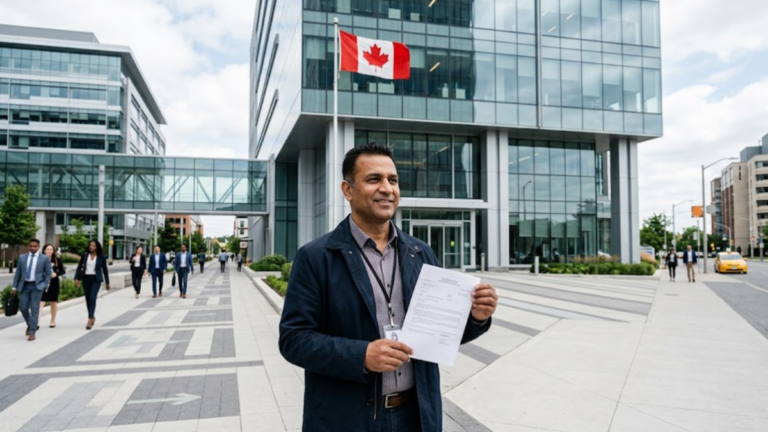
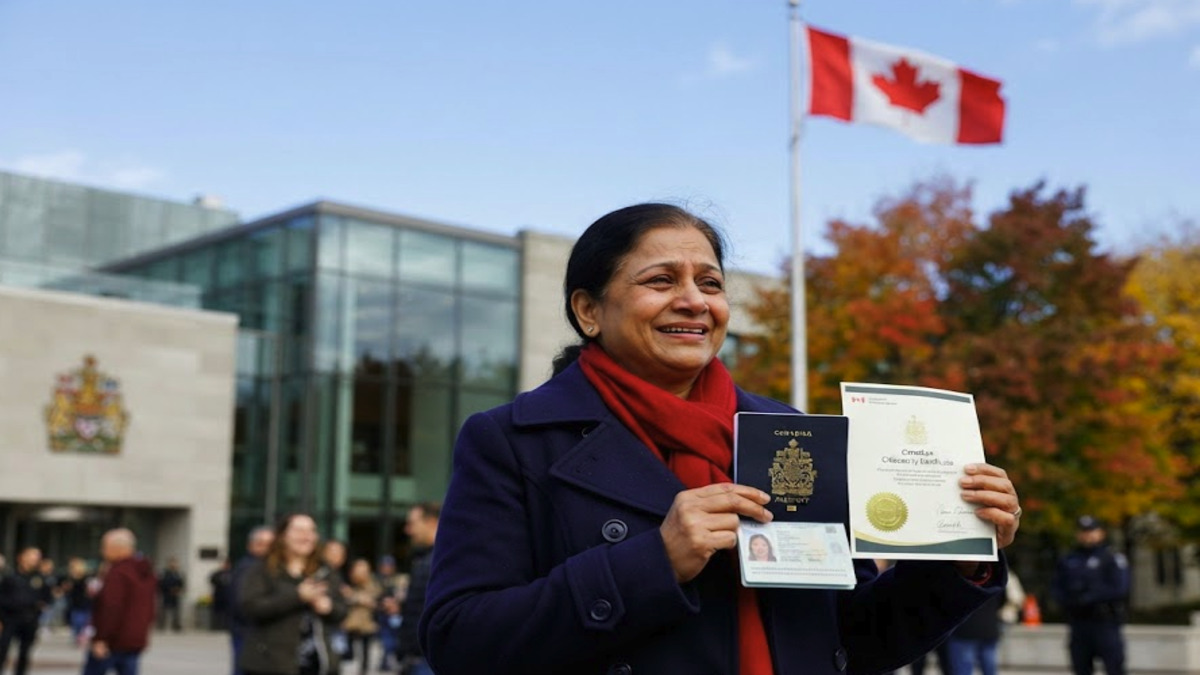
New Canadian citizen holding a Canadian passport and Citizenship Certificate after completing the official citizenship process.

How to Get Canadian Citizenship: Official Requirements, Eligibility and Application Process

OTTAWA – CANADIST : How to Get Canadian Citizenship: Canadian citizenship is a major milestone for permanent residents who wish to fully participate in Canadian society. Becoming a Canadian citizen provides the right to vote, obtain a Canadian passport, apply for certain government positions, and enjoy the full rights and responsibilities protected under Canadian law.

However, Canadian citizenship is not granted automatically. Applicants must satisfy a series of legal requirements established by the Government of Canada before submitting an application. These include permanent resident status, physical presence in Canada, income tax obligations, language proficiency, and knowledge of Canada’s history, institutions, and values. So, who is eligible to become a Canadian citizen, and what does the application process involve?

Understanding Canadian Citizenship

Canadian citizenship is governed by the Citizenship Act and administered by Immigration, Refugees and Citizenship Canada (IRCC).

There are several ways to acquire Canadian citizenship, including:

  • Citizenship by birth in Canada.
  • Citizenship by descent for eligible children born abroad to Canadian parents.
  • Citizenship through naturalization for eligible permanent residents.

For most immigrants, naturalization is the standard pathway to becoming a Canadian citizen.

Unlike permanent residents, Canadian citizens may vote in federal, provincial, and municipal elections where applicable, apply for a Canadian passport, and cannot lose their status simply because they spend extended periods living outside Canada, except in very limited circumstances established by law.

Who Can Apply for Canadian Citizenship?

According to the Government of Canada, applicants must meet several eligibility requirements before applying for citizenship.

The requirements are assessed individually, and applicants must satisfy every applicable condition before their application can be approved.

Permanent Resident Status

Applicants must hold permanent resident (PR) status in Canada.

Permanent resident status must not be under review because of fraud, subject to a removal order, or involved in unresolved immigration investigations.

Most people become eligible for citizenship only after first obtaining permanent residence and meeting the required residency obligations.

Physical Presence Requirement

One of the most important eligibility conditions is physical presence in Canada.

Applicants must have been physically present in Canada for at least 1,095 days during the five years immediately before the date they sign their citizenship application.

Time spent in Canada before becoming a permanent resident may count partially in certain situations, subject to the limits established by Canadian law.

IRCC recommends keeping accurate travel records because every absence from Canada may affect the physical presence calculation.

Income Tax Filing Requirement

Applicants may also need to demonstrate that they have complied with Canadian income tax obligations.

The Government of Canada requires eligible applicants to have filed income taxes, when required under the Income Tax Act, for the number of taxation years specified under citizenship legislation.

Tax compliance forms part of the overall citizenship assessment.

Language Requirements

Most applicants between the ages established by Canadian citizenship legislation must demonstrate adequate knowledge of either English or French, Canada’s two official languages.

Applicants may prove language ability using accepted evidence such as:

  • Approved language test results.
  • Educational records completed in English or French.
  • Certain government-recognized language certificates.

Language ability must generally correspond to the minimum level required by IRCC under the Canadian Language Benchmarks (CLB).

The Canadian Citizenship Test

Most applicants between the applicable age limits must successfully complete the Canadian citizenship test.

The examination measures an applicant’s knowledge of:

  • Canadian history.
  • Geography.
  • Democratic institutions.
  • Rights and responsibilities of citizens.
  • Federal, provincial, and territorial government.
  • National symbols.
  • Canadian laws and values.

The test is based on the official government study guide Discover Canada, published by Immigration, Refugees and Citizenship Canada.

Applicants who are unable to take the written test under specific circumstances may be assessed through an interview, depending on IRCC procedures.

Prohibitions That May Affect Eligibility

Not every permanent resident is immediately eligible to become a Canadian citizen.

Canadian citizenship legislation identifies several situations that may prevent an individual from obtaining citizenship.

For example, eligibility may be affected if an applicant:

  • Is serving a sentence in Canada.
  • Is charged with or convicted of certain criminal offences.
  • Is under a removal order.
  • Is subject to ongoing immigration investigations.
  • Has provided false information during an immigration or citizenship process.

IRCC reviews each application individually before making a final decision.

Required Documents

The documents required for a Canadian citizenship application depend on each applicant’s personal circumstances. However, Immigration, Refugees and Citizenship Canada (IRCC) generally requires applicants to provide documentation that confirms their identity, immigration status, and eligibility.

A standard application may include:

  • A completed citizenship application form.
  • Proof of permanent resident status.
  • Valid identification documents.
  • Passport or travel documents covering the eligibility period.
  • Proof of language proficiency, where required.
  • Two citizenship photographs if requested under the application instructions.
  • Payment of the applicable application fee.
  • Additional supporting documents requested by IRCC.

Applicants should ensure that all documents are complete, accurate, and up to date before submitting their application.

How to Apply for Canadian Citizenship

Most citizenship applications are submitted directly to Immigration, Refugees and Citizenship Canada (IRCC).

Applicants should carefully complete the application package, gather all required supporting documents, pay the applicable fees, and submit the application using the method specified by IRCC.

After receiving the application, IRCC reviews the documents to verify that all eligibility requirements have been met.

If information is missing or additional documents are required, applicants may be contacted before the assessment continues.

Citizenship Application Review

Once the application is accepted for processing, IRCC conducts a detailed review of the applicant’s file.

During this stage, officers verify:

  • Permanent resident status.
  • Physical presence in Canada.
  • Income tax compliance.
  • Language requirements.
  • Citizenship test eligibility.
  • Criminal and immigration background, where applicable.

Applicants may also be asked to attend an interview if additional information is required.

Citizenship Ceremony

Applicants whose citizenship applications are approved are invited to attend an official citizenship ceremony.

During the ceremony, successful applicants take the Oath of Citizenship, which is a legal requirement before Canadian citizenship is granted.

Following the oath, applicants officially become Canadian citizens and receive their Canadian Citizenship Certificate.

The ceremony represents the final stage of the naturalization process.

Applying for a Canadian Passport

After becoming Canadian citizens, individuals may apply for a Canadian passport.

The passport serves as official proof of Canadian citizenship for international travel and allows visa-free or visa-on-arrival access to many countries, depending on current international agreements.

Canadian citizens may also apply for other government services available exclusively to citizens.

How Long Does the Process Take?

Citizenship processing times vary depending on:

  • The number of applications being processed.
  • The completeness of the application.
  • Individual background verification.
  • Whether additional documentation or interviews are required.

IRCC regularly updates estimated processing times through its official website.

Applicants should avoid relying on unofficial estimates published elsewhere.

Common Mistakes That Delay Citizenship Applications

Many citizenship applications are delayed because of avoidable errors.

Some of the most common include:

  • Incorrect physical presence calculations.
  • Missing supporting documents.
  • Incomplete application forms.
  • Failure to provide acceptable language evidence.
  • Errors in personal information.
  • Failure to respond promptly to IRCC requests.

Carefully reviewing the application before submission can help reduce unnecessary delays.

Frequently Asked Questions

Can permanent residents automatically become Canadian citizens?

No. Permanent residents must submit a citizenship application and meet all eligibility requirements established by Canadian law.

Do I have to pass a citizenship test?

Most applicants within the applicable age range must successfully complete the Canadian citizenship test unless exempt under Canadian legislation.

Is English required for Canadian citizenship?

Applicants who fall within the applicable age requirements must demonstrate adequate knowledge of either English or French, Canada’s official languages.

Can I travel while my citizenship application is being processed?

Yes. However, applicants should continue to meet all legal obligations and respond promptly to any requests from IRCC during processing.

Canadian citizenship offers permanent residents the opportunity to fully participate in Canada’s democratic, social, and economic life. Although the process requires applicants to meet several legal conditions—including permanent resident status, physical presence, language proficiency, tax compliance, and successful completion of the citizenship process—the requirements are clearly defined by the Government of Canada.

Applicants who carefully follow the official guidelines and submit complete documentation can significantly improve the efficiency of their application process.