

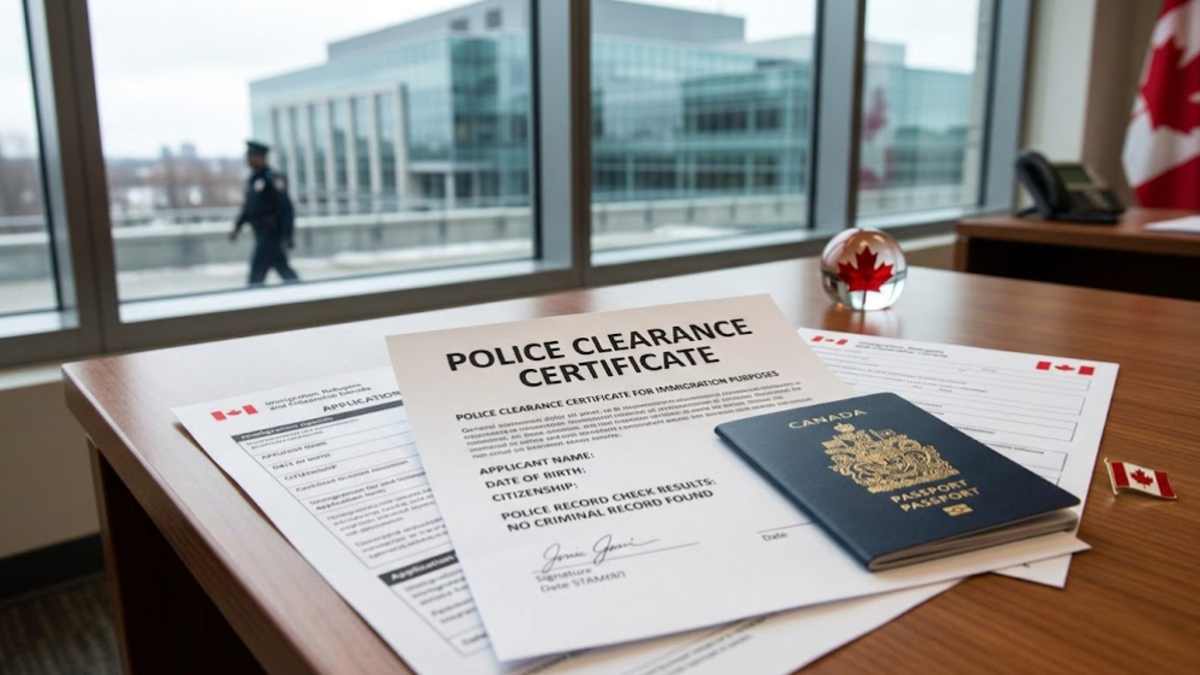
Ottawa – Canadist: Canada Immigration Police Certificate: How to Get a Police Clearance

A Canada Immigration Police Certificate has become an important document for many people seeking permanent residence, citizenship or certain temporary immigration status in Canada. Recent immigration updates have also put greater emphasis on when certificates must be issued, particularly for International Experience Canada applicants and people who have lived abroad. For Express Entry candidates, the document can become especially important because obtaining a certificate from another country may take weeks or even longer. So, who needs a police clearance, when should it be requested and what should applicants do if the document does not arrive on time?
Canada Immigration Police Certificate: What the document means
A police certificate is an official document used by Canadian immigration authorities to assess an applicant’s criminal history. Depending on the country that issues it, the document can have different names, including police clearance certificate, good conduct certificate or judicial record extract.
Immigration, Refugees and Citizenship Canada (IRCC) uses police certificates to help determine whether an applicant could be inadmissible to Canada because of a criminal record or other security concerns. The certificate does not by itself decide an immigration case, but it forms part of the background assessment carried out by Canadian authorities.

The document looks different from one country to another. Some governments issue a national certificate, while others rely on regional or local police authorities. In certain jurisdictions, applicants must provide fingerprints, photographs, proof of address or information covering previous residences.
IRCC says applicants should obtain the certificate from the relevant police or government authority in the country concerned. The process can involve an application fee, identity documents and information about where the applicant lived.
The official Canadian government guidance also makes clear that a certificate written in a language other than English or French must be submitted with the original document and a translation prepared by a certified translator.
For applicants, this means that simply finding a document described as a “police clearance” is not enough. The certificate must meet the requirements that apply to the country where it was issued and to the immigration program being used.
Who needs a Canada Immigration Police Certificate?
The rules depend on the immigration program, but police certificates are particularly important for permanent residence applications.
Under the Express Entry rules, the online application system asks for police certificates for the principal applicant and family members aged 18 or older. The requirement generally covers countries where the applicant or family member stayed for six consecutive months or longer during the previous 10 years.
Time spent in Canada does not require a foreign police certificate. Periods before the applicant turned 18 are also excluded from the standard requirement.
However, applicants should not interpret the 10-year rule as an absolute limit on what immigration officials can request. IRCC says an officer can ask for additional police certificates covering periods since the applicant turned 18 if they consider them necessary.
That distinction matters for people with complicated travel or residence histories. A person may have moved between several countries, studied abroad, worked overseas or returned repeatedly to the same country.
Applicants should therefore prepare a complete residence history rather than relying only on memory when deciding which certificates they may need.
Short trips generally do not create the same requirement as a continuous six-month stay. IRCC provides an example of a person who spent several separate periods of four months studying in Spain. Because none of those stays reached six consecutive months, the online system would not normally request a Spanish certificate. An immigration officer could still request one later.
When should applicants request the police clearance?
Timing can be one of the biggest challenges in the immigration process.
IRCC warns that police certificates can take a long time to obtain and recommends starting the process early. Express Entry candidates should consider requesting certificates while they remain in the candidate pool rather than waiting until an invitation to apply arrives.
Once an Express Entry candidate receives an invitation to apply, the applicant normally has 60 days to submit the permanent residence application. That deadline creates a potential problem if a foreign police authority has a slow application process.
The rules also distinguish between the country where the applicant currently lives and countries where the applicant previously lived.
For the applicant’s current country of residence, the police certificate must have been issued no more than six months before the date the permanent residence application is submitted. IRCC can also request an updated certificate during processing.
For a previous country of residence, the certificate must have been issued after the applicant’s last stay there of six consecutive months or longer. Even where a country places an expiry date on its certificate, IRCC says an expired document from a previous country can still be accepted if it was issued after the applicant’s last qualifying stay and the country is not the applicant’s current country of residence.
This makes timing particularly important for applicants who have recently moved countries.
The safest approach is to identify all potentially required certificates early, check the issuing authority’s procedures and then make sure the documents still meet IRCC’s timing rules when the application is submitted.
Recent changes affecting International Experience Canada applicants
Recent immigration reporting has highlighted changes involving police certificates for International Experience Canada, or IEC, work permit applications.
Updated instructions clarified that the certificate from an applicant’s current country of residence must have been issued within six months of the date IRCC receives the work permit application. The clarification also addressed applicants who previously lived in another country for six months or longer after turning 18.
For those previous countries of residence, the certificate must have been issued after the applicant’s last period of residence there. The clarification also applies in certain IEC cases involving U.S. citizens and permanent residents and people who do not normally submit a police certificate upfront but are later asked to provide one by an immigration officer.
The change is significant because it connects the age of the police certificate to the date IRCC receives the application.
IEC candidates also face a short application window after receiving an invitation. Candidates generally have 20 days to submit a complete work permit application after receiving an invitation.
For that reason, applicants who know they may require police certificates from several countries should not wait until the invitation arrives before beginning the process.
IRCC’s instructions also recognize that some countries have different procedures. The official country-specific guidance covers jurisdictions including Spain, France, Portugal, Japan, Australia, Belgium, Finland, Iceland, Luxembourg, Mexico and Switzerland, among others.
How to get a police clearance from another country
The first step is to determine which authority issues the certificate in the relevant country.
In many cases, the applicant contacts the local police service or a national government authority. Some countries allow applications online, while others require applicants to appear in person or use an authorized representative.
Applicants may need to provide fingerprints, photographs, identification documents, previous addresses and dates of residence. Fees can also apply.
IRCC’s general guidance advises applicants to check the specific instructions for the country concerned because police certificate procedures vary significantly between jurisdictions.
This is particularly important for applicants who no longer live in the country where they need a certificate.
Some governments allow former residents to apply through a consulate, embassy, representative or family member. Others may require an application through a local police authority.
There is no single worldwide application procedure for a Canadian immigration police certificate. The applicant must follow the rules of the authority that actually issues the document.
If the country requires an official request letter from IRCC, the process can be different. In Express Entry cases, the applicant can indicate in the document checklist that the country requires an official request letter. IRCC can then review the application and provide information about obtaining the certificate.
Applicants should keep receipts, confirmation emails, application records and delivery information throughout the process. These documents can become important evidence if the certificate is delayed.
China highlights the difficulty some applicants face
Recent immigration reporting has drawn attention to the particular difficulties faced by applicants who need police certificates from China.
The document is generally known as a “No Criminal Record Certificate.” Unlike many countries, China generally does not provide a straightforward nationwide online application process for these certificates.
Procedures can also vary from one city to another. Applicants who lived in multiple Chinese cities may therefore face separate requirements depending on where they lived.
Chinese citizens living outside the country can, in many cases, authorize an immediate family member to apply on their behalf. The reported process can involve identification, a signed authorization document, the applicant’s household registration booklet and other required documents.
For Chinese citizens living in China, the process can involve a notary public office and the local police station. The applicant may first obtain an official request document, use it to seek the No Criminal Record Certificate and then return to the notary office for a Notary Certificate of No Criminal Convictions.
The final paperwork can also include a notarized translation.
Non-Chinese citizens who lived in China for more than 180 days can generally seek the certificate through the Exit-Entry Administration Department of the Public Security Bureau in the relevant city. Procedures can differ locally, so applicants must confirm the requirements with the appropriate authority.
The difficulties illustrate why applicants should not leave police certificates until the final stage of an immigration application.
What if the police certificate is delayed?
A delayed police certificate does not automatically mean that an applicant must abandon an immigration application.
For Express Entry candidates who cannot obtain all required certificates before the 60-day application deadline, IRCC allows applicants to submit a letter of explanation together with evidence showing that they made their best effort to obtain the document.
The evidence can include a confirmation receipt, payment receipt, delivery notice, tracking number or written explanation from the authority responsible for issuing the certificate.
The applicant should upload the explanation and supporting evidence in the relevant country-specific police certificate field.
The immigration officer will assess whether the applicant made a genuine and sufficient effort to obtain the document. IRCC warns that an application can be rejected as incomplete if the officer is not satisfied with the evidence provided.
This makes documentation extremely important.
An applicant who simply says that a certificate is taking too long may not provide enough evidence. A stronger file shows when the certificate was requested, which authority received the request, what fee was paid and why the document has not yet arrived.
Applicants should keep every piece of correspondence connected with the request.
Avoid mistakes when uploading police certificates
Another practical issue concerns the format of documents submitted to IRCC.
For Express Entry, police certificates must be submitted as colour scans of the original certificates. IRCC says certified true copies or unauthorized copies are not accepted and can lead to an application being rejected.
Applicants who have several police certificates should also pay attention to the upload structure of the application.
For IEC applications, recent guidance notes that there is only one upload field for police certificates. Where several certificates are required, IRCC recommends combining them into a single file before uploading.
Translation requirements also deserve attention.
If a certificate is not in English or French, applicants must provide the original certificate together with a translation from a certified translator. A translated summary prepared informally by the applicant does not replace the required certified translation.
Applicants should also check that names, dates of birth, passport information and residence details are consistent across their immigration documents.
A mismatch does not necessarily mean an application will fail, but unexplained discrepancies can create questions and additional processing.
A practical checklist before submitting
Before submitting an application, applicants should review their residence history carefully and identify every country where they may have met the relevant six-month threshold.
They should then check the country-specific instructions and determine whether the certificate must be requested in person, online, through a representative or through another authorized process.
The certificate should be requested early enough to account for processing and delivery delays.
Applicants should retain evidence of every request and payment. If the document does not arrive before the immigration deadline, that evidence may support an explanation to IRCC.
They should also verify the certificate’s issue date. The rules differ depending on whether the certificate comes from the applicant’s current country of residence or a previous country.
Finally, applicants should make sure that the submitted copy is an acceptable scan of the original and that any required translation comes from a certified translator.
The Government of Canada police certificate guidance provides the official starting point for checking the general requirements and accessing country-specific instructions.
Why early preparation matters for Canadian immigration
Police certificates may appear to be a routine document, but the process can become complicated when an applicant has lived in several countries.
The challenge becomes greater when a former country of residence requires an in-person application, does not offer a centralized system or has different procedures across cities.
Recent immigration updates reinforce the importance of checking the issue date as well as the document itself. A certificate can be genuine and still fail to meet the timing requirement for a particular application.
For Express Entry candidates, the 60-day deadline after an invitation makes preparation especially important. For IEC applicants, the shorter 20-day application period creates another reason to gather documents before an invitation arrives.
The central lesson for applicants is straightforward: identify the certificates early, follow the issuing country’s rules precisely and keep evidence of every step.
A police clearance is not simply another immigration attachment. It is part of Canada’s admissibility assessment, and an incomplete or missing document can create avoidable complications at a critical stage of the application process.
FAQ
Do all Canada immigration applicants need a police certificate?
No. The requirement depends on the immigration program and the applicant’s residence history.
How long must I have lived in a country to normally need a certificate?
For Express Entry, the standard rule covers stays of six consecutive months or longer in the relevant period after turning 18.
What if my police certificate is delayed?
For Express Entry, submit an explanation and evidence showing that you made your best effort to obtain it before the deadline.
Can I submit a police certificate in another language?
Yes, but you generally need the original certificate and a translation into English or French from a certified translator.
Contact: info@canadaalyom.com