

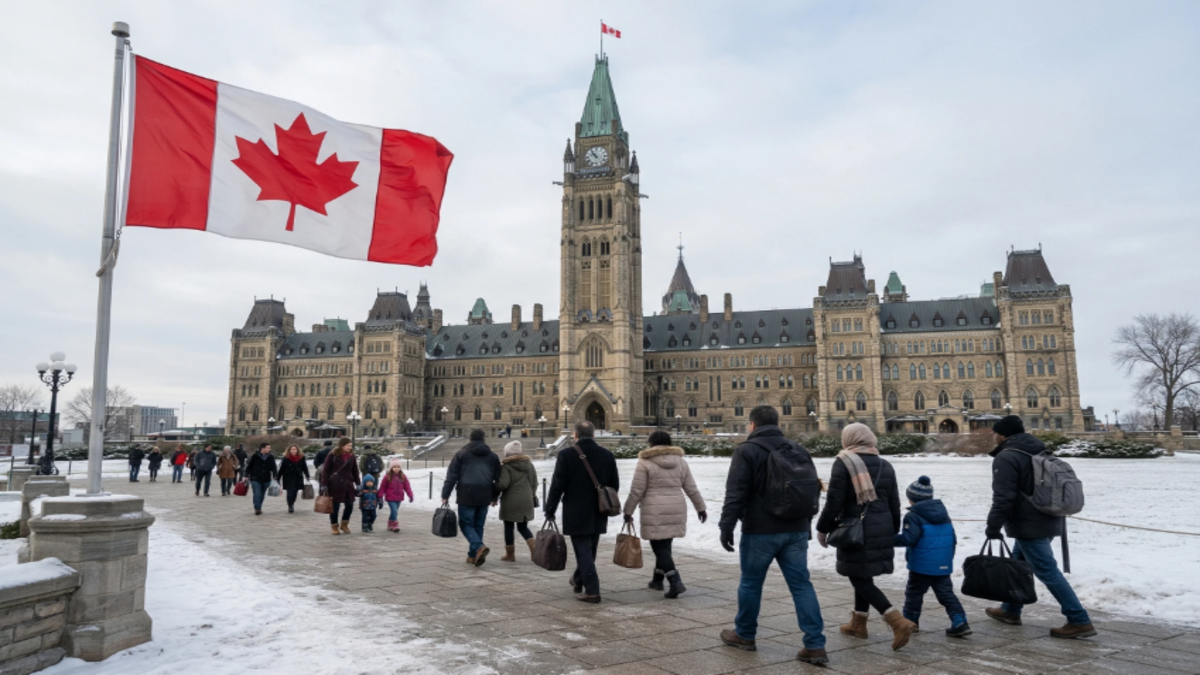
Ottawa, Canadist: Canada immigration policy

Canada Immigration Policy at a Turning Point as Asylum Reforms, Permanent Residence Plans and Constitutional Challenges Take Centre Stage
Canada is navigating an important period of immigration reform, constitutional debate and political change, with developments affecting newcomers, temporary foreign workers, refugees and religious minorities attracting national attention. While no major new federal immigration rule was confirmed on November 27, several existing measures and recently announced initiatives are expected to shape the country’s immigration system in the months ahead.
Among the most significant developments are Canada’s new asylum application procedures, the federal government’s proposed transition of eligible temporary residents to permanent residence in 2027, and recent changes intended to help researchers remain in Canada. Beyond immigration, the Supreme Court of Canada’s anticipated decision on Quebec’s controversial Bill 21, preparations for upcoming federal byelections and the introduction of new budget implementation legislation are adding to the country’s political and institutional challenges.
Together, these developments highlight the federal government’s effort to manage immigration more predictably while addressing labour-market requirements, asylum processing pressures, constitutional questions and national security concerns.

Canada Immigration Policy: No Major New Federal Rule Change Confirmed
For immigrants and prospective applicants monitoring developments in Canada, an important distinction is necessary: no new major immigration policy announcement dated November 27 was identified in the latest review of federal notices.
This does not mean Canada’s immigration system is standing still. Several important decisions announced earlier in November remain relevant, particularly those concerning permanent residence, Express Entry and asylum procedures.
The most important developments include:
- November 18: Express Entry changes intended to help leading researchers continue working in Canada.
- November 17: Temporary measures designed to remove certain barriers to permanent residence for researchers with Canadian work experience.
- November 12: Details of a proposed transition to permanent residence in 2027 for eligible temporary residents.
- November 3: New asylum application procedures and eligibility regulations came into force.
For applicants, the distinction between an announcement, a proposed measure and an implemented regulation is essential. A policy discussed by the federal government does not automatically create an entitlement to permanent residence or change the eligibility requirements for every immigration category.
Proposed 2027 permanent residence transition for temporary residents
One of the most closely watched immigration developments is the federal government’s plan to facilitate the transition of eligible temporary residents to permanent residence in 2027.
The November 12 announcement outlined a proposed transition involving up to 100,000 workers and their families. The wider temporary-resident transition measures also identify a target of up to 200,000 existing residents.
The initiative reflects an important policy consideration: people who are already living and working in Canada may contribute to the economy, fill labour shortages and establish strong community connections.
Moving eligible residents towards permanent status could help employers retain experienced workers while offering greater stability to people who have already established their lives in the country.
However, the proposed initiative should not be interpreted as a general amnesty or an automatic permanent residence programme for all temporary foreign workers.
Eligibility conditions and the implementation of the measures remain central to determining who may benefit. Temporary residents should therefore avoid making immigration or employment decisions based solely on the headline figures.
Express Entry changes aim to retain highly skilled researchers
Another significant development concerns Canada’s efforts to attract and retain highly qualified researchers.
Changes announced on November 18 are intended to help leading researchers continue their work in Canada through the Express Entry system. Related temporary measures announced on November 17 seek to remove certain barriers to permanent residence for researchers with Canadian work experience.
The measures reflect the importance of research, innovation and advanced skills to Canada’s long-term economic competitiveness.
International researchers can contribute to universities, scientific institutions, technology companies and other research-intensive sectors. However, retaining this talent requires more than attracting people through temporary opportunities. A clear route towards long-term settlement can also influence whether highly skilled professionals decide to remain in Canada or pursue opportunities elsewhere.
The latest measures therefore form part of a broader effort to connect immigration policy with Canada’s research and productivity objectives.
Canada’s New Asylum System Introduces Stricter Application Timelines
While the proposed permanent residence transition is attracting attention among temporary residents, changes to Canada’s asylum system are particularly important for refugees and people seeking international protection.
New asylum regulations came into force on November 3, introducing a more structured application process and new procedural requirements.
Under the revised system, key changes include:
- A single online application process.
- A 60-day deadline for eligible claimants to submit completed applications and supporting documents.
- The possibility of a one-time extension of 30 days.
- Timelines for government security and admissibility reviews.
- Continued access to work permits for eligible asylum claimants.
- Exceptions for certain vulnerable applicants, including unaccompanied minors.
What the new asylum deadlines mean for applicants
The introduction of a single online application process is intended to establish a more consistent framework for submitting asylum claims.
However, the 60-day deadline makes timely preparation particularly important. Applicants must understand the documentation requirements and ensure that their submissions are completed within the applicable period.
The possibility of a one-time 30-day extension provides some flexibility, but claimants should not assume that additional time will automatically be granted.
The exceptions for certain vulnerable individuals are also significant. Applicants who fall within protected categories, including unaccompanied minors, may be subject to different procedural considerations.
The reforms illustrate the government’s attempt to improve the organization and timeliness of asylum processing while maintaining arrangements for eligible claimants to obtain work permits.
For refugees and people considering an asylum application, understanding the regulations currently in force is more important than relying on older information about Canada’s previous procedures.
Supreme Court of Canada Faces Major Constitutional Test Over Quebec’s Bill 21
Beyond immigration policy, one of the most consequential national developments concerns Quebec’s Bill 21, legislation restricting certain public employees from wearing religious symbols while performing their duties.
The Supreme Court of Canada was expected to issue a decision on the legislation on November 27, according to a Reuters report published that morning. However, the available briefing did not confirm that the Court had actually released its ruling.
The legislation affects certain individuals in positions of authority, including teachers, police officers and government employees.
Religious symbols covered by the restrictions include hijabs, turbans and crosses.
The case has become a major national debate because it raises questions about religious freedom, equality rights, provincial authority and the limits of constitutional protections.
Why Bill 21 matters beyond Quebec
Quebec has invoked the notwithstanding clause twice to protect the legislation from certain Charter challenges.
This makes the case particularly significant for Canada’s constitutional framework. The notwithstanding clause allows governments to override certain Charter protections for a limited period, subject to constitutional rules.
The Supreme Court’s consideration of the case therefore has implications extending beyond the immediate restrictions imposed by Quebec.
For religious minorities, particularly Muslim women who wear hijabs, the legislation has raised concerns about access to public-sector employment and equal participation in professional life.
At the national level, the controversy also highlights differences between Quebec’s approach to secularism and broader debates about religious accommodation and individual rights elsewhere in Canada.
Whatever the eventual outcome, the case is likely to remain an important reference point in discussions about provincial powers and constitutional rights.
It is essential, however, not to anticipate the Court’s conclusion before an official decision is confirmed.
Elections Canada Addresses Foreign Interference Concerns Ahead of Byelections
Another important development concerns the security of Canada’s electoral process.
Chief Electoral Officer Stéphane Perrault told members of Parliament that he was satisfied with the arrangements in place to ensure that security partners would provide the information needed to identify possible foreign interference in six upcoming byelections scheduled for December 7.
He also stated that available evidence had not identified foreign interference, cyber incidents or coordinated campaigns affecting the 2025 federal election or subsequent byelections.
The comments come amid growing attention to foreign influence operations and the potential risks they pose to democratic institutions.
Election security remains a national priority
Foreign interference is a concern for democratic systems because coordinated influence campaigns and cyber operations can undermine public confidence in elections.
The Elections Canada chief’s assessment indicates confidence in the existing arrangements for receiving and evaluating security information.
Nevertheless, the absence of identified interference in previous elections should not be interpreted as proof that future electoral processes face no risks.
The December 7 byelections will provide another opportunity for Canada’s electoral and security institutions to demonstrate their preparedness.
Maintaining public confidence requires not only effective security arrangements but also transparent communication about potential threats and the measures taken to address them.
Federal Government Introduces Budget Implementation Bill C-43
On the economic front, the federal government introduced Bill C-43 on November 26 to implement provisions of Budget 2026.
The proposed legislation is intended to advance several government priorities, including:
- Economic investment and productivity.
- Economic diversification.
- Affordability.
- Canadian security and sovereignty.
The bill represents an important legislative step in translating the government’s budget priorities into policy and legal measures.
Why the proposed legislation matters
Budget implementation bills can have broad implications because they provide the legislative framework for measures involving taxation, public spending, investment and government programmes.
For businesses, investors and households, the eventual provisions may influence the economic environment in which they make financial and operational decisions.
The relationship between immigration and economic policy is also relevant. Canada’s ability to attract workers, retain skilled professionals and support productivity is closely connected to its broader economic objectives.
However, Bill C-43 remains a legislative proposal at this stage. Its introduction does not mean that all its provisions have already become law.
The bill must be distinguished from measures that have completed the legislative process and entered into force.
Immigration Developments Affecting Ukrainians and Hong Kong Applicants
Other existing immigration priorities remain important for people waiting for permanent residence decisions.
Federal measures announced in November also address the processing of existing permanent residence applications involving eligible Ukrainian and Hong Kong applicants.
The stated objective is to process remaining eligible applications more efficiently.
These initiatives form part of the government’s wider approach to managing existing immigration commitments while maintaining a more predictable system.
For affected applicants, the focus remains on the processing of applications already submitted rather than the announcement of a completely new immigration pathway.
It is important to distinguish between a commitment to process existing applications and a guarantee that every applicant will receive permanent residence. Individual eligibility and application requirements continue to matter.
What Canada’s Latest Developments Mean for Immigrants and Newcomers
The developments reported on November 27 reveal several priorities shaping Canada’s immigration and public policy environment.
First, the federal government is seeking to make better use of people already living in Canada. The proposed 2027 transition measures and researcher-related changes suggest an emphasis on retaining workers and highly skilled professionals.
Second, asylum processing is becoming more structured, with clearer application procedures and defined submission deadlines. This makes procedural awareness increasingly important for people seeking protection.
Third, the wider political environment remains relevant to newcomers. The Bill 21 case demonstrates how constitutional and provincial policy debates can affect religious minorities and access to public-sector employment.
Finally, economic legislation and election security developments show that immigration policy is only one part of a broader national agenda involving productivity, affordability, sovereignty and democratic resilience.
Key issues to monitor in the coming weeks
Several developments deserve continued attention:
- The Supreme Court’s Bill 21 decision: Confirmation of the ruling and its legal implications will be important for Quebec and the wider country.
- The 2027 permanent residence transition: Further details about eligibility and implementation will be crucial for temporary residents and their families.
- Asylum application requirements: Applicants must follow the new regulations and applicable deadlines.
- Researcher-related immigration measures: Their implementation will determine how eligible professionals can benefit.
- Bill C-43: The legislative process will clarify which proposed budget measures ultimately become law.
- December 7 byelections: Electoral security arrangements will remain under scrutiny.
Frequently Asked Questions (FAQ)
1. Has Canada announced a new immigration rule on November 27, 2026?
No major new federal immigration rule change dated November 27 was confirmed in the available briefing. The most recent significant developments include researcher-related Express Entry changes, proposed permanent residence transition measures and new asylum regulations.
2. Will 100,000 temporary foreign workers automatically receive permanent residence in 2027?
No. The proposed transition involves up to 100,000 workers and their families, but it does not guarantee permanent residence to every temporary foreign worker. Eligibility requirements and the implementation of the programme will determine who can benefit.
3. What are the new asylum application deadlines in Canada?
Under the regulations introduced on November 3, eligible asylum claimants generally have 60 days to submit completed applications and supporting documents. A one-time extension of 30 days may be possible. Certain vulnerable applicants, including unaccompanied minors, are covered by exceptions.
4. Has Canada’s Supreme Court ruled on Quebec’s Bill 21?
The ruling was expected on November 27, according to the Reuters report included in the available briefing. However, the briefing did not verify that the decision had been released or establish its outcome. Readers should consult official Supreme Court announcements for confirmation.
Conclusion: Canada’s Immigration and Political Landscape Enters an Important Period
Canada’s latest developments demonstrate a country balancing several major policy priorities. Immigration reforms are increasingly focused on retaining skilled talent, managing temporary residents and improving the asylum process, while constitutional questions, electoral security and economic legislation continue to shape the national agenda.
For newcomers, temporary foreign workers, researchers and refugees, the most important lesson is to distinguish between policies already in force and government proposals that still require implementation. The proposed permanent residence transition may create opportunities for eligible residents, but it should not be mistaken for an automatic pathway. Similarly, the new asylum regulations require applicants to pay close attention to deadlines and documentation.
Meanwhile, the anticipated Bill 21 ruling and the introduction of Bill C-43 underline the wider significance of the decisions facing Canada’s institutions.
As these developments unfold, staying informed through reliable official announcements and verified reporting will be essential for understanding their practical consequences.
Follow Canadist for the latest Canadian immigration updates, federal policy decisions, political developments and important national news every day.
Article Author
Jonathan Clark
Culture and Lifestyle Journalist specializing in Canada.
Email:
info@canadaalyom.com