

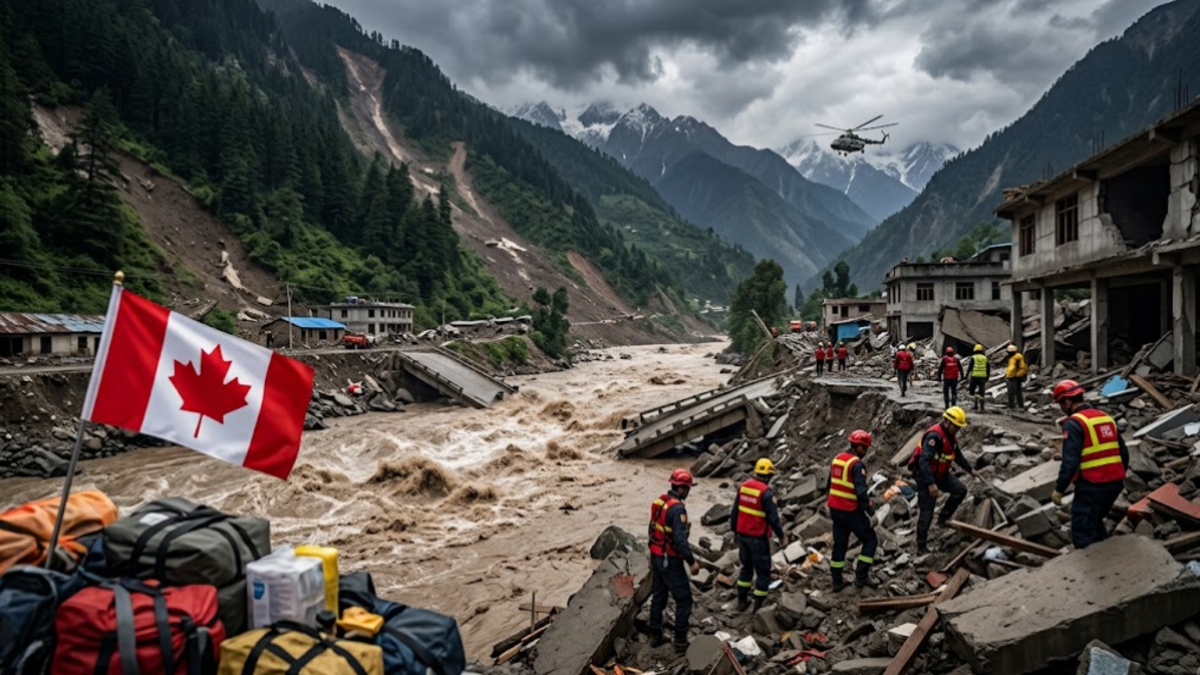
OTTAWA – Canadist: Nepal–Tibet floods have become one of the region’s most serious disasters in years, with more than 600 people reported dead and thousands still unaccounted for after catastrophic flooding and landslides along the Nepal-China border. For Canada, the crisis has taken on an especially urgent dimension: 32 Canadians and permanent residents remain missing or unaccounted for, while authorities have not confirmed any Canadian deaths. As rescue crews face damaged roads, unstable terrain and the threat of further flooding, what is known about the Canadian victims and the international search for survivors?

Nepal–Tibet floods deepen as rescue teams search for missing people
The disaster began on Wednesday after a violent chain of geological events sent enormous volumes of water, mud, rocks and debris through communities near the Nepal-China border. The flooding devastated areas around Nepal’s Rasuwa district and the Tibetan side of the border, including the Gyirong area.
Fresh reports published today put the overall death toll at at least 633, while the number of people still missing has climbed to nearly 3,000. The figures continue to change as authorities gain access to isolated areas and families provide information about people who remain unreachable.
The scale of the destruction has made the rescue operation exceptionally difficult. Roads and bridges were swept away, communication networks were disrupted and large amounts of mud covered homes, industrial sites and transport routes.

Rescue officials have also had to work around the danger of additional flooding. A temporary lake formed high in the mountains after the initial disaster, raising fears that another release of water could send fresh torrents into already damaged valleys. Authorities have been monitoring the situation while rescue operations continue.
In Nepal, thousands of security personnel and emergency workers have been involved in the response. More than 3,700 people had been rescued by Friday, but difficult weather, damaged infrastructure and hazardous conditions continued to slow searches in the worst-hit areas.
The disaster has also struck locations used by foreign tourists, trekkers and religious pilgrims. Mount Kailash, an important sacred destination, draws visitors from several countries, and many foreign nationals were in the broader region when the flooding occurred.
That international presence has turned the Nepal-Tibet emergency into a major consular crisis, with governments around the world trying to locate citizens whose whereabouts remain unknown.
Nepal–Tibet floods leave 32 Canadians unaccounted for
For Canadians, the most immediate concern is the fate of 32 people whose whereabouts have not been confirmed.
Foreign Affairs Minister Anita Anand said on Friday that the number of Canadians and permanent residents believed to be missing in the affected Nepal and Tibet region had risen to 32. The figure was higher than the previous government estimate, showing how quickly information has changed during the disaster.
Crucially, the Canadian government has not confirmed any Canadian deaths.
Anand said officials were still trying to reconcile information from different authorities because the number of Canadians considered missing by Canadian officials did not match the smaller number reported by Nepalese authorities. That discrepancy does not establish that the unaccounted-for Canadians have died; it reflects the difficulty of obtaining reliable information from a disaster zone where communications and transportation systems have been severely damaged.
The situation has already become personal for families across Canada.
Global News has reported on missing residents from British Columbia and other communities. Among them are Coquitlam couple Sumit and Shubakshi Rawla, while another British Columbia couple, Dhaval and Megha Shah, has also been reported missing after being caught in the disaster area.
The human stories emerging from Canada underline the uncertainty facing relatives.
Families are relying on limited phone calls, travel companies, local contacts and social media updates to determine whether their loved ones escaped. In several cases, relatives have described having no confirmed information since the hours before the flood struck.
A separate report identified 10 people from Toronto as missing after arriving near the Nepal-China border shortly before the flooding. The group was associated with a spiritual organization, highlighting how pilgrimage travel contributed to the large number of foreign nationals caught in the disaster.
The Canadian figure also needs to be viewed in the wider international picture. Hundreds of foreign nationals remain unaccounted for, including Americans, Indians, Australians, Britons and people from several other countries. The Nepal Tourism Board has also published changing figures for missing foreigners as lists are updated.
Canada sends aid while consular teams work on the ground
Ottawa has responded on two fronts: locating Canadians and supporting the humanitarian operation in Nepal.
The federal government announced $5 million in humanitarian assistance for emergency relief. The funding is intended to support essential services such as food, drinking water, shelter, sanitation and health care through international and humanitarian partners.
Global Affairs Canada has also deployed five consular officials to Kathmandu. They are working with local authorities, humanitarian partners and other governments to gather information and establish contact with Canadians affected by the disaster.
The government says the consular officials are working alongside Canada’s honorary consul in Kathmandu and remain prepared to provide assistance as conditions change. Officials are also seeking information through travel agencies and other organizations that may have records of people who entered the affected region.
Canadians searching for missing relatives can reach Global Affairs Canada’s emergency response centre through its 24-hour channels. The government has published emergency telephone, email and messaging contacts for people requiring urgent consular help.
Canada’s official travel advice for Nepal also urges Canadians to exercise a high degree of caution and notes the serious situation following the flooding and mudslide near the China-Nepal border.
The official Canadian government update can be found through Global Affairs Canada’s Nepal-China flood response notice.
Canada has also offered emergency relief supplies from national stockpiles through the Canadian Red Cross if such assistance is requested. The government said it remains in contact with humanitarian partners as the needs on the ground become clearer.
The humanitarian response is particularly important because the disaster has damaged more than homes. Hospitals, roads, bridges, energy infrastructure and other essential facilities have also suffered major destruction.
What caused the catastrophic flooding?
The exact sequence of events has remained an area of intense scientific and official investigation.
Early reports focused on a possible earthquake, but subsequent analysis pointed toward a large glacier-related collapse. Reuters reported that an ice-and-rock avalanche entered a mountain river, sending a massive flow of water and debris downstream. Satellite observations have helped researchers study the scale and direction of the event.
Experts have warned for years that high-mountain regions face growing risks as glaciers retreat and unstable ice, rock and water systems interact.
The flooding did not simply consist of rising river water. Huge quantities of rock, mud and ice moved through valleys at high speed, destroying structures and burying roads and other infrastructure under thick layers of sediment.
That has complicated rescue work. Heavy machinery cannot easily reach some locations, while tunnels and other enclosed spaces may contain survivors who are difficult to access.
One of the most urgent searches has focused on a hydropower project in Nepal where more than 100 people were believed to have been trapped inside tunnels. Rescue workers have faced thick mud and unstable conditions while trying to reach those locations.
The disaster has also raised fresh concerns about secondary hazards. Growing water behind debris and unstable geological formations could create another dangerous surge, forcing rescue crews to balance the need to reach missing people with the safety of emergency personnel.
That risk was serious enough to temporarily disrupt some rescue activity while authorities assessed the possibility of additional flooding. Teams later resumed work, although officials continued to operate under heightened alert.
Families wait while the international search continues
Across Nepal, scenes of families searching for information have become a defining feature of the disaster.
At hospitals and emergency centres, relatives have gathered around photographs and lists of missing people. In Kathmandu, authorities and volunteers have worked to identify bodies while survivors arrive from damaged communities needing medical attention and shelter.
For foreign families, the search has been even more complicated because they often rely on governments, tour operators and local contacts to obtain information from remote areas.
The situation is particularly difficult in Tibet, where access and communications can be more restricted. Chinese authorities have reported deaths and hundreds of missing people in Gyirong, while rescue teams have used foot routes, rafts and drones to reach severely affected locations.
International rescue efforts have expanded as governments track their own citizens. The United States has reported dozens of missing nationals, while other countries have also been searching for tourists and pilgrims. Several foreign governments have offered assistance or financial support as Nepal assesses the enormous scale of the damage.
The economic consequences could also be severe.
Nepal’s finance minister has estimated that rebuilding could require between US$4 billion and US$5 billion, a sum approaching a tenth of the country’s economy. The floods have damaged infrastructure that supports electricity production, transportation and tourism, all important parts of Nepal’s economy.
The disaster’s impact on tourism could be particularly significant. The affected region includes major trekking and pilgrimage routes, meaning that damage to roads and border facilities could disrupt travel well beyond the immediate emergency period.
For Canada, however, the central issue remains the same: the fate of the 32 people still unaccounted for.
Canadian authorities have not announced any confirmed Canadian deaths, and that distinction remains important as identification efforts continue. At the same time, officials acknowledge that information from the disaster zone is incomplete and that the number of people listed as missing can change as communications are restored and survivors are located.
The coming days are therefore likely to remain critical.
Rescuers must reach isolated communities, inspect collapsed structures, identify recovered bodies and compare national missing-person lists. Canadian consular officials will continue trying to establish contact with citizens and permanent residents whose families are waiting for answers.
The wider disaster is also evolving. With thousands still missing and damaged infrastructure limiting access, authorities face a race against time to find survivors while preventing new emergencies from worsening an already devastating situation.
FAQ
How many Canadians are missing in the Nepal-Tibet floods?
Canadian officials say 32 Canadians and permanent residents are unaccounted for in the affected region.
Have any Canadian deaths been confirmed?
No Canadian deaths had been confirmed by Canadian authorities in the latest available update.
Is Canada sending help to Nepal?
Yes. Canada has announced $5 million in humanitarian assistance and deployed five consular officials to Kathmandu.
What caused the Nepal-Tibet floods?
The disaster has been linked to a major glacier-related collapse and the subsequent movement of enormous amounts of water, ice, rock and debris through mountain river systems.
Contact: info@canadaalyom.com