

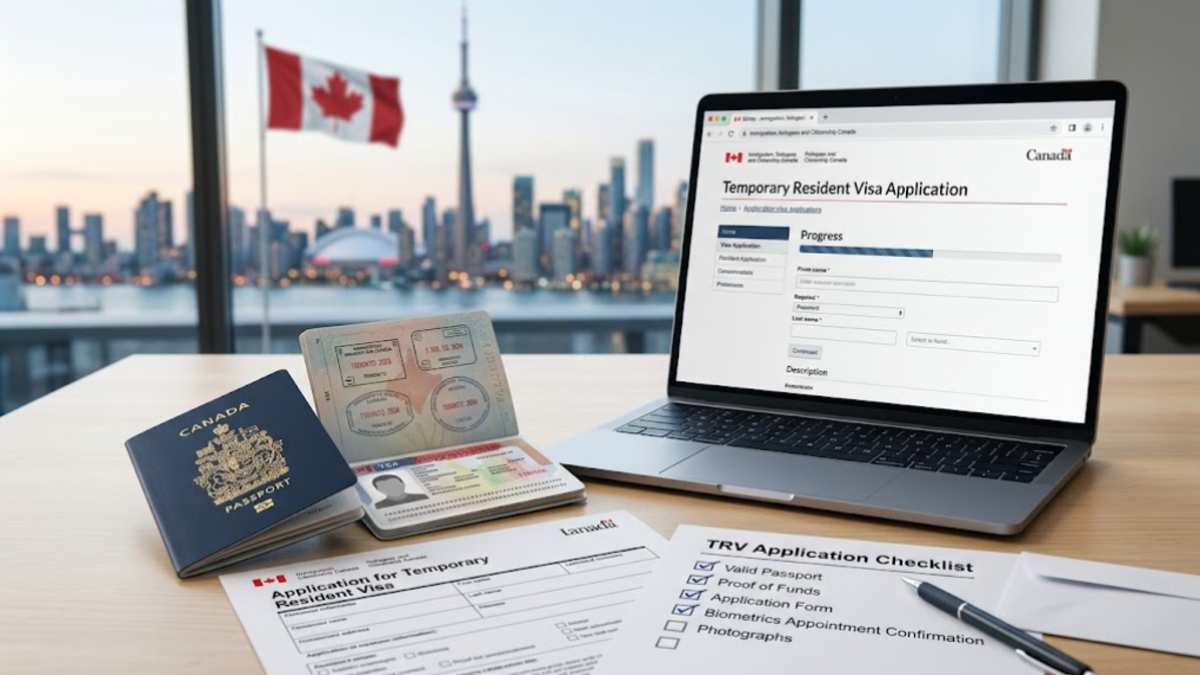
OTTAWA – Canadist: Canada Temporary Resident Visa applications are facing close attention as visitors prepare to travel for tourism, family visits and short business trips. Recent immigration reporting has highlighted the importance of complete applications, credible travel plans and evidence that visitors will leave Canada at the end of their authorized stay. So, what should applicants know before submitting a Temporary Resident Visa application, and which mistakes can put an otherwise strong case at risk?

Canada Temporary Resident Visa: What applicants need to know
A Canada Temporary Resident Visa, commonly called a visitor visa or TRV, is the document Canada places in a passport when a foreign national needs a visa to travel to Canada as a temporary visitor. It allows the holder to seek entry, but it does not guarantee admission at the border.
The distinction matters. Canadian immigration officers can assess a traveller again when the person arrives in Canada. A visa therefore should not be treated as an automatic right to enter or remain in the country.
The visa is generally used by people travelling to Canada for temporary purposes such as tourism, visiting relatives or friends, or certain short business activities. Applicants must demonstrate that their circumstances fit the purpose of a temporary visit.

The Canadian government says applicants must satisfy an immigration officer that they meet the requirements for a visitor visa. That includes demonstrating that they will leave Canada at the end of their authorized stay and that they have enough money for the visit.
The application process begins with determining whether a visitor visa is actually required. Canada has different entry requirements depending on nationality, travel document and method of travel. Some travellers may need an electronic travel authorization instead of a visa, while others require a TRV.
Applicants should therefore avoid starting with the visa form itself. The first step should be checking the official Canadian immigration requirements for their individual circumstances.
Recent immigration coverage has also put greater emphasis on refusal risks. CIC News reported that visitor visa refusals can occur when applicants fail to provide convincing evidence of their intention to return home, submit incomplete documentation or provide information that does not support the stated purpose of the trip.
For prospective visitors, that means the strongest application is not necessarily the one with the largest number of documents. It is the one in which the information is consistent, relevant and supported by credible evidence.
How to apply for a Canada Temporary Resident Visa
Most applicants should apply online through Canada’s immigration system. The application requires electronic copies of the relevant documents, payment of the applicable fees and, where required, biometric information.
The basic application process starts with gathering the necessary documents. A valid passport or travel document is required, and applicants may need additional evidence depending on their circumstances and the reason for travelling.
The application form for a visitor visa is IMM 5257. Each person applying for a Temporary Resident Visa must complete the form unless the instructions state otherwise.
Applicants should answer every applicable question carefully. Immigration authorities specifically advise applicants to complete the form on a computer, which can make it easier to identify errors before submission.
The next step involves paying the required fees. The standard visitor visa processing fee is CAN$100 per individual, while the biometric fee is CAN$85 for an individual who must provide biometrics. Family applicants can face different fee structures.
Biometrics generally involve fingerprints and a photograph. Most applicants who fall within the relevant age and eligibility requirements must provide them after submitting their application.
Once an applicant receives a biometric instruction letter, the appointment should be arranged promptly. Immigration authorities state that applicants generally have 30 days to provide biometrics after receiving the instruction letter.
The application then moves into processing. Immigration officials can request additional information if they consider it necessary. Depending on the circumstances, this can include an interview, medical examination or police certificate.
That is why applicants should monitor their application after submission rather than assuming the process ends when the online form is sent.
The government also warns that incomplete applications can be refused. A missing document or unanswered question can therefore become more than a minor administrative problem.
Applicants should use the official Canadian immigration instructions as the final reference because requirements can differ according to the applicant’s situation.
Canada Temporary Resident Visa and the importance of proving your return
One of the central issues in a visitor visa application is temporary intent.
An applicant must convince the immigration officer that the planned trip is genuinely temporary. This does not mean simply writing, “I will return home” in a cover letter. The application should contain evidence that supports that statement.
Employment can be important evidence. A person with a stable job may provide employment documentation showing their position, length of employment and approved leave.
Business owners can similarly demonstrate ongoing commercial responsibilities in their home country. Students may provide evidence of enrolment and their continuing studies.
Family responsibilities can also help establish ties, depending on the applicant’s circumstances. Property ownership, long-term commitments and other established connections may provide additional context.
However, applicants should not submit documents merely to increase the size of the file. Evidence should help explain the applicant’s actual circumstances.
A common mistake is submitting a large collection of financial records without explaining what they demonstrate. Bank statements, for example, should be consistent with the applicant’s employment, income and proposed travel plans.
The same principle applies to travel history. Previous international travel may provide useful context, but applicants should never assume that a passport containing several visas automatically guarantees approval.
The officer considers the application as a whole.
Recent reporting on Canadian visitor visas has specifically identified insufficient proof of ties to the applicant’s home country as one of the important reasons applications can be refused.
This makes the purpose of the trip particularly important. A visitor planning a short family holiday should present a realistic itinerary rather than an unexplained plan to remain in Canada for an extended period.
The dates should make sense alongside employment leave, accommodation arrangements and financial resources.
If a relative or friend in Canada is providing accommodation or inviting the applicant, supporting information can help establish the purpose of the visit. But an invitation letter does not replace the applicant’s responsibility to demonstrate that they meet the visitor visa requirements.
Common mistakes that can damage an application
The first major mistake is submitting incomplete information.
Applicants sometimes rush through forms because they believe the supporting documents are more important. That approach can create inconsistencies or leave questions unanswered.
Every section should be reviewed before submission. Names, dates, addresses, employment history and travel details should match the supporting documents.
The second mistake is providing contradictory information.
For example, an applicant might state that they are travelling for two weeks while another document suggests a substantially longer stay. Even an innocent discrepancy can raise questions about the accuracy of the application.
The third mistake is failing to explain the financial side of the trip.
Applicants should be able to demonstrate that they can reasonably afford their proposed visit. The amount required will depend on the length and nature of the trip, accommodation arrangements and individual circumstances.
A bank balance alone does not necessarily explain where the money came from or whether it is consistent with the applicant’s normal financial situation.
The fourth mistake is relying on unexplained large deposits shortly before applying.
If an account suddenly contains significantly more money than usual, the applicant should be prepared to explain the source with legitimate supporting evidence. Financial information should tell a coherent story rather than create new questions.
Another common problem involves travel history.
Applicants must provide truthful information about their previous travel and immigration history. Attempting to hide a previous refusal, overstaying episode or other relevant event can create much more serious consequences than acknowledging and explaining it.
Canadian immigration reporting has repeatedly warned that inaccurate information can raise misrepresentation concerns. Such issues can affect an application even when the applicant believes the incorrect information was minor.
Why honesty matters more than a perfect-looking file
A visitor visa application should never be built around what the applicant thinks an immigration officer wants to see.
Instead, it should accurately describe the applicant’s real circumstances.
This principle becomes particularly important when applicants use immigration consultants, lawyers or other representatives. Professional assistance can help with organization and interpretation of requirements, but applicants remain responsible for the information submitted on their behalf.
Canadian authorities advise applicants to check whether a paid immigration representative is authorized to provide immigration advice or representation.
Applicants should also review every completed form before allowing a representative to submit it.
A signature or electronic declaration does not become meaningless simply because someone else prepared the application.
Another mistake is copying generic explanations from online forums or using another applicant’s cover letter as a template without adapting it to the actual circumstances.
Immigration officers assess individual applications. A statement that worked for one traveller may be irrelevant to another.
The best supporting letter is usually straightforward. It should explain why the applicant wants to travel, how long they intend to stay, where they plan to stay, how they will pay for the trip and why they will return home.
There is no need to fill the letter with dramatic language.
Clarity can be more persuasive than volume.
Financial documents, invitations and travel plans
Financial evidence should correspond with the proposed trip.
An applicant planning a short visit should be able to explain the expected expenses, including accommodation, transportation, food and other ordinary costs.
If the applicant will stay with family or friends, that fact should be clearly identified. Where another person is paying for some or all of the trip, the application should explain that arrangement and provide appropriate evidence.
Invitation letters can support an application, particularly when the visit involves family or friends in Canada. But an invitation does not automatically establish that the visitor qualifies for a visa.
The applicant still needs to satisfy the requirements applicable to temporary visitors.
The itinerary should also be realistic.
Applicants do not necessarily need to book every activity before receiving a visa. In fact, making expensive non-refundable arrangements before receiving a decision can expose travellers to unnecessary financial risk.
What matters is that the proposed trip makes sense.
A short tourism visit might include several cities, but the applicant should be able to explain why those destinations are being visited and how the travel fits within the proposed period.
For business visitors, the purpose must also remain consistent with visitor status. Canadian authorities state that qualifying business visitors must plan to stay for less than six months, must not intend to enter the Canadian labour market, and must have their main place of business and source of income and profits outside Canada.
What happens after submission?
Submitting the application does not mean that approval is guaranteed.
Canadian immigration officials review the file and can request further information. Applicants may also be asked to attend an interview or complete additional steps.
Processing times vary according to the application, visa office and circumstances. The government notes that processing can depend on factors including whether the application is complete, how easily information can be verified and how quickly an applicant responds to requests.
That makes it risky to build a trip around an assumed processing deadline.
Travellers should check the current processing information for their location and apply with enough time to accommodate possible delays.
Biometrics can also affect the timeline. Applicants who receive a biometric instruction letter should not postpone the appointment because waiting can add unnecessary delays.
If the application is approved, the applicant receives instructions concerning the passport and visa.
Even then, the traveller should understand that the visa allows them to seek entry. A border officer makes the final decision about admission when the person arrives in Canada.
What applicants should check before clicking submit
A final review can prevent many avoidable problems.
Applicants should compare the passport with the application to ensure names and dates are accurate. They should check that travel dates are consistent throughout the file and confirm that employment, education and family information is complete.
Financial records should be reviewed for unexplained inconsistencies.
Applicants should also check whether the documents are legible and whether translations are required for documents that are not in an accepted language.
The application should contain evidence relevant to the applicant’s individual circumstances rather than a random collection of paperwork.
Most importantly, applicants should read the declarations carefully and ensure that every answer is truthful.
Recent Canadian immigration coverage has emphasized the risks associated with incomplete or inaccurate applications. The wider immigration system has also faced increased scrutiny around fraud and document integrity, reinforcing the importance of submitting genuine evidence.
A practical checklist for prospective visitors
Before submitting a Canada Temporary Resident Visa application, applicants should ask themselves several basic questions.
Is the passport valid and is the personal information entered correctly?
Is the purpose of the trip clear?
Do the proposed travel dates make sense?
Can the applicant demonstrate sufficient funds for the planned visit?
Are employment, education, family or other relevant ties properly documented?
Does the application accurately describe previous travel and immigration history?
Are all required forms complete?
Have biometrics been handled correctly if required?
Are supporting documents consistent with the information in the forms?
Has the applicant checked the file for unexplained contradictions?
These questions may sound simple, but they address many of the weaknesses that can turn an otherwise credible application into a problematic one.
Applicants should also remember that no consultant, travel agent or online service can guarantee a visa decision.
The decision rests with Canadian immigration authorities.
For that reason, applicants should be particularly cautious about anyone promising guaranteed approval in exchange for a fee or suggesting that documents should be altered to make an application stronger.
A truthful application supported by relevant evidence remains the safest approach.
The bottom line for Canada Temporary Resident Visa applicants
The Canada Temporary Resident Visa process rewards preparation, consistency and honesty.
Applicants should first establish whether they actually need a visitor visa. They should then complete the correct application, provide the required documents, pay the applicable fees and respond promptly to biometric or other instructions.
The most important part of the application, however, is the overall story.
The purpose of the visit, financial circumstances, travel plans and reasons for returning home should fit together logically.
A strong application does not need to overwhelm an immigration officer with paperwork. It needs to make the applicant’s circumstances understandable and credible.
Recent immigration reporting has made clear that visitor visa refusals remain a serious concern for travellers who cannot adequately demonstrate their temporary intent or submit complete and truthful documentation.
Applicants should therefore resist the temptation to rush the process or rely on generic advice.
Checking the official requirements, reviewing every answer and submitting evidence that genuinely reflects the applicant’s circumstances can reduce avoidable problems and give the application the clearest possible presentation.
FAQ
What is a Canada Temporary Resident Visa?
It is a visitor visa placed in a passport that allows an eligible foreign national to seek entry to Canada for a temporary visit.
How much does a visitor visa cost?
The standard processing fee is CAN$100 per individual. A separate biometric fee may apply.
Do I need biometrics?
Many applicants must provide fingerprints and a photograph. The requirement depends on the applicant’s circumstances.
Does a visa guarantee entry to Canada?
No. A visa permits the traveller to seek entry, but a Canadian border officer makes the final admission decision.
Contact: info@canadaalyom.com