

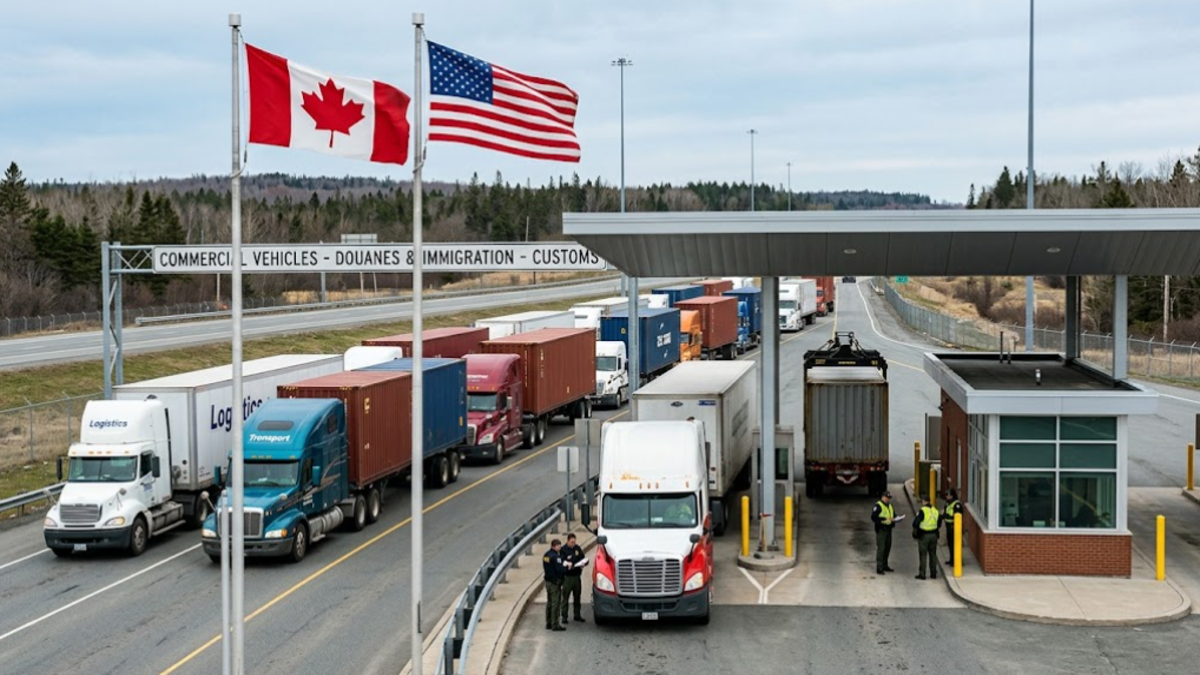
OTTAWA – Canadist: Canada-US trade agreement talks move closer to a breakthrough as Donald Trump says Washington and Ottawa are nearing a deal that could prevent proposed 50% tariffs on about C$20 billion of Canadian exports.

The latest development offers Canadian businesses a temporary reprieve after weeks of escalating trade pressure, but major questions remain unresolved. Dairy-market access, alcohol restrictions and other barriers are still at the centre of negotiations, while Ottawa has stressed that important work remains before any comprehensive agreement can be considered settled. So, how close are Canada and the United States really to a new trade arrangement?
Canada-US trade agreement talks enter a critical phase
The trade dispute between Canada and the United States has entered a decisive stage after Trump signalled that the two countries had made enough progress to postpone a new round of tariffs.
The proposed measures would impose duties of 50% on a group of Canadian goods worth roughly C$20 billion. The threatened tariffs represented only a portion of Canada’s exports to the United States, but their potential impact went well beyond the value of the products directly covered.

For Canadian producers, exporters and retailers, the prospect of a sudden 50% tariff created uncertainty over contracts, prices, production decisions and cross-border supply chains.
Trump’s latest comments have changed the immediate outlook. Instead of allowing the new tariffs to take effect as previously planned, Washington agreed to give negotiators additional time to work towards an understanding.
The American president has described the situation in positive terms and said the two governments are moving towards a deal. Canadian Prime Minister Mark Carney has also acknowledged significant progress, although his message has been notably more cautious.
Carney has indicated that substantial work remains. That distinction matters because an announcement of progress does not necessarily mean the two governments have resolved the underlying disputes.
Canada’s official negotiating position has focused on securing relief from existing sectoral tariffs as well as avoiding the additional measures threatened by Washington. Ottawa has also been seeking progress on the broader modernization of the Canada-United States-Mexico Agreement, known as CUSMA.
The latest movement therefore represents an important change in tone, but not necessarily the conclusion of negotiations.
What the proposed 50% tariffs mean for Canadian exports
The threatened tariffs have become one of the most important economic issues facing Canada because of the country’s deep commercial relationship with the United States.
The proposed 50% duties would apply to approximately C$20 billion worth of Canadian exports. That represents about 5% of Canada’s exports to the American market, according to reporting on the negotiations.
Although that proportion may appear limited when compared with Canada’s total trade with the United States, affected companies could face a substantial shock if the measures eventually take effect.
A tariff of 50% can dramatically alter the economics of an international sale. Importers may demand lower prices from Canadian suppliers, companies may try to move production, and consumers could ultimately face higher prices.
The uncertainty itself can also create problems.
Businesses do not need to pay a tariff for uncertainty to affect their decisions. Companies that do not know whether a duty will apply next week, next month or after another round of negotiations can delay investments and reconsider supply arrangements.
That is why the temporary postponement matters to Canadian industry.
The pause gives exporters more time to plan and gives negotiators an opportunity to settle the issues that remain on the table. It also reduces the immediate risk of another sharp escalation between two countries whose economies are closely integrated.
The negotiations have already involved several sectors, including automobiles, steel, aluminum, forestry and agricultural products. The latest dispute has placed particular attention on American concerns about access to Canada’s markets.
Washington has argued that Canadian policies create barriers for American producers. Ottawa, meanwhile, has defended its interests and has repeatedly said that any new arrangement must protect Canadian workers, farmers, businesses and families.
That disagreement explains why the negotiations have proved difficult even as both sides now speak more optimistically about the possibility of a deal.
Canada-US trade agreement still faces difficult dairy dispute
Dairy remains one of the most politically sensitive issues in the negotiations.
The United States has long pushed for greater access to Canada’s dairy market. Canada’s supply-management system has protected domestic dairy producers through quotas and other measures, making market access a recurring source of tension in bilateral trade discussions.
The latest negotiations have again placed dairy near the centre of the dispute.
Trump has said that the prospective agreement would address American agricultural concerns. Canada, however, has maintained that its supply-management system remains an important domestic policy and has shown no indication that it is prepared to abandon it.
That leaves negotiators with a delicate task.
Any concession on dairy could face scrutiny from Canadian farmers and agricultural organizations. At the same time, refusing to address American demands could make it harder for Washington to support a broader settlement.
The dispute is therefore not simply about the value of dairy exports.
It also involves domestic politics, regional economic interests and the long-standing structure of Canada’s agricultural market.
American dairy producers have repeatedly complained about access to Canada, while Canadian producers have defended the system as a means of providing stability for farmers and consumers.
The issue also illustrates why a headline announcing that the two countries are close to a deal does not necessarily mean that every disagreement has been resolved.
A trade agreement can contain compromises, transitional arrangements or commitments that leave some disputes for later negotiations.
That possibility appears particularly relevant in the current talks because Ottawa and Washington have several separate trade disagreements running at the same time.
Alcohol restrictions add another layer to negotiations
Alcohol is another issue that has complicated the discussions.
American officials have raised concerns about restrictions affecting U.S. alcohol products in Canada. The issue became more prominent as provinces examined their own policies governing the sale and distribution of American alcoholic beverages.
Canada’s federal government does not control every aspect of alcohol distribution because provinces and territories have significant responsibilities in the sector.
That makes the issue more complicated than a simple federal-to-federal negotiation.
Ottawa can negotiate with Washington, but provincial decisions can also influence what Canada can offer as part of a broader settlement.
Recent discussions have therefore included efforts to reduce barriers affecting American alcohol exports.
The issue has also acquired symbolic importance. At a time when both governments are arguing about fairness in trade, Washington wants greater access for American producers, while Canadian authorities want to avoid measures that could undermine domestic businesses or create political backlash.
The negotiations have consequently become a balancing act.
Canada wants to secure better treatment for its exporters while protecting sectors considered strategically or politically important. The United States wants concessions that it can present as evidence that American producers are receiving more equitable access to the Canadian market.
The alcohol question may not determine the entire agreement, but it demonstrates how individual market-access disputes can become linked to a much larger negotiation.
Ottawa seeks relief from wider sectoral tariffs
The proposed 50% tariffs are not the only trade measures affecting Canada.
Ottawa has also been seeking relief from existing American tariffs covering major sectors of the Canadian economy. Government officials have identified steel, aluminum, automobiles and softwood lumber among the industries affected by U.S. trade measures.
That broader tariff picture is crucial to understanding why Canada is seeking a comprehensive solution rather than simply preventing the latest proposed duties.
For Canadian manufacturers, the cost of tariffs can accumulate through supply chains.
A company may export a finished product to the United States while also purchasing American components. Another Canadian manufacturer may sell steel or aluminum to an American factory that relies on cross-border production.
The two economies are deeply connected, which means tariffs can affect businesses on both sides of the border.
Ottawa has repeatedly argued that stable and predictable access to the U.S. market remains essential for Canadian workers and companies.
The government has also emphasized the importance of maintaining CUSMA, which continues to provide the framework for much of North American trade.
Canada’s negotiating strategy has therefore combined immediate tariff relief with a longer-term effort to modernize the continental trade relationship.
That distinction is important.
A temporary agreement could stop a new tariff from taking effect without resolving every dispute. A broader settlement would have to address the wider structure of trade between the two countries.
Trump sees an opening for a broader deal
Trump’s latest comments have raised expectations that the talks could move beyond the immediate tariff deadline.
The American president has linked the negotiations to broader economic issues and has suggested that a settlement could address several longstanding disputes.
The optimism from Washington comes after an intense period of negotiations involving senior officials from both governments.
Canadian Trade Minister Dominic LeBlanc and Canada’s chief trade negotiator, Janice Charette, have been involved in efforts to resolve the outstanding issues. American officials have also maintained high-level contacts with their Canadian counterparts.
The talks have taken place against the backdrop of the ongoing review of CUSMA.
That review adds another layer of complexity because the two countries are not negotiating only over the latest tariffs. They are also considering the future framework governing North American commerce.
Canada has argued that CUSMA remains valuable because it provides businesses with predictable access to the American and Mexican markets.
The government has also emphasized that Canadian interests must remain protected during the negotiations.
The immediate tariff dispute has therefore become part of a larger conversation about the future of North American economic relations.
Businesses welcome breathing room but remain cautious
For Canadian companies, the temporary tariff pause offers relief, but it does not eliminate uncertainty.
Businesses that feared a sudden 50% increase in the cost of selling affected goods into the United States can now wait for negotiators to determine the next step.
That breathing room could prove particularly important for companies operating on tight margins.
A sudden tariff can force an exporter to choose between absorbing the additional cost, raising prices or reducing shipments. Each option carries risks.
But the latest development also highlights the difficulty of planning around trade policy that can change quickly.
Canadian businesses have already spent considerable time adapting to changing tariff measures and countermeasures. Another unresolved deadline could simply postpone the uncertainty rather than remove it.
The Canadian Chamber of Commerce has welcomed the pause while warning about the continued uncertainty facing businesses.
That reaction reflects a broader concern within the private sector: companies want predictable rules more than temporary relief.
A long-term agreement could give businesses greater confidence to invest, hire and expand cross-border operations.
Without such an agreement, companies may continue to build contingency plans, diversify suppliers and look for alternative markets.
Canada has already been seeking to strengthen economic relationships beyond the United States. However, the scale of the American market means that diversification cannot immediately replace the commercial importance of cross-border trade.
What happens next in the negotiations?
The next stage will depend on whether Canadian and American negotiators can convert the current political momentum into a detailed agreement.
The immediate priority is to prevent the proposed 50% tariffs from returning after the temporary delay.
After that, negotiators will have to determine how to handle the more difficult structural questions.
Dairy-market access remains one of the most sensitive issues. Alcohol restrictions are also under discussion, while automobiles, steel, aluminum and other sectors remain part of the wider tariff dispute.
The two governments must also consider how any bilateral settlement fits within CUSMA.
That means the current talks could produce several outcomes.
The countries could reach a relatively narrow interim arrangement focused on preventing the latest tariffs. They could also agree on broader concessions covering several sectors.
Another possibility is that negotiators settle some disputes while leaving the most difficult issues for the wider CUSMA process.
For now, neither side has provided enough detail to conclude that a final comprehensive agreement is complete.
That is why Canadian officials have continued to use cautious language even as Trump has spoken more confidently.
The difference in tone is significant.
Washington is presenting the latest movement as evidence that the pressure campaign is producing results. Ottawa is emphasizing progress while maintaining that negotiations still require work.
Both positions can coexist because a trade agreement is not finished until the governments settle the details and establish how the commitments will operate.
A critical moment for Canada’s economy
The stakes extend beyond the C$20 billion in exports facing the proposed tariffs.
Canada and the United States share one of the world’s most integrated trading relationships. Manufacturers, farmers, energy companies, retailers and service providers on both sides of the border depend on predictable commercial links.
A new agreement could therefore provide more than tariff relief.
It could restore some confidence among companies that have spent months dealing with uncertainty and help establish a clearer direction for future investment.
For Ottawa, the challenge is to reach an arrangement that protects Canada’s core economic interests without giving Washington concessions that could create new problems at home.
For Washington, the challenge is to secure greater market access for American producers while avoiding measures that could damage American companies that rely on Canadian suppliers and consumers.
The latest movement suggests that both governments recognize the costs of prolonged confrontation.
But the remaining disputes are serious enough to prevent premature celebration.
The proposed 50% tariffs have been delayed, and the political rhetoric has become more positive. Yet the dairy question, alcohol restrictions and other trade barriers still need answers.
That leaves the Canada-US trade agreement talks at a potentially decisive point.
The immediate danger of a new tariff shock has eased, but the larger test now begins: whether Ottawa and Washington can turn a short-term pause into a durable trade settlement.
FAQ
Is Canada close to a new trade agreement with the United States?
Canada and the United States have made significant progress, according to both governments, but key issues remain unresolved. Trump has expressed optimism, while Prime Minister Mark Carney has stressed that more work is necessary.
What Canadian exports faced the proposed 50% tariffs?
The proposed duties targeted roughly C$20 billion worth of Canadian exports. The measures would have affected a range of Canadian goods and created additional costs for exporters.
Why is dairy important in the negotiations?
The United States wants greater access to Canada’s dairy market, while Canada wants to preserve its supply-management system. The issue has been a longstanding source of tension between the two countries.
Have the trade disputes been fully resolved?
No. The proposed tariff increase has been postponed while negotiations continue, but disputes involving dairy, alcohol and other trade barriers remain part of the discussions.
Contact: info@canadaalyom.com