

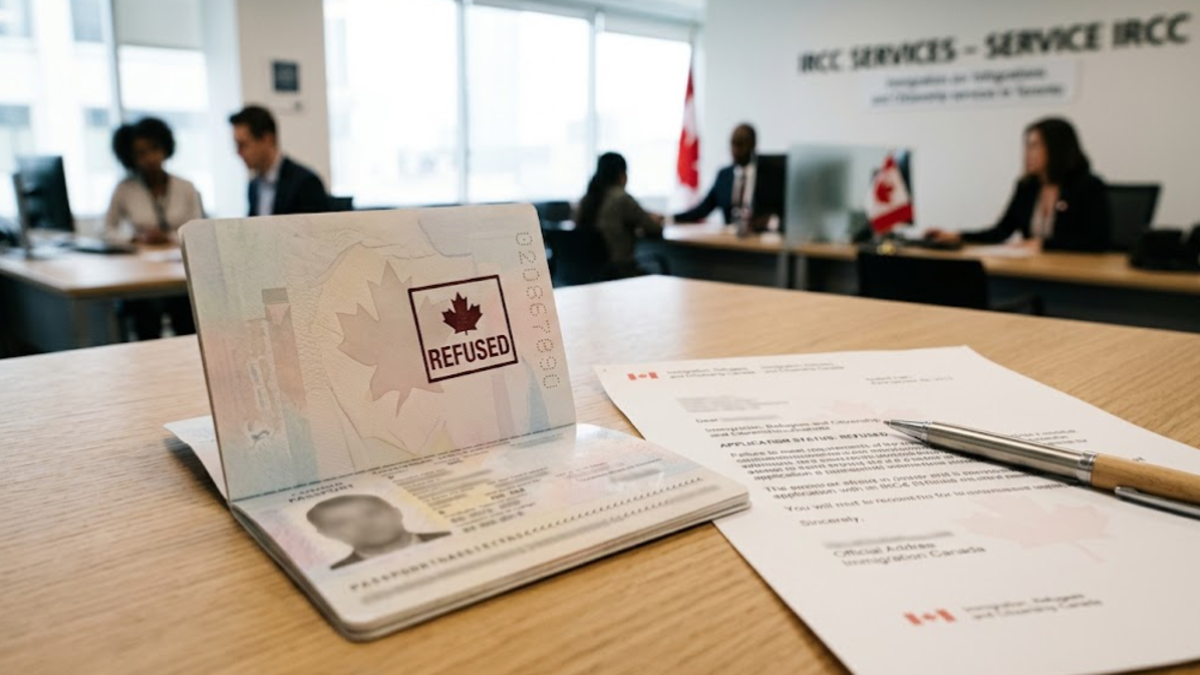
OTTAWA – Canadist: Canada Visa Refusal has become an increasingly important concern for people planning short visits, family trips, studies or temporary stays in Canada, with official figures showing that refusal rates have risen and immigration officers are paying closer attention to whether applicants will respect the conditions of their stay. What are the most common reasons an application can be rejected, and what do Canadian authorities expect applicants to demonstrate?

Recent immigration reporting and figures from Immigration, Refugees and Citizenship Canada (IRCC) point to a central issue: applicants must convince an officer that their proposed stay in Canada is genuine, financially realistic and temporary when they apply for a temporary resident visa.
IRCC reported that the global temporary resident visa refusal rate reached 51 per cent in the first part of the year, compared with 39 per cent for all of 2023. The department said the vast majority of temporary resident visa applications were refused because officers were not satisfied that applicants would leave Canada at the end of their authorized stay.
The figures help explain why a strong application requires more than simply completing forms and paying the required fee. Officers assess the information as a whole, including the applicant’s circumstances, finances, travel plans and connections to their country of residence.

Why Canada Visa Refusal rates have become a major concern
Canada has increased scrutiny of temporary immigration applications as the federal government works to manage temporary resident numbers and strengthen the integrity of its immigration programs.
IRCC said its stronger visa-screening measures produced a 16 per cent increase in the global visa refusal rate in 2024, alongside tighter screening for what the department described as illegal intent. The department also reported an average of about 9,000 investigations into possible visa misrepresentation each month during that period.
The change has affected applicants who may previously have expected a relatively straightforward visitor visa process. Immigration reporting has highlighted the growing importance of demonstrating strong reasons to return home after a temporary visit.
A visitor does not automatically qualify for a visa simply because the trip has a legitimate purpose. The applicant must also satisfy the officer that the proposed visit fits their personal and financial circumstances.
That distinction is crucial.
Someone who says they want to visit relatives for several weeks, for example, may need to show why the trip makes sense, how it will be financed and what commitments require them to return home.
IRCC itself tells prospective visitors that they may need to demonstrate ties such as employment, a home, financial assets or family connections that would take them back to their country of residence.
The biggest reason: doubts about leaving Canada
The most significant issue behind temporary resident visa refusals is the officer’s assessment of whether the applicant will leave Canada when their authorized stay ends.
This does not necessarily mean that an applicant has done anything wrong. Instead, the officer may conclude that the evidence submitted does not sufficiently establish temporary intent.
The assessment can involve several elements at once.
An applicant with stable employment, established family responsibilities, property, ongoing studies or a business may have evidence supporting a return. Another applicant with few documented obligations outside Canada may face greater difficulty demonstrating the same intention.
The key point is that no single document guarantees approval.
A letter from an employer, for example, can help explain a person’s employment situation, but the officer considers it alongside the rest of the application. Similarly, owning property does not by itself guarantee that an applicant will receive a visa.
The application needs to tell a coherent story.
The dates of the trip should make sense. The stated purpose should correspond with the itinerary. The applicant’s finances should be consistent with the proposed travel. Personal circumstances should also support the explanation for returning home.
This is why generic statements about intending to return can be less persuasive than documentary evidence showing what the applicant actually has to return to.
Financial evidence can make or break an application
Money is another major area of scrutiny.
Applicants must demonstrate that they can reasonably support themselves during their stay and cover the expenses associated with their proposed trip. The amount required will depend on the circumstances of the visit, including its length and the applicant’s plans.
A bank statement showing a large balance does not necessarily settle the question.
Officers can consider whether the financial information is consistent with the applicant’s income and circumstances. A sudden increase in available funds without a clear explanation may raise questions about the origin of the money or whether the applicant genuinely has access to it.
The overall financial picture therefore matters more than a single number.
Applicants should be able to explain how they earn their income, who will pay for the trip and how the projected expenses relate to their financial situation.
The same principle applies when another person in Canada is sponsoring or helping finance the visit. The application should make clear who is paying for what and why.
A vague sponsorship arrangement can leave important questions unanswered.
Financial evidence should also correspond with the planned length of the visit. A lengthy trip supported by limited documented income may require a stronger explanation than a short visit financed through clearly established savings.
An unclear purpose of travel can trigger questions
Another common problem is a purpose of travel that does not appear sufficiently credible or specific.
Applicants may state that they are travelling for tourism, to visit relatives or to attend an event. But the supporting information needs to make the proposed journey understandable.
A detailed itinerary can help establish what the applicant intends to do in Canada and how long the trip is expected to last.
For a family visit, applicants may need to explain their relationship with the person they intend to visit and the reason for the trip. For tourism, the proposed activities and destinations should be realistic. For an event, supporting evidence can help establish why the applicant needs to travel at that particular time.
The objective is not to make the application unnecessarily complicated. It is to eliminate avoidable uncertainty.
The more closely the documents support the stated purpose, the easier it is for an officer to assess the application.
Incomplete or inconsistent documents remain a serious problem
A visa application can also encounter difficulties when information is missing, inaccurate or inconsistent.
Names, dates, employment history, travel history and financial information should be presented consistently throughout the application and supporting documents.
Contradictions can create concerns even when an applicant believes they are minor.
For example, an employment history that does not match information elsewhere in the application may prompt questions. Differences between stated income and financial documents can have the same effect.
Applicants should therefore check every section before submission rather than concentrating only on the most obvious documents.
Accuracy is particularly important because providing false information can have much more serious consequences than an ordinary incomplete application.
IRCC identifies misrepresentation as a matter that can affect admissibility, while its visa-integrity reporting has highlighted increased scrutiny of potentially fraudulent or misleading applications.
Applicants should never attempt to strengthen a case by submitting documents or information that are not genuine.
Previous immigration history can influence the assessment
An applicant’s previous travel and immigration history can also matter.
Canadian authorities may consider whether a person previously complied with the conditions attached to a Canadian stay or another immigration status. A history of overstaying, unauthorized work or unauthorized study can create serious concerns.
IRCC lists failure to comply with immigration conditions among the reasons a person may be found inadmissible. Examples include remaining in Canada longer than authorized or working or studying without the required authorization.
Previous refusals also deserve careful attention.
A previous visa refusal does not automatically mean that a later application will fail. However, simply submitting the same application again without addressing the reasons for the earlier decision may not resolve the problem.
IRCC advises refused visitor visa applicants to consider the reasons listed in the refusal and whether their circumstances have changed before deciding whether to apply again.
That makes the refusal letter an important document rather than something applicants should simply set aside.
Inadmissibility is different from a weak application
Not every refusal results from concerns about temporary intent, finances or travel plans.
Canada can also refuse entry or an immigration application when an individual is considered inadmissible.
IRCC identifies several possible grounds, including security concerns, criminality, organized crime, medical issues, financial reasons and misrepresentation, depending on the circumstances.
Security-related grounds can be particularly significant. A federal evaluation published by Public Safety Canada found that security-related inadmissibility under section 34 accounted for half of refusals involving certain inadmissibility determinations under sections 34, 35 and 37.
These cases are different from an ordinary visitor visa application in which an officer is simply unconvinced about the applicant’s temporary intentions.
Applicants facing an inadmissibility issue should therefore distinguish between a refusal based on insufficient evidence and a refusal connected to a legal ground of inadmissibility.
For official information about inadmissibility and Canadian immigration requirements, applicants should consult the Government of Canada’s immigration information.
Why a strong invitation letter is not enough
Family members or friends in Canada sometimes assume that an invitation letter will guarantee a visitor visa.
It does not.
An invitation can explain the relationship between the applicant and the person in Canada, the reason for the visit and, where applicable, accommodation or financial arrangements.
But the visa decision remains focused on the applicant’s circumstances.
A Canadian host cannot eliminate concerns about an applicant’s financial situation, travel history or intention to leave Canada.
The applicant must still demonstrate that the proposed temporary visit makes sense.
This is especially important where the applicant intends to stay for a long period. A lengthy visit can require a particularly clear explanation of why the duration is necessary and how the applicant will maintain their commitments outside Canada.
How applicants can reduce the risk of refusal
There is no document that guarantees approval, and applicants should be cautious of anyone promising a guaranteed Canadian visa.
The most practical approach is to build an application in which the documents support the explanation rather than contradict it.
Applicants should first establish exactly why they want to travel and how long they intend to remain.
They should then document their financial circumstances, employment or business commitments, family situation and other relevant ties.
Travel plans should be realistic and consistent with the stated purpose.
Financial records should explain the applicant’s ability to pay for the trip rather than merely display a large account balance.
Applicants should also review their previous immigration history and disclose relevant information accurately.
Most importantly, every statement should be truthful.
A refusal is not necessarily the end of the process. IRCC says applicants who receive a refusal letter should examine the reasons given and determine whether their circumstances or evidence have changed before submitting another application.
What happens after a Canada Visa Refusal?
A refusal letter is intended to explain why the application was rejected.
IRCC has also introduced officer decision notes with refusal letters to provide applicants with more information about the reasoning behind decisions. The department says the notes are sent to the applicant or authorized representative when an application is refused, although some information may be removed to protect sensitive material.
This development gives refused applicants a clearer opportunity to understand what went wrong.
Instead of immediately submitting another application with the same information, applicants can use the refusal explanation to identify the specific weaknesses that need attention.
If the officer questioned the applicant’s intention to leave Canada, for example, the next application should address that concern with stronger evidence where circumstances genuinely permit.
If financial evidence was inadequate, the applicant should provide clearer documentation and an explanation that accurately reflects their finances.
If the problem involved incomplete information, the applicant should correct it before applying again.
The objective should be to address the refusal, not simply to repeat the original application.
The central lesson for Canadian visa applicants
The latest immigration data and reporting point to a clear message: Canada’s temporary resident visa process places considerable weight on whether applicants can demonstrate that they are genuine temporary visitors.
The strongest applications are not necessarily those containing the largest number of documents. They are the ones in which the information is relevant, credible, consistent and supported by evidence.
Applicants should think about the application from the perspective of the reviewing officer.
Why is this person travelling? Why now? How will the trip be financed? What will the person do in Canada? What requires the person to return home? Does the documentary evidence support the answers?
Those questions sit at the heart of many temporary resident visa decisions.
With the global refusal rate substantially higher than it was in 2023, applicants have greater reason to prepare carefully and avoid relying on assumptions about what will persuade an officer.
At the same time, a refusal should not automatically be interpreted as a permanent barrier to travelling to Canada. The correct response depends on the precise reason for the decision and whether the applicant can genuinely address the concerns identified by IRCC.
FAQ
Why is a Canada visa refused?
A temporary resident visa can be refused when an officer is not satisfied that the applicant will leave Canada at the end of the authorized stay, or when other eligibility, documentation, financial or admissibility concerns arise.
Is insufficient money a reason for Canada Visa Refusal?
Yes. Applicants need to demonstrate that they can reasonably support the proposed trip. Financial information should be credible and consistent with their income and circumstances.
Can I apply again after a Canada Visa Refusal?
Yes, but applicants should first review the refusal reasons and determine whether they can address the concerns or whether their circumstances have changed.
Does an invitation letter guarantee a Canadian visa?
No. An invitation can support the purpose of a visit, but the applicant must still satisfy the visa officer that they meet the requirements and will leave Canada as required.
Contact: info@canadaalyom.com