

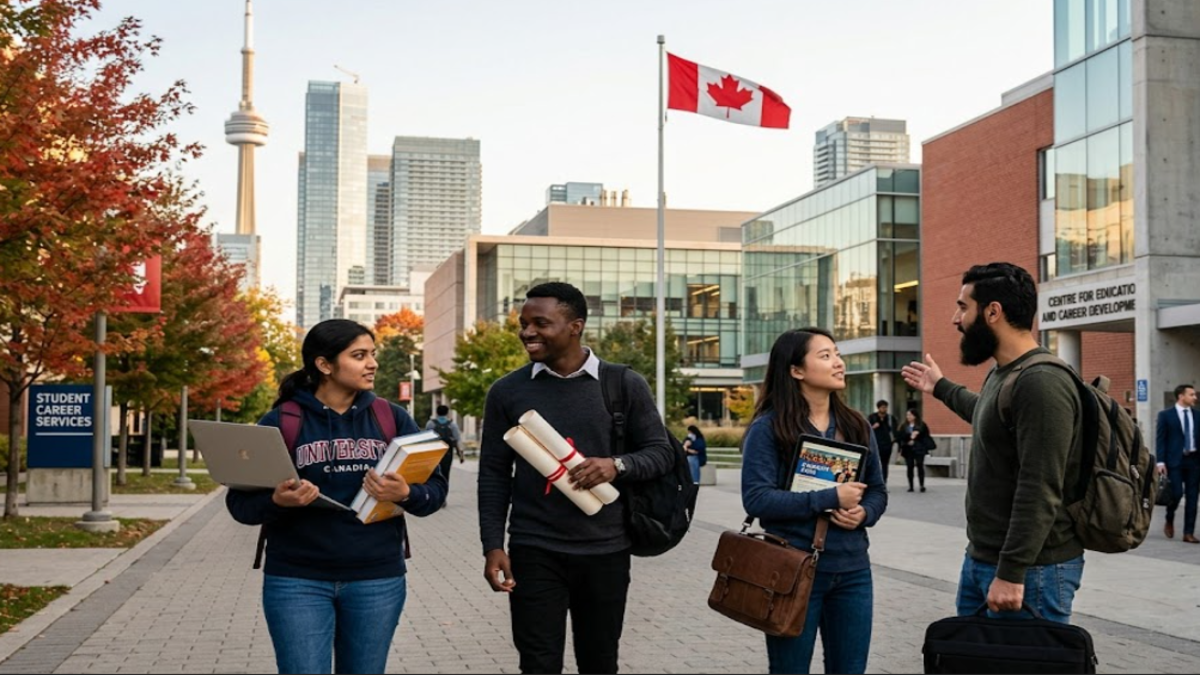
OTTAWA – Canadist: Study and Work in Canada remains at the center of Canada’s immigration conversation as the federal government continues to refine policies affecting international students. New developments released today show that immigration officials are applying greater scrutiny to study permit applications, particularly financial documentation, while also reminding students about the conditions governing employment during their studies. At the same time, discussions surrounding post-graduation work opportunities continue to attract national attention, reflecting Canada’s effort to balance immigration integrity with its long-standing goal of attracting global talent. How will these latest developments affect thousands of students planning to begin their Canadian education?

Canada has long ranked among the world’s most attractive destinations for international students. High-quality education, internationally recognized qualifications, and clear pathways to employment have made Canadian colleges and universities popular choices for students from every continent.
However, the country’s international education system has undergone significant changes over the past two years. As immigration authorities work to manage record demand, the federal government has introduced stricter measures designed to protect the integrity of the immigration system while ensuring that genuine students continue to benefit from Canada’s educational opportunities.
Today’s developments highlight that this approach remains firmly in place. Rather than announcing sweeping policy changes, Immigration, Refugees and Citizenship Canada (IRCC) is emphasizing compliance with existing rules, careful verification of applications, and responsible participation in both the education system and the Canadian labour market.

These updates are particularly important because they affect every stage of a student’s journey—from applying for a study permit to seeking employment during studies and eventually pursuing post-graduation opportunities.
Study and Work in Canada: Financial evidence under greater scrutiny
One of today’s most significant developments concerns the financial documentation submitted by prospective international students.
Recent reports indicate that IRCC officers are paying closer attention to the proof of funds included in study permit applications. Immigration officials are not simply checking whether applicants meet the minimum financial threshold. Instead, they are carefully examining whether the submitted documents present a consistent and credible financial picture.
According to immigration specialists cited in today’s reports, officers are reviewing the origin of funds, banking records, family financial support, and the overall consistency of each application. Documents that appear incomplete, inconsistent, or difficult to verify may result in additional questions or even the refusal of a study permit application.
This increased scrutiny reflects Canada’s broader effort to ensure that applicants possess sufficient financial resources to support themselves throughout their academic programs without encountering unexpected financial hardship after arriving in the country.
For prospective students, this means preparation has become more important than ever.
Immigration consultants recommend submitting complete banking documentation, clearly explaining any recent large deposits, and ensuring that every financial document supports the overall application. Any discrepancies between declared income, available savings, sponsorship arrangements, or tuition payments could invite additional examination.
Although Canada’s study permit requirements themselves have not fundamentally changed today, the way applications are being assessed demonstrates that immigration officers continue to prioritize document quality and credibility.
Educational institutions are also encouraging applicants to prepare comprehensive files well before submission deadlines. Many universities and colleges have expanded advising services to help admitted students understand documentation requirements before they apply for their study permits.
The stronger and more transparent an application appears from the beginning, the more smoothly the assessment process is likely to proceed.
Why compliance matters more than ever
Today’s immigration updates also reinforce an important message that Canadian officials have repeated throughout recent months: obtaining a study permit is only the beginning of a student’s legal responsibilities.
Every international student receives a permit containing specific conditions. These conditions govern enrollment status, academic progress, and eligibility to work while studying.
IRCC has reminded students that these conditions are legally binding. Failure to respect them may not only affect a student’s current status but could also influence future immigration applications, including work permits or permanent residence pathways.
Immigration lawyers note that many students focus primarily on gaining admission to a Canadian institution, but maintaining compliance after arrival is equally important. Remaining enrolled full-time when required, keeping documentation up to date, and understanding employment rules are all essential components of maintaining legal status in Canada.
These reminders come at a time when international education continues to play an important role in Canada’s economy. Beyond tuition revenue, international students contribute to local communities through housing, transportation, retail spending, and participation in the labour market.
For this reason, Canadian authorities continue to emphasize that maintaining public confidence in the international student system depends on ensuring that immigration rules are respected by both educational institutions and students alike.
The latest developments suggest that Canada’s objective is not to discourage genuine international students but rather to strengthen confidence in a system that has experienced unprecedented demand in recent years.
As today’s news demonstrates, financial credibility represents only one part of a broader framework that increasingly emphasizes transparency, compliance, and long-term planning. Those same principles also apply to employment during studies, an area where IRCC has issued fresh guidance following several high-profile cases involving work authorization.
Study and Work in Canada: IRCC clarifies work authorization for international students
Alongside the increased attention being paid to study permit applications, Immigration, Refugees and Citizenship Canada (IRCC) has also issued fresh clarification regarding employment rules for international students. The reminder comes after several recent cases in which graduates reported difficulties related to work permit applications, prompting questions about how employment conditions are being interpreted.
The department emphasized that international students should carefully understand the conditions attached to their study permits before accepting any job. While many students are eligible to work during their studies, that authorization is not automatic in every situation. Eligibility depends on several factors, including enrollment status, the type of educational institution attended, and compliance with all permit conditions.
Officials stressed that working without authorization or failing to meet the conditions of a study permit may have serious consequences. In addition to affecting a student’s legal status in Canada, violations could influence future applications for work permits or permanent residence.
Immigration professionals say the clarification is intended to reduce misunderstandings rather than introduce new restrictions. Many students receive information from friends or social media that may not accurately reflect current immigration rules. As a result, experts recommend verifying any employment-related questions directly through official government guidance before making decisions.
The reminder also highlights the importance of maintaining full-time enrollment whenever required. In many cases, work authorization is linked to a student’s active participation in an eligible academic program. Dropping below the required course load without proper authorization could affect eligibility to work.
For students already in Canada, understanding these rules is especially important because employment often plays a significant role in helping cover living expenses while gaining valuable Canadian work experience.
Balancing education and employment
Canada has traditionally encouraged international students to participate in the labour market while completing their education. Many employers value the language skills, international perspectives, and academic training that these students bring to the workplace.
Part-time employment also allows students to build professional networks, improve communication skills, and gain practical experience that may later strengthen applications for permanent residence through various immigration pathways.
However, immigration specialists continue to remind students that employment should complement—not replace—their academic responsibilities. Canadian authorities expect international students to remain primarily focused on completing the educational program for which their study permit was issued.
This balance between education and employment remains one of the defining features of Canada’s international student system. While opportunities to work continue to exist, they are accompanied by clear legal responsibilities that students are expected to respect throughout their stay.
Growing attention on post-graduation work permits
Another issue attracting attention today involves graduates seeking Post-Graduation Work Permits (PGWPs), one of Canada’s most popular pathways for international students wishing to gain professional experience after completing their studies.
In Alberta, groups of former international students have continued voicing concerns after receiving refusals for post-graduation work permits. Demonstrations have drawn public attention to individual cases where graduates argue they expected to transition into the Canadian workforce after successfully completing their academic programs.
The situation has generated discussion among immigration lawyers, educational institutions, provincial representatives, and student organizations. While every application is assessed individually, the protests have highlighted the importance of understanding PGWP eligibility requirements before beginning a program of study.
Experts note that not every academic program automatically qualifies graduates for a Post-Graduation Work Permit. Eligibility depends on several factors, including the type of institution attended, the program completed, and compliance with immigration regulations throughout the student’s period of study.
As Canadian immigration policies continue to evolve, prospective students are increasingly encouraged to research their chosen institution carefully before accepting an offer of admission. Understanding whether a program meets PGWP eligibility requirements has become an essential part of planning an education in Canada.
Educational institutions respond
Many colleges and universities have responded by expanding immigration advising services for both prospective and current students. Dedicated international offices are providing updated information on study permits, work authorization, and post-graduation pathways to help students make informed decisions.
Some institutions have also increased workshops covering immigration compliance, employment regulations, and long-term career planning. These sessions aim to reduce confusion surrounding changing immigration policies and ensure students understand their responsibilities before graduation.
Education leaders continue to emphasize that transparency is essential. Providing accurate information at the beginning of a student’s academic journey can help avoid misunderstandings later, particularly when graduates begin preparing applications for work permits or permanent residence.
Despite today’s headlines, Canada remains one of the world’s leading destinations for international education. Universities, colleges, employers, and governments continue working together to attract talented students while strengthening confidence in the immigration system.
The latest developments suggest that Canada’s approach is becoming more focused on accountability and documentation rather than limiting opportunities. Students who carefully prepare their applications, comply with permit conditions, and remain informed about official requirements continue to have access to educational and professional opportunities across the country.
New pathways continue to support international graduates
While much of today’s discussion has focused on stricter application reviews and compliance with immigration rules, Canada continues to offer several opportunities for international graduates who wish to build their future in the country.
Federal and provincial governments have repeatedly stated that international students remain an important source of skilled workers for Canada’s economy. Many graduates already possess Canadian education, local work experience, and language skills, making them strong candidates for long-term immigration programs.
Recent measures announced by immigration authorities demonstrate that, although eligibility requirements are being more closely monitored, pathways to permanent residence remain available for those who meet the established criteria.
Among the latest developments is the continuation of programs supporting French-speaking graduates outside Quebec, reflecting Canada’s broader strategy to strengthen francophone communities across the country. Several provinces have also maintained or expanded immigration streams designed to retain graduates in sectors experiencing labour shortages.
Provincial Nominee Programs (PNPs) continue to play an important role in this strategy. Depending on labour market needs, provinces may invite qualified graduates working in healthcare, education, technology, engineering, skilled trades, and other priority occupations to apply for permanent residence.
Immigration experts believe these initiatives demonstrate that Canada’s overall objective has not changed. Rather than reducing opportunities for international graduates, authorities are seeking to ensure that immigration pathways remain sustainable, transparent, and aligned with economic priorities.
What prospective students should consider before applying
Today’s developments provide several valuable lessons for anyone planning to study in Canada during the coming admission cycles.
First, financial preparation has become more important than ever. Applicants should ensure that every document submitted with a study permit application accurately reflects their financial situation. Consistency, transparency, and credibility are essential throughout the process.
Second, students should research their chosen institution carefully. Before accepting an offer of admission, it is advisable to confirm whether the institution is eligible under Canadian immigration rules and whether the selected academic program may qualify graduates for future work opportunities.
Third, understanding study permit conditions before arriving in Canada can prevent unnecessary complications later. Knowing when employment is authorized, maintaining academic eligibility, and respecting immigration requirements are fundamental responsibilities for every international student.
Finally, applicants should rely on official information instead of rumors or social media speculation. Immigration policies may evolve over time, and the most reliable guidance always comes directly from Canadian authorities.
The official website of Immigration, Refugees and Citizenship Canada remains the primary source for current immigration policies, eligibility requirements, study permits, work authorization, and permanent residence pathways. More information is available through the official IRCC website: https://www.canada.ca/en/immigration-refugees-citizenship.html
Canada continues balancing opportunity with immigration integrity
The developments reported today illustrate the direction Canada’s international education system is taking. Immigration authorities are strengthening verification procedures, encouraging greater compliance with study permit conditions, and ensuring that employment opportunities are accessed within the framework established by Canadian law.
For genuine international students, these measures should not necessarily be viewed as barriers. Instead, they reflect an increasingly structured immigration system that rewards careful preparation, accurate documentation, and full compliance with legal requirements.
Educational institutions continue welcoming students from around the world, employers remain interested in recruiting qualified graduates, and governments continue recognizing international education as an important contributor to Canada’s economic growth and demographic needs.
At the same time, prospective students should understand that success now depends not only on obtaining admission to a Canadian institution but also on maintaining compliance throughout every stage of their academic and professional journey.
As Canada continues refining its immigration policies, students who remain informed, prepare strong applications, and follow official guidance will continue to find opportunities to study, work, and potentially build long-term careers in one of the world’s leading destinations for international education.
Frequently Asked Questions
Is Canada still accepting international students?
Yes. Canada continues to welcome international students, although immigration authorities are applying greater scrutiny to study permit applications and supporting documentation.
Can international students still work while studying?
Eligible students may work if they meet the conditions attached to their study permit and comply with all IRCC requirements.
Has Canada ended post-graduation work permits?
No. Post-Graduation Work Permits remain available for graduates who meet all eligibility requirements established by Canadian immigration authorities.
Where should students verify immigration information?
Students should always consult the official Immigration, Refugees and Citizenship Canada (IRCC) website for the latest policies and eligibility criteria.
Contact: info@canadaalyom.com