
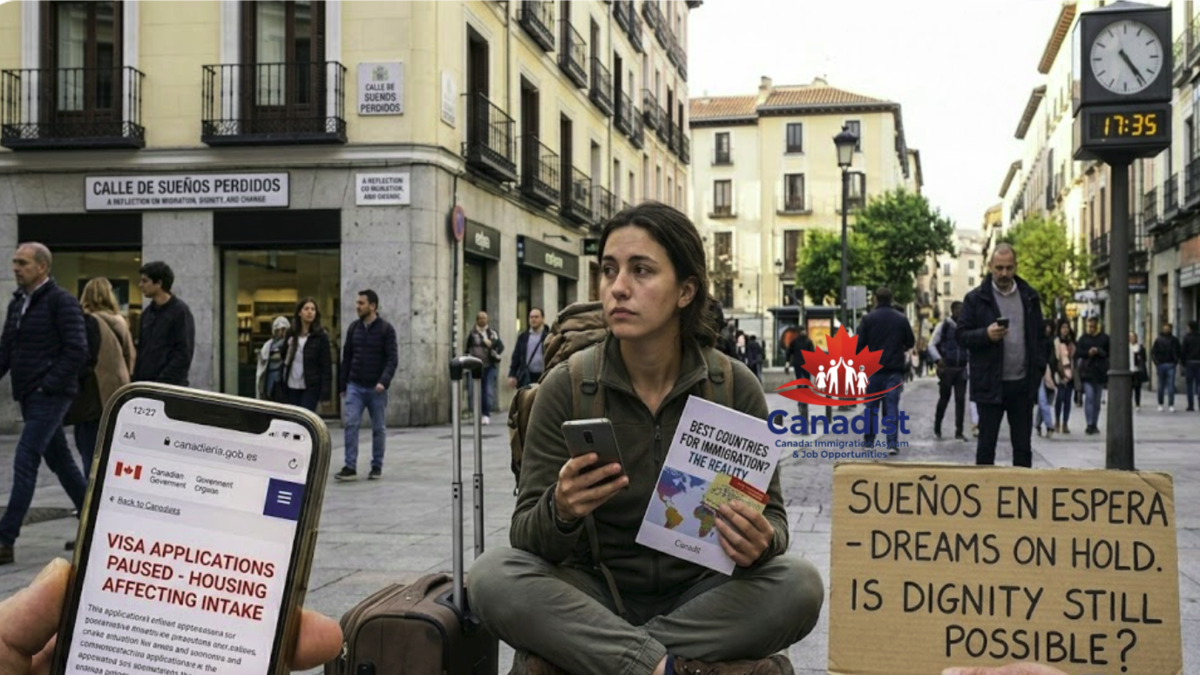
Ottawa – Canadist: The Best countries for immigration are no longer what they used to be. For decades, families packed their lives into suitcases, chasing the promise of stability in nations that held the door wide open. Today, the reality feels sharper, colder, and far more transactional. Have you ever wondered why the countries that once stood as beacons of hope now feel like fortresses?

The narrative has flipped. Sweden, once the golden standard for asylum seekers, now mirrors the restrictive policies of its neighbors. Canada, the land of polite opportunity, struggles with a housing crisis that forces newcomers to reconsider their flight path. France and Spain, long-term favorites for European integration, face their own domestic pressures. It leaves us asking: is the dream actually dying, or just evolving into something harder to reach?
The Evolution of the Dream Destinations
We look back at stories from a decade ago. Back then, Sweden was the sanctuary. It was the place where humanity came before paperwork. People arrived with nothing but hope and were met with shelter and social support. Fast forward to now, and the landscape has changed. Governments are tightening budgets and laws, reflecting a broader shift in global attitudes toward migration.
The team at Canadist noticed a pattern in recent reports. It is not just about fewer visas; it is about the “atmosphere” of the destination. Integration used to be a social contract. Now, it feels like a competitive exam. You aren’t just moving to start a life; you are moving to survive an economic bottleneck.

When the Promise Breaks
Look at the ground level. Real people are caught in the middle. We spoke to migrants in Toronto who arrived with professional degrees, only to find themselves navigating a rental market that eats 70% of their salary. We talked to families in Europe who feel the goalposts moving every few months.
It creates a profound sense of whiplash. You do your homework, you follow the rules, and you show up ready to build. But the rules changed while you were in transit. This isn’t just a political shift; it is a human one. The dignity of the migrant experience is being challenged by rising xenophobia and economic fatigue.
A Hard Look at Reality
When we compare these nations, the differences become stark. We pulled data from the UNHCR to map out how these traditional favorites currently stack up. The table below isn’t about promoting one over the other; it’s about stripping away the marketing and showing the raw administrative reality.
| Country | Asylum | Work Market | Housing | Citizenship | Language | Racism |
| Sweden | Very Strict | Competitive | Difficult | Challenging | Essential | Rising |
| Canada | Moderate | Strained | Critical | Fast-ish | English/French | Moderate |
| France | Complex | Rigid | Expensive | Long | Critical | Notable |
| Spain | Accessible | High Unempl. | Moderate | Possible | Critical | Low-Mod |
This data confirms a simple truth. The era of the “unconditional welcome” has evaporated. Every nation on this list is now prioritizing domestic stability over open-door policies.
Why the Shift Matters for You
The pressure isn’t just external; it is internal. European nations and North American hubs are grappling with aging populations and infrastructure that cannot keep up. When the system groans under pressure, the migrant is usually the first to feel it.
You see it in the rising rhetoric. You feel it in the difficulty of finding that first apartment. It forces you to ask: are you moving for the brand name of the country, or for the actual quality of life?
Sometimes, the smaller or less “famous” countries offer more dignity than the ones that used to dominate the headlines. People are realizing that “Best countries for immigration” might be a label that needs an update. A country might have a great reputation, but that reputation doesn’t pay your rent or guarantee your social safety.
Where Does Dignity Remain?
Dignity is a tricky thing to measure. It isn’t found in a visa stamp. It is found in whether you can walk down the street without being looked at as a burden.
It is found in whether your degree is respected, not just acknowledged. Some find this in the bustling cities of Spain, despite the job market struggles. Others find it in the quiet integration of smaller Canadian provinces that are desperate for labor.
We at Canadist believe that the search for a new home is fundamentally a search for respect. Don’t let the reputation of a decade ago dictate your future today. Look at the data. Look at the housing prices. Look at the local social climate. Your journey deserves a destination that welcomes you, not one that merely tolerates your presence.
Frequently Asked Questions
What makes a country truly suitable for immigration today?
It depends on your personal risk tolerance. Look for a balance between job availability, housing affordability, and social stability rather than just high wages.
Is it still possible to seek asylum in the current political climate?
Yes, but the process has become significantly more bureaucratic and restricted across most Western nations. Documentation and legal support are more crucial now than ever.
How can one avoid the “housing trap” in popular destinations?
Research secondary cities. Many people flock to major capitals like Paris or Toronto, which drives up prices. Look for regional hubs that are actively incentivizing new residents to settle there.
Why do countries change their immigration laws so frequently?
Policies often react to domestic economic cycles, housing shortages, and shifts in public opinion. It is rarely a permanent stance; it is almost always a reaction to the current local crisis.