

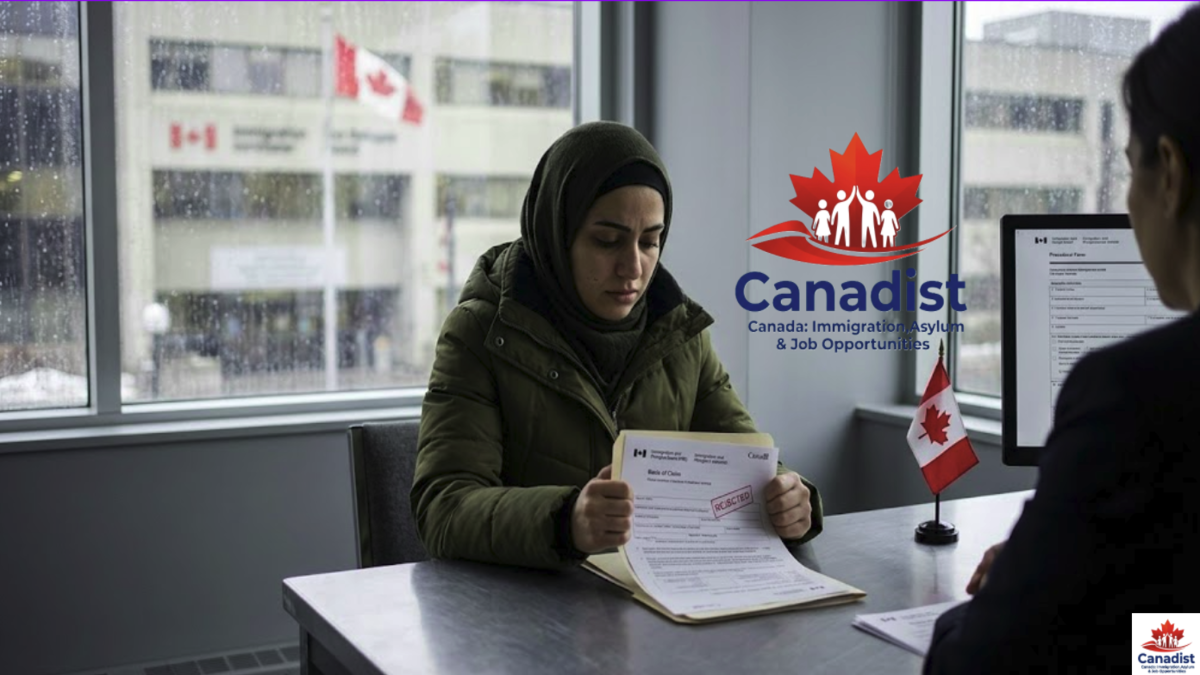
Ottawa – Canadist. Do you think telling the truth is enough to get asylum in Canada? Many people believe this, only to find themselves facing a deportation order months later. The system is not just about your story; it is about how that story fits into a very rigid legal frame.

Why do honest people get rejected? It happens every day. Sometimes it is a forgotten date, and other times it is a missed paper. If you are preparing your claim, you need to know that one small slip can end everything. Completely.
The BOC form is where cases go to die
Most applicants treat the Basis of Claim (BOC) form like a simple registration. That is a huge mistake. In reality, the BOC is your shadow. It follows you into the hearing room, and the judge will use it to test every word you say.
We have seen many cases where a person remembers an event differently two years later. To the IRB member, that is not a memory lapse; it is a “contradiction.” If your BOC says you were attacked on a Tuesday, but you say Wednesday in the hearing, you have a problem. A big one. Precision here is not optional; it is survival.

Credibility: It is not about the truth
In Canada, everything in an asylum case depends on one thing: credibility. You can be the most persecuted person on earth, but if the board member does not believe you, none of that matters.
This is the part nobody talks about. Nervousness can look like lying. Trauma can make you forget details. But the immigration officer is looking for a “consistent” narrative. Many applicants panic during the hearing when they are grilled about minor details. Lawyers see this mistake every week. If your story shifts, even slightly, the “credibility gap” opens up, and usually, it is impossible to close.
The trap of the Internal Flight Alternative
Many people think that if they are in danger in their home city, they qualify for protection. In Canada, that is not enough. The government will ask: “Why can’t you just move to the other side of your country?”
This is called the Internal Flight Alternative (IFA). It is a legal trap that catches thousands. You must prove that you are at risk in every single corner of your homeland. If the board thinks you could live safely in a distant province, your claim will be rejected. Most claimants fail to prepare for this specific question, assuming the danger follows them everywhere. Do not make that assumption.
Paperwork speaks louder than words
Can you prove what happened to you? While your testimony is evidence, the IRB wants to see the “objective” reality. Missing a police report or a medical certificate can weaken your stance significantly.
According to reports followed by Canadist, claims without supporting documents face a much steeper climb. You cannot expect the board to know the local politics of your country. You have to show them. Use news articles, human rights reports, and personal records. If you don’t provide the context, the board will fill in the blanks themselves—and usually not in your favor.
Deadlines do not wait for anyone
The Canadian system is obsessed with timelines. Missing a deadline for submitting your evidence is not a minor error; it can be fatal to your case.
We have seen claims declared abandoned simply because a fingerprint appointment was missed or a document arrived two days late. The system is cold and procedural. If you miss a date, the government assumes you are no longer interested in protection. This is a tragic way to lose your future in Canada after such a long journey.
FAQ
What is the biggest mistake in a Canada asylum claim?
The most common error is inconsistency. When the written story in the BOC does not perfectly match the oral testimony during the hearing, the claim is usually rejected for lack of credibility.
Does Canada reject people from “safe” countries?
Yes, frequently. If you come from a country Canada considers democratic or safe, the burden of proof is much higher. You must show why the state cannot protect you personally.
Can I work while waiting for a decision?
Usually, yes. Asylum seekers can apply for an open work permit once their claim is found eligible and they have completed their medical exam.
What should I do if my claim is rejected?
You must act fast. You usually have only 15 days to file a notice of appeal to the Refugee Appeal Division. Every hour counts in that situation.
Many people think telling the truth is enough. In Canada, it is not. Paperwork, deadlines, and consistency can decide your future more than your story itself. Winning a claim is a legal battle, not just a personal one.
Contact: info@canadaalyom.com